
FLOWER SEEDS
Page 1 of 4 Next >>

Coriandrum sativum
Cilantro is harvested for its leaves, flowers, and seeds (seeds are known as coriander). This herb adds a light flavor to salsa, marinades, and much more. ‘Santo’ is known for its slow bolting and does better in warm climates than other cilantro types. This plant grows quickly and is best used in succession to allow continual harvests.
Seed Count: approximately 25-50 seeds
Plant Height: 12-18”
Light Requirements: full sun
Soil Preference: rich, well draining soil, pH 6-7
USDA Zones: 3-9 (annual)
How to Grow
Germination: 7-21 days at 65-70F
Seeding Depth: 1/8” depth
Plant Spacing: 2-4”
Days to Maturity: 50-60 days (cilantro leaves), 90-110 days (coriander seeds)
Early-Season Seeding: Start seed indoors 3-5 weeks before the last frost and transplant after the danger of frost has passed. Direct seed outdoors is recommended and can be done after the danger of frost has passed.
Growing Tips: Sow in succession every 2-3 weeks to provide a continuous supply of cilantro. Do not thin seedlings if growing for leaf harvest since cilantro grows well when sown thickly. Cilantro may bolt (flower) when temperatures become warmer in mid summer and plants will stop producing leaves. Grow in partial shade in warmer zones to prevent bolting. After bolting, cut back foliage or allow to grow for flower and seed harvesting.
Edible: Harvest when plants are established, about 60 days after seeding. Harvest flowers when they are open and harvest seeds after they have dried on the plant.
Plant every 30 days in the Spring and Fall

Creamy pale yellow petals slowly unfurl in ruffly rows on tall upright stems. Plants produce 5-10 stems with 3-5” diameter blooms and prefer cooler temperatures blooming spring through early-summer. Ranunculus corms are a root structure which will produce stems and roots, very similar to planting a bulb.
Package Contains: 20 corms
Plant Height: 8-16”
Light Requirements: full sun: zones 3-8, partial afternoon shade: zones 9-10
Soil Preference: rich, loose, well draining soil, pH 5.6-7.5
USDA Zones: 3-6 (annual), 7-10 (perennial)
How to Grow
Planting Depth: 2-4”
Plant Spacing: 6-8”
Spring Planting: Pre-sprout corms indoors 4-6 weeks before the last frost date in spring. Transplant pre-sprouted corms after temperatures are above 25F. Bury soaked corms 3-4 weeks before your last spring frost date.
Fall Planting: Corms can be planted in fall without winter protection in zones 7-10, and with winter protection in zones 5-6.
Growing Tips: Store corms in a dry location at 40-65F until you are ready to plant them. Soak corms for 2-3 hours in aerated water (water left running) right before planting, corms should double in size. Bury the corm pointed downwards. Water carefully with 1-2” of water a week, allowing the soil to dry between watering’s, and increasing watering as temperatures warm.
Harvest: Harvest single stems as low as possible just when petals start to unfurl and the bud feels like a marshmallow for a vase life of 5-8 days with flower food.
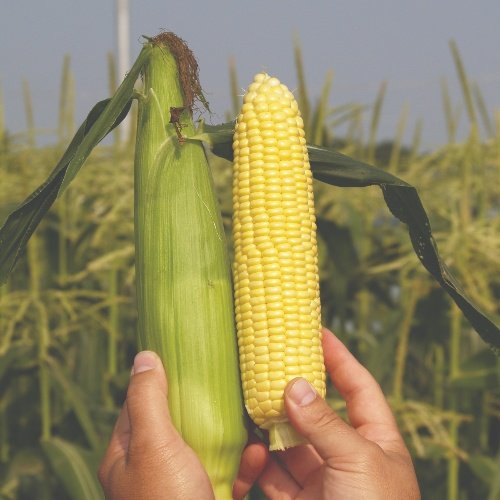
Summer Sweet Multisweet
Yellow and white kernels on delicious ears.
Maturity: 75 Days
Ear Length: 8”
Sun: Full Sun
Height: 7.5 Feet
Sow: Direct Sow
Sow Time: 2 weeks after the last frost
Seed Count: 100
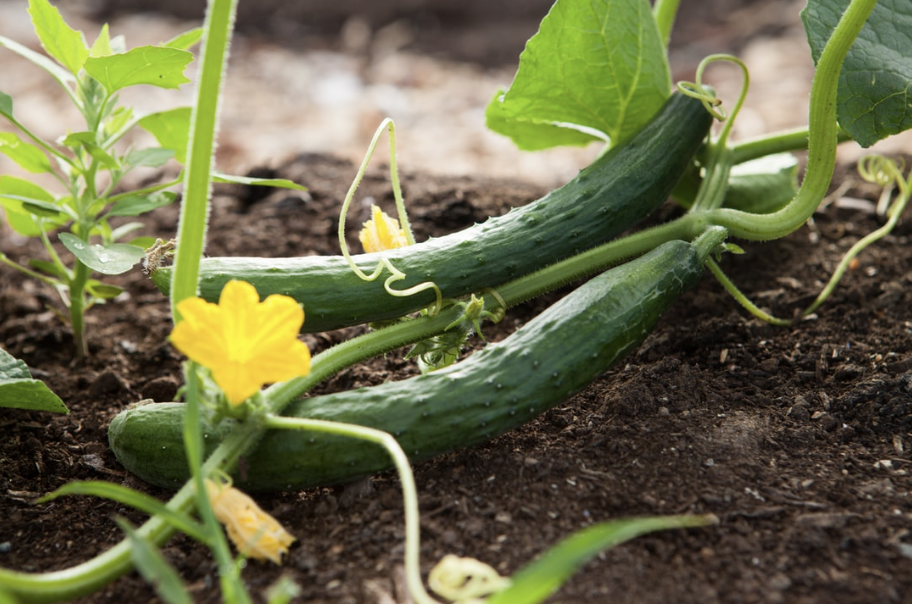
Requires a long, hot growing season
The marketmore is the standard for cucumbers, making it the vegetable to have in your garden. These tough vegetables can withstand disease and pests.
Days To Maturity: 63 days
Fruit Size: 6”-8”
Sun: Full Sun
Spread: 36”-48”
Height: 10”-12”
Sow Method: Direct Sow
Sow Time: After Last Frost
Thin: 24”
Approx seed per packet: 25 seeds
How to Grow:
Plant your seeds directly into your soil 3” apart in groups of 4-6. Once the seedlings emerge, thin crop and keep 3-4 of the strongest. Keep the weeds under control and keep the plants well watered.
Photo by @rodkersjourneys

Cosmos bipinnatus
Light apricot colored petals fading to pink at the center with pink on the underside of flowers. As 3-4” blooms age they fade to a creamy yellow providing ever changing color in your garden and flower arrangements summer through fall. Cosmos attract pollinators of all kinds making them a great companion plant in your vegetable garden. Plants are drought tolerant and their finely textured leaves and stems will add airy interest to your garden and floral arrangements.
Seed Count: approximately 50 seeds
Plant Height: 24-30”
Light Requirements: full sun
Soil Preference: average fertility and moderate water conditions
USDA Zones: 2-11 (annual)
How to Grow
Germination: 7-10 days at 68-80F
Seeding Depth: 1/8-1/4” depth, light required
Plant Spacing: direct seed 6”, transplant 12”
Days to Maturity: 70-90 days
Early-Season Seeding: Start seed indoors 4-5 weeks before the last frost date, transplant after the danger of frost has passed. Direct seed outdoors after the last frost date or when soil temperature is above 60F.
Late-Season Seeding: Start seed indoors or direct seed outdoors at least 11 weeks before the first frost date.
Growing Tips: Trellis may be required to support thin stems in windy conditions. Cut spent blooms to encourage more flowering or allow them to go to seed and self sow.
Cut Flower: Pinch growing point when the plant is 1’ tall to promote multi-stem growth. Harvest when flower buds are starting to open but before pollination occurs to ensure a longer vase life. Single flowers bloom 4-6 days when using flower food. The bloom period can be extended by harvesting stems with several buds at differing maturities to stagger blooming times.
Photo by @greenes.farm

Cosmos bipinnatus
Double bloomed white, pink, and red ‘Double Click Mix’ cosmos mix brings the perfect blend that blooms on airy foliage summer through fall. Their fine texture leaves and 2-4” blossoms add texture and interest to your garden and flower arrangements. Cosmos are drought tolerant and attract pollinators of all kinds making them a great companion plant in your vegetable garden.
Seed Count: approximately 50 seeds
Plant Height: 36-48”
Light Requirements: full sun
Soil Preference: average fertility and moderate water conditions
USDA Zones: 2-11 (annual)
How to Grow
Germination: 7-10 days at 68-80F
Seeding Depth: 1/8-1/4” depth, light required for germination
Plant Spacing: 12”
Days to Maturity: 75-90 days
Early-Season Seeding: Start seed indoors 4-5 weeks before the last frost date, transplant after the danger of frost has passed. Direct seed outdoors after the last frost date or when soil temperature is above 60F.
Late-Season Seeding: Start seed indoors or direct seed outdoors at least 13 weeks before the first frost date.
Growing Tips: Trellis may be required to support thin stems in windy conditions. Cut spent blooms to encourage more flowering or allow them to go to seed and self sow. These prefer less frequent fertilization as too much nitrogen can promote foliage but limit flower growth.
Cut Flower: Pinch the growing point when the plant is 1’ tall to promote multi-stem growth. Harvest when flower buds are starting to open but before pollination occurs to ensure a longer vase life. Single flowers bloom 4-6 days when using flower food. The bloom period can be extended by harvesting stems with several buds at differing maturities to stagger blooming times.
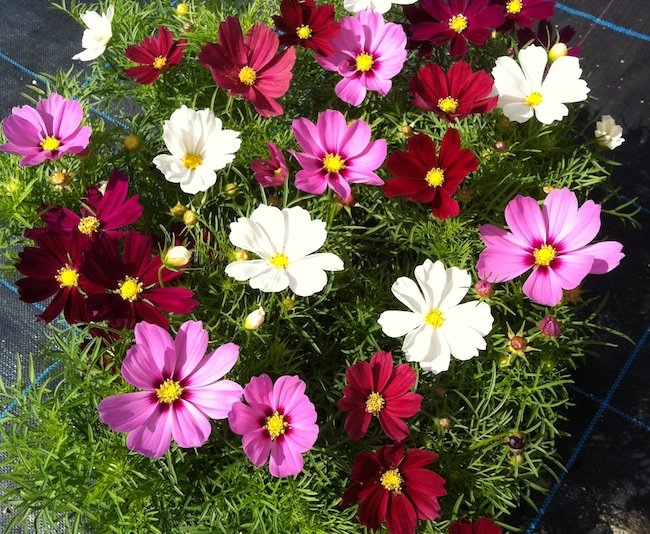
This dwarf variety grows to just 36 inches tall and comes in a mix of white, pink, rose and crimson. It is a perfect size for beds and borders, and the flowers attract bees, butterflies and other pollinators. Prefers lean, well-draining soils.
How to Grow
Plant Height: 24-36 inches
Seed Count: Approximately 100 seeds
Germination: 7-10 days at 68-80F
Seeding Depth: 1/8-1/4” depth, light required for germination
Plant Spacing: 12”
Days to Maturity: 90-100 days
Early-Season Seeding: Start seed indoors 4-5 weeks before the last frost date, transplant after the danger of frost has passed. Direct seed outdoors after the last frost date or when soil temperature is above 60F.
Late-Season Seeding: Start seed indoors or direct seed outdoors at least 14 weeks before the first frost date.
Growing Tips: Trellis may be required to support thin stems in windy conditions. Cut spent blooms to encourage more flowering or allow them to go to seed and self sow. These prefer less frequent fertilization as too much nitrogen can promote foliage but limit flower growth.
Cut Flower: Pinch the growing point when the plant is 1’ tall to promote multi-stem growth. Harvest when flower buds are starting to open but before pollination occurs to ensure a longer vase life. Single flowers bloom 4-6 days when using flower food. The bloom period can be extended by harvesting stems with several buds at differing maturities to stagger blooming times.
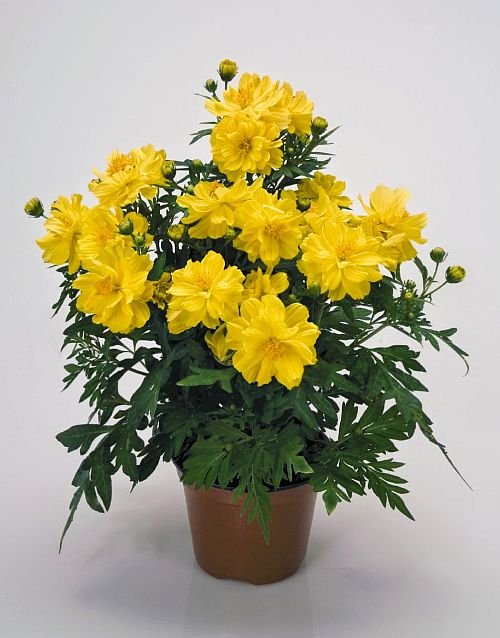
Cosmos bipinnatus
A short bright yellow landscape cosmos. Lovely in small pots or as a bedding plant. Is one of the Sulphur cosmos bred for landscape use. Still can be used as a cut flower but will have shorter stems.
Plant Height: 12-24 inches
Light Requirements: full sun
Soil Preference: average fertility and moderate water conditions
USDA Zones: 2-11 (annual)
How to Grow
Germination: 7-14 days at 68-80F
Seeding Depth: 1/8-1/4” depth, light required for germination
Plant Spacing: 12”
Days to Maturity: 75-90 days
Early-Season Seeding: Start seed indoors 4-5 weeks before the last frost date, transplant after the danger of frost has passed. Direct seed outdoors after the last frost date or when soil temperature is above 60F.
Late-Season Seeding: Start seed indoors or direct seed outdoors at least 11 weeks before the first frost date.
Growing Tips: Trellis may be required to support thin stems in windy conditions. Cut spent blooms to encourage more flowering or allow them to go to seed and self sow. These prefer less frequent fertilization as too much nitrogen can promote foliage but limit flower growth.
Cut Flower: Pinch the growing point when the plant is 1’ tall to promote multi-stem growth. Harvest when flower buds are starting to open but before pollination occurs to ensure a longer vase life. Single flowers bloom 4-6 days when using flower food. The bloom period can be extended by harvesting stems with several buds at differing maturities to stagger blooming times.
photo by @natalie.ciccio

Cosmos bipinnatus
With varying shades of pink and scarlet, you won’t want to miss out on planting these blooms. They’ll add just the right touch of cheerfulness to your garden and arrangements blooming summer through fall. Their fine texture leaves and 2-4” blossoms add texture and interest. Cosmos are drought tolerant and attract pollinators of all kinds making them a great companion plant in your vegetable garden.
Seed Count: approximately 50 seeds
Plant Height: 36-48”
Light Requirements: full sun
Soil Preference: average fertility and moderate water conditions
USDA Zones: 2-11 (annual)
How to Grow
Germination: 7-10 days at 68-80F
Seeding Depth: 1/8-1/4” depth, light required for germination
Plant Spacing: 12”
Days to Maturity: 75-90 days
Early-Season Seeding: Start seed indoors 4-5 weeks before the last frost date, transplant after the danger of frost has passed. Direct seed outdoors after the last frost date or when soil temperature is above 60F.
Late-Season Seeding: Start seed indoors or direct seed outdoors at least 13 weeks before the first frost date.
Growing Tips: Trellis may be required to support thin stems in windy conditions. Cut spent blooms to encourage more flowering or allow them to go to seed and self sow. These prefer less frequent fertilization as too much nitrogen can promote foliage but limit flower growth.
Cut Flower: Pinch the growing point when the plant is 1’ tall to promote multi-stem growth. Harvest when flower buds are starting to open but before pollination occurs to ensure a longer vase life. Single flowers bloom 4-6 days when using flower food. The bloom period can be extended by harvesting stems with several buds at differing maturities to stagger blooming times.
Photo by @nellarosefarms
Warm Season

Cosmos bipinnatus
Spotless white ‘Purity’ cosmo flowers grow tall on airy foliage providing beautiful blooms summer through fall. Their fine texture leaves and 2-4” blossoms add texture and interest to your garden and flower arrangements. Cosmos are drought tolerant and attract pollinators of all kinds making them a great companion plant in your vegetable garden.
Seed Count: approximately 50 seeds
Plant Height: 36-48”
Light Requirements: full sun
Soil Preference: average fertility and moderate water conditions
USDA Zones: 2-11 (annual)
How to Grow
Germination: 7-10 days at 68-80F
Seeding Depth: 1/8-1/4” depth, light required for germination
Plant Spacing: 12”
Days to Maturity: 75-90 days
Early-Season Seeding: Start seed indoors 4-5 weeks before the last frost date, transplant after the danger of frost has passed. Direct seed outdoors after the last frost date or when soil temperature is above 60F.
Late-Season Seeding: Start seed indoors or direct seed outdoors at least 13 weeks before the first frost date.
Growing Tips: Trellis may be required to support thin stems in windy conditions. Cut spent blooms to encourage more flowering or allow them to go to seed and self sow. These prefer less frequent fertilization as too much nitrogen can promote foliage but limit flower growth.
Cut Flower: Pinch the growing point when the plant is 1’ tall to promote multi-stem growth. Harvest when flower buds are starting to open but before pollination occurs to ensure a longer vase life. Single flowers bloom 4-6 days when using flower food. The bloom period can be extended by harvesting stems with several buds at differing maturities to stagger blooming times.
Photo by @aleksandrasmedley

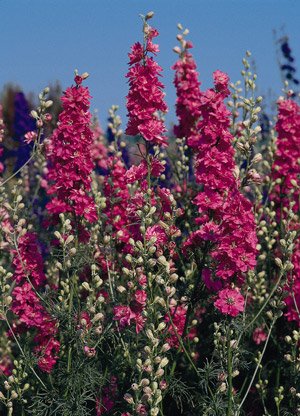
lowers can be used to add height to your garden beds or incorporated into floral arrangements. This plant attracts a variety of pollinators and repel deel. Seeds freely sow, don’t be surprised to find sprigs of their airy leaves growing next spring.
Plant Height: 3-4’
Light Requirements: full sun
Soil Preference: moist, well-draining soil, pH 6-7.5
USDA Zones: 2-10 (annual)
How to Grow
Germination: 15-30 days at 50-55F soil temperature, chilling seeds at 35F temperatures for 7-10 days before sowing improves germination
Seeding Depth: ¼-½” depth, darkness required for germination
Plant Spacing: 12”
Days to Maturity: 100-120
Early-Season Seeding: Start seed indoors 8-10 weeks before the last frost date, harden plants before transplanting outside around the last frost date. Direct seeding is recommended. Sow 3-4 weeks before the last frost date.
Late-Season Seeding: Start seeds indoors or direct seed outdoors at least 12 weeks before your first fall frost date. Seeds can be sown in fall for spring blooms in zones 7-10.
Growing Tips: Seeds require temperatures below 55F and darkness to properly germinate. Plants grow best in cool conditions staying below 55F for the first 6 weeks of growth. Direct seeding is recommended due to plants having a long root that may not tolerate transplant. If transplanting, start seeds in 4” deep containers and avoid compressing the soil upon transplanting. Air-flow, consistent watering, and avoiding moisture on the leaves will prevent fungal disease on this susceptible crop.
Cut Flower: Flowers can be harvested when the bottom 3-5 of florets are opened. Vase life will last 7-10 days with flower food. If drying, harvest when a majority of the flowers are open and hang upside down in a dry place out of direct light for 2-3 weeks.

Delphinium cultorum
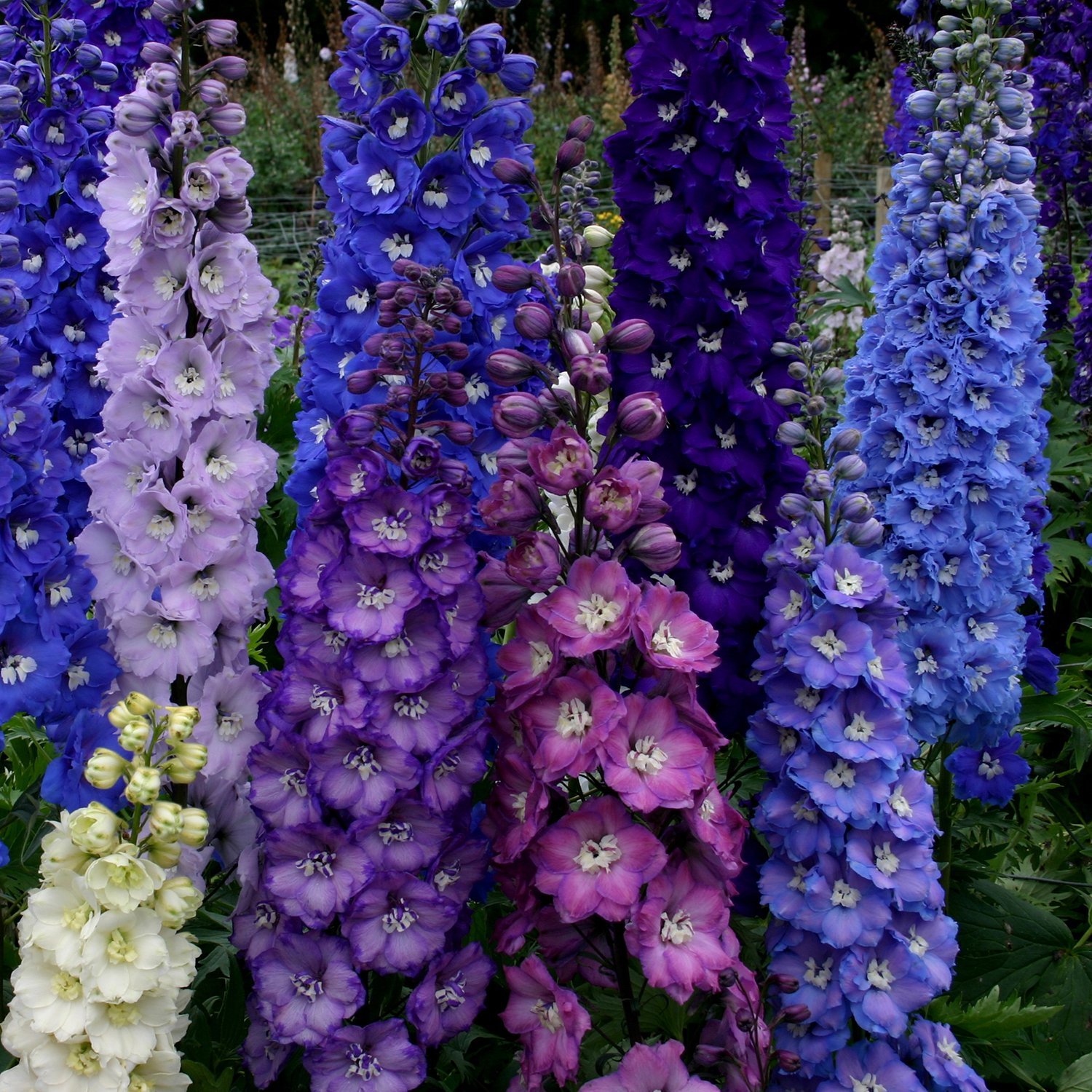
Delphinium are a striking addition to the garden and ‘Black Knight’ offers an exceptionally deep blue-violet hue with a dark black center. The tall stems add color and height to the back of gardens and can be used in floral arrangements. Plants attract a variety of pollinators and are deer resistant.
Plant Height: 4-6’
Light Requirements: full sun
Soil Preference: rich, well draining soil, pH 6.5-7.5
USDA Zones: 3-9 (perennial)
How to Grow
Germination: 14-28 days at 65-70F
Seeding Depth: 1/4”
Plant Spacing: 2-3’
Days to Maturity: Flowers in the second year
Early-Season Seeding: Start seed indoors 4-6 weeks before the last frost date, transplant after the danger of frost has passed. Direct seed outdoors after the last frost date or when soil temperature is above 60F.
Late-Season Seeding: Start seed indoors or direct seed outdoors at least 12 weeks before the first frost date.
Growing Tips: Delphinium requires support of the tall stems in windy locations to prevent them from breaking. Plants may need to be replanted every 3-5 as their vigor can decline with age. Cutting flowers back after they flower in summer may result in a second flush of blooms in the fall.
Cut Flower: Harvest when the bottom ⅓-½ of the blooms are open. Flower food will result in a vase-life of 7-10 days.
Photo by @northernlight_garden
Plant Height: 4-6’
Light Requirements: full sun
Soil Preference: rich, well draining soil, pH 6.5-7.5
USDA Zones: 3-9 (perennial)
How to Grow
Germination: 14-28 days at 65-70F
Seeding Depth: 1/4”
Plant Spacing: 2-3’
Days to Maturity: Flowers in the second year
Early-Season Seeding: Start seed indoors 4-6 weeks before the last frost date, transplant after the danger of frost has passed. Direct seed outdoors after the last frost date or when soil temperature is above 60F.
Late-Season Seeding: Start seed indoors or direct seed outdoors at least 12 weeks before the first frost date.
Growing Tips: Delphinium requires support of the tall stems in windy locations to prevent them from breaking. Plants may need to be replanted every 3-5 as their vigor can decline with age. Cutting flowers back after they flower in summer may result in a second flush of blooms in the fall.
Cut Flower: Harvest when the bottom ⅓-½ of the blooms are open. Flower food will result in a vase-life of 7-10 days.

Senecio cineraria
This mounded plant with velvety silver fern-like leaves is a beautiful addition to the garden or floral arrangements. It’s compact size is perfect for border and container plantings.
Plant Height: 8-12”
Light Requirements: full sun, partial shade
Soil Preference: average, well draining soil
USDA Zones: 3-7 (annual), 8-10 (tender perennial)
How to Grow
Germination: 7-14 days at 70-75F, light required for germination
Seeding Depth: 1/8” depth
Plant Spacing: 8-12”
Days to Maturity: 60-90 days
Early-Season Seeding: Starting seed indoors is recommended and should be done 10 weeks before the last frost and transplant after the danger of frost has passed. Direct seeding is not recommended but can be done outdoors after the danger of frost has passed.
Late-Season Seeding: Start seed indoors or direct seeding outdoors at least 10 weeks before the first frost date in fall.
Growing Tips: Watering from below will prevent seed disturbance. Remove flowers to encourage growth of foliage. Do not water plants from above since water can lead to disease. Mulching around plants will help them overwinter in warmer regions. Foliage can be harvested all year long and the more you harvest the leaves, the more they will grow.
Cut Flower: Harvest when plants are established, about 90 days after seeding. Harvest during the cooler part of the day in the morning or afternoon and place stems into water right away for 3 hours before arranging. Vase-life is 7-10 days.
Photo by @seths_succiejungle

Low Maintenance Perennial
Foeniculum vulgare
This decorative fennel has beautiful lacy bronze leaves. Useful as an ornamental as well as a culinary sweet fennel and medicinal herb. This particular type of fennel is slow to bolt and is a non bulbing type.
Plant Height: 30-36”
Light Requirements: full sun, partial shade
Soil Preference: rich, well draining soil
USDA Zones: 2-5 (biennial), 6-10 (perennial)
How to Grow
Germination: 7-14 days at 65-70F
Seeding Depth: ¼-½” depth, darkness required for germination
Plant Spacing: 6-12”
Days to Maturity: 50-60 days
Early-Season Seeding: Start seed indoors 3-5 weeks before the last frost and transplant after the danger of frost has passed. Direct seeding outdoors is recommended and can be done after the danger of frost has passed.
Late-Season Seeding: Start seed indoors or direct seeding outdoors at least 10 weeks before the first frost date in fall.
Growing Tips: Fennel may bolt (flower) when temperatures become warmer in mid summer and plants will stop producing leaves. Grow in partial shade in warmer Southern zones to prevent bolting.
Edible: Harvest leaves and stems before flowering occurs. Harvest root in the fall of the first year of growth. If seed harvest is desired, do not overwater during flowering and harvest seeds when they turn green gray in color. Seed production may not occur until the second year of growth.
Medicinal: Fennel is used as a carminative to relieve flatulence and colic while stimulating digestion. It is also anti-spasmodic, anti-inflammatory, and is similar to anise in calming bronchial coughs. It has estrogenic activity and stimulates milk flow in nursing mothers.
Photo by @sarflondongarden

Cynoglossum Amabile
These tiny flowers are not lost in your garden with their vivid blue coloring and heavy amount of blooms. This flower attracts a variety of pollinators while it blooms spring through summer and will freely self-sow in your garden. Delicate stems add a airy touch to cut flower arrangements.
Seed Count: approximately 100 seeds
Plant Height: 12-18”
Light Requirements: full sun, partial shade
Soil Preference: moderate fertility, well-draining soil, pH 6-7
USDA Zones: 3-10 (annual)
How to Grow
Germination: 14-21 days at 65-70F, requires darkness for germination
Seeding Depth: 1/4” depth
Plant Spacing: 9-12”
Days to Maturity: 80-120
Early-Season Seeding: Start seed indoors 6-8 weeks before the last frost date, transplant after the danger of frost has passed. Direct seeding outdoors is not recommended but can be attempted after the last frost date or when soil temperature is above 75F.
Late-Season Seeding: Start seed indoors or direct seeding outdoors at least 14 weeks before the first frost date in fall.
Growing Tips: All parts of this plant are poisonous to animals and humans. Bottom watering is helpful to prevent disturbing surface sown seeds or soil. Succession sowing twice, 3-4 weeks apart will lengthen the blooming time. Flowers will bloom for up to 6 weeks as long as you harvest them before they go to seed.
Cut Flower: Harvest when flowers are ¾ open for fresh use during the cooler parts of the day. Immediately after harvesting, place in water and allow it to rehydrate for a few hours before arranging. Forget me nots will last 5-7 days in a vase with flower food.
Cool Season

Godetia grandiflora
These unique blooms have a tissue paper appearance and come in salmon, coral color that is absolutely stunning. Tropical esque flowers bloom on a mounded plant that does well in garden beds, and container plantings. This particular Godetia has longer stems making it ideal for use in cut flower arrangements.
Plant Height: 18”
Light Requirements: full sun
Soil Preference: moist, well-draining soil, pH 6.6-7.3
USDA Zones: 3-7 (annual)
How to Grow
Germination: 21-28 days at 70F
Seeding Depth: 1/8” depth, light required for germination
Plant Spacing: 18-24”
Days to Maturity: 75-90 days
Early-Season Seeding: Starting seed indoors is not recommended but can be done 6-8 weeks before the last frost date, transplant after the danger of frost has passed. Direct seed outdoors after the last frost date or when soil temperature is above 70F.
Late-Season Seeding: Direct seed outdoors at least 10 weeks before the first frost in fall.
Growing Tips: Below tray watering is recommended for these shallow sown seeds to prevent disturbance. Seeds can be sown in 2-3 successions to lengthen the time they flower in the garden. Pinch plants when they are about 6” tall for a bushier plant and more flowers. Remove flowers before they set seed to lengthen the blooming time.
Cut Flower: Harvest when the first few flowers have opened on the stem. Expect a vase-life of 7 days with flowers opening up at different times along the stem.

Gomphrena globosa
These unique deep-magenta blooms have a pompom appearance similar to a clover flower. Gomphrena is heat tolerant, making it ideal for late-summer blooming and flowering in warmer climates. This bright annual flower will add color when planted in mass within your garden beds. They can also be planted in containers, attracting a variety of pollinators. Gomphrena makes an excellent flower for fresh or dried arrangements with a long vase-life and excellent color retention.
Seed Count: approximately 50 seeds
Plant Height: 18-30”
Light Requir-ements: full sun
Soil Preference: well-draining soil
USDA Zones: 3-11 (annual)
How to Grow
Germination: 5-14 days at 70-80F
Seeding Depth: 1/8” depth
Plant Spacing: 6-9”
Days to Maturity: 85-110 days
Early-Season Seeding: Start seed indoors 4-6 weeks before the last frost date, transplant after the danger of frost has passed. Direct seeding outdoors is not recommended but can be done after the last frost date or when soil temperature is above 70F.
Late-Season Seeding: Start indoors and transplant outdoors at least 16 weeks before the first frost in fall.
Growing Tips: Plants do not require pinching to be multi-branched. Remove spent flowers before they go to seed to encourage more flowering.
Cut Flower: Harvest when flowers begin to have color but are not fully open and expect a vase-life of 10-14 days with flower food. For drying, harvest when flowers are fully open and hang upside down for about 3 weeks in a cool, dry place.
Photo by @theperfectpick

Gomphrena globosa
These unique rosy-pink blooms have a pompom appearance similar to a clover flower. Gomphrena is heat tolerant, making it ideal for late-summer blooming and flowering in warmer climates. This bright annual flower will add color when planted in mass within your garden beds. They can also be planted in containers, attracting a variety of pollinators. Gomphrena makes an excellent flower for fresh or dried arrangements with a long vase-life and excellent color retention.
Seed Count: approximately 50 seeds
Plant Height: 18-30”
Light Requir-ements: full sun
Soil Preference: well-draining soil
USDA Zones: 3-11 (annual)
How to Grow
Germination: 5-14 days at 70-80F
Seeding Depth: 1/8” depth
Plant Spacing: 6-9”
Days to Maturity: 85-110 days
Early-Season Seeding: Start seed indoors 4-6 weeks before the last frost date, transplant after the danger of frost has passed. Direct seeding outdoors is not recommended but can be done after the last frost date or when soil temperature is above 70F.
Late-Season Seeding: Start indoors and transplant outdoors at least 16 weeks before the first frost in fall.
Growing Tips: Plants do not require pinching to be multi-branched. Remove spent flowers before they go to seed to encourage more flowering.
Cut Flower: Harvest when flowers begin to have color but are not fully open and expect a vase-life of 10-14 days with flower food. For drying, harvest when flowers are fully open and hang upside down for about 3 weeks in a cool, dry place.
Warm Season
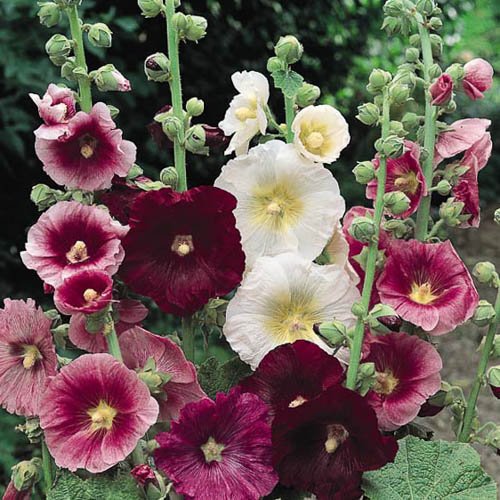
Alcea rosea
Large stems hold 3-4” single blooms in a variety of colors that add height to the back of garden beds in summer through fall. Hollyhocks sow freely so don’t be surprised if plants spread and bloom for years to come. Blooms are especially attractive to bees and other pollinators and are edible. Plants can be grown in hot climates and are deer resistant
Plant Height: 5-7’
Light Requirements: full sun
Soil Preference: rich, moist, well-draining soil, pH 6-8
USDA Zones: 3-8 (short-lived perennial)
How to Grow
Germination: 10-21 days at 70-75F
Seeding Depth: 1/8” depth, light aids germination
Plant Spacing: 2’
Days to Maturity: may bloom the first year if seeded early, but typically bloom the second year
Early-Season Seeding: Start seed indoors 6-8 weeks before the last frost date, transplant after the danger of frost has passed. Direct seed outdoors after the last frost date or when soil temperature is above 70F.
Late-Season Seeding: Direct seed outdoors in early-fall. Hollyhocks freely self sow.
Growing Tips: Hollyhocks are a perennial and may not bloom until the 2nd year of growth. They are also susceptible to rust fungus and powdery mildew. Avoid irregular or overhead irrigation and allow airflow to plants to prevent disease issues. Stems are tall and may require support. In the fall, cut stalks after they die back and remove them to prevent disease spreading to next years’ blooms.
Cut Flower: Can be used as a cut flower but require special care to maintain vase-life. The stems will need to be charred at the base after harvesting to prevent flower sap leaking and flower wilt. Vase-life 4-5 days using this method. Stems can be cut again and recharred after 5 days to extend the vase-life.
Photo by @homeonfridaycreek

Alcea rosea
Large stems hold 3-4” double blooms in peachy pink tones that add height to the back of garden beds in summer through fall. Hollyhocks sow freely so don’t be surprised if plants spread and bloom for years to come. Blooms are especially attractive to bees and other pollinators and are edible. Plants can be grown in hot climates and are deer resistant
Seed Count: approximately 25-50 seeds
Plant Height: 5-7’
Light Requirements: full sun
Soil Preference: rich, moist, well-draining soil, pH 6-8
USDA Zones: 3-8 (short-lived perennial)
How to Grow
Germination: 10-21 days at 70-75F
Seeding Depth: 1/8” depth, light aids germination
Plant Spacing: 2’
Days to Maturity: may bloom the first year if seeded early, but typically bloom the second year
Early-Season Seeding: Start seed indoors 6-8 weeks before the last frost date, transplant after the danger of frost has passed. Direct seed outdoors after the last frost date or when soil temperature is above 70F.
Late-Season Seeding: Direct seed outdoors in early-fall. Hollyhocks freely self sow.
Growing Tips: Hollyhocks are a perennial and may not bloom until the 2nd year of growth. They are also susceptible to rust fungus and powdery mildew. Avoid irregular or overhead irrigation and allow airflow to plants to prevent disease issues. Stems are tall and may require support. In the fall, cut stalks after they die back and remove them to prevent disease spreading to next years’ blooms.
Cut Flower: Can be used as a cut flower but require special care to maintain vase-life. The stems will need to be charred at the base after harvesting to prevent flower sap leaking and flower wilt. Vase-life 4-5 days using this method. Stems can be cut again and recharred after 5 days to extend the vase-life.

Desmanthus Illinoensis
This unique plant has puffy white flowers which turn into woody seed heads that really stand out on the fine, feathery green foliage. Feathery leaves will fold when touched similar to a mimosa or sensitive plant. This plant is also a workhouse in the garden since it is considered a legume which fixates nitrogen in the soil making it available for other plants. This plant can reseed and will germinate
Plant Height: 2-4’
Light Requirements: full sun, partial shade
Soil Preference: sandy, well-draining soil, pH 6.5-7.5
USDA Zones: 3-9 (perennial)
How to Grow
Germination: 7-21 days at 65-70F
Seeding Depth: 1/4-1/2” depth
Plant Spacing: 1-2’
Days to Maturity: may bloom the first year but typically blooms the second year
Early-Season Seeding: Direct seed outdoors after the last frost date or when soil temperature is above 65F.
Late-Season Seeding: Direct seed outdoors in early-fall before frost.
Growing Tips: Bundle flowers are often grown as a range land crop so it may attract deer but can tolerate heavy feeding which will may it grow back. Seeds will fall and reseed on their own. Leaves will curl in when touched but avoid doing this too often as it can stress the plant and effect growth.
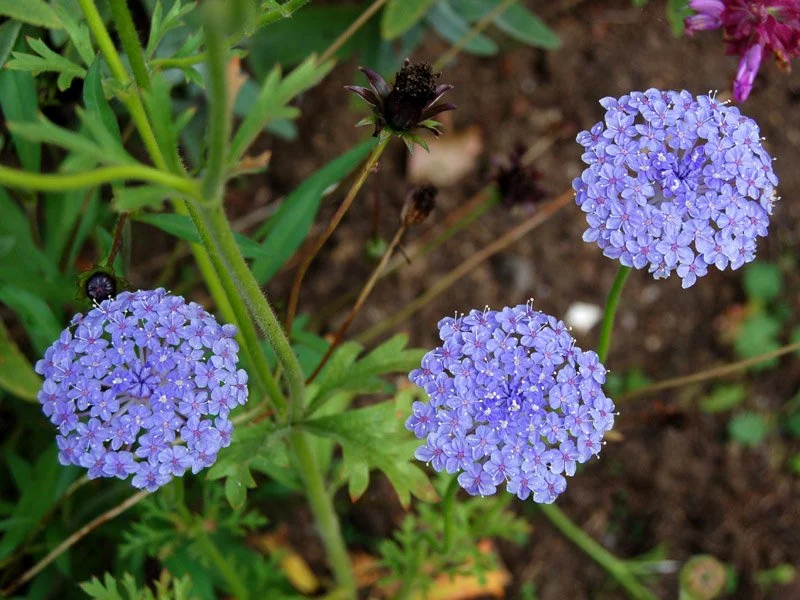


Consolida ajacis
Lovely mix of blue-violet, pink, white, and deep purple flowers bloom late-spring through mid-summer on a tall spike covered in wispy foliage. Flowers can be used to add height to your garden beds or incorporated into floral arrangements. This plant attracts a variety of pollinators and repel deel. Seeds freely sow, don’t be surprised to find sprigs of their airy leaves growing next spring.
Plant Height: 3-4’
Light Requirements: full sun
Soil Preference: moist, well-draining soil, pH 6-7.5
USDA Zones: 2-10 (annual)
How to Grow
Germination: 15-30 days at 50-55F soil temperature, chilling seeds at 35F temperatures for 7-10 days before sowing improves germination
Seeding Depth: ¼-½” depth, darkness required for germination
Plant Spacing: 12”
Days to Maturity: 100-120
Early-Season Seeding: Start seed indoors 8-10 weeks before the last frost date, harden plants before transplanting outside around the last frost date. Direct seeding is recommended. Sow 3-4 weeks before the last frost date.
Late-Season Seeding: Start seeds indoors or direct seed outdoors at least 12 weeks before your first fall frost date. Seeds can be sown in fall for spring blooms in zones 7-10.
Growing Tips: Seeds require temperatures below 55F and darkness to properly germinate. Plants grow best in cool conditions staying below 55F for the first 6 weeks of growth. Direct seeding is recommended due to plants having a long root that may not tolerate transplant. If transplanting, start seeds in 4” deep containers and avoid compressing the soil upon transplanting. Air-flow, consistent watering, and avoiding moisture on the leaves will prevent fungal disease on this susceptible crop.
Cut Flower: Flowers can be harvested when the bottom 3-5 of florets are opened. Vase life will last 7-10 days with flower food. If drying, harvest when a majority of the flowers are open and hang upside down in a dry place out of direct light for 2-3 weeks.


45 days. [Pre-1915.] A fully-savoyed or crinkled variety with dark green leaves. Most heat-tolerant variety we offer, very dependable, and the most full-flavored variety for salad use. Has withstood winter lows to 0oF.
This dwarf variety grows to just 36 inches tall and comes in a mix of white, pink, rose and crimson. It is a perfect size for beds and borders, and the flowers attract bees, butterflies and other pollinators. Prefers lean, well-draining soils.
How to Grow
Plant Height: 24-36 inches
Seed Count: Approximately 100 seeds
Germination: 7-10 days at 68-80F
Seeding Depth: 1/8-1/4” depth, light required for germination
Plant Spacing: 12”
Days to Maturity: 90-100 days
Early-Season Seeding: Start seed indoors 4-5 weeks before the last frost date, transplant after the danger of frost has passed. Direct seed outdoors after the last frost date or when soil temperature is above 60F.
Late-Season Seeding: Start seed indoors or direct seed outdoors at least 14 weeks before the first frost date.
Growing Tips: Trellis may be required to support thin stems in windy conditions. Cut spent blooms to encourage more flowering or allow them to go to seed and self sow. These prefer less frequent fertilization as too much nitrogen can promote foliage but limit flower growth.
Cut Flower: Pinch the growing point when the plant is 1’ tall to promote multi-stem growth. Harvest when flower buds are starting to open but before pollination occurs to ensure a longer vase life. Single flowers bloom 4-6 days when using flower food. The bloom period can be extended by harvesting stems with several buds at differing maturities to stagger blooming times.


Zinnia elegans
Double deep wine colored flowers on tall stems blooming summer through fall. This plant does well in warm temperatures and plants will branch out and become quite large if given enough water. Flowers attract a variety of pollinators. Their cheery flowers add color to containers, gardens, and cut flower arrangements.
Seed Count: Approximately 50 seeds
Plant Height: 4-5’
Light Requirements: full sun
Soil Preference: average fertility and moist soil, pH 5.5-7.5
USDA Zones: 3-10 (annual)
How to Grow
Germination: 3-7 days at 80-85F, light required for germination
Seeding Depth: 1/4” depth
Plant Spacing: 9-12”
Days to Maturity: 75-90 days
Early-Season Seeding: Start seed indoors 4-6 weeks before the last frost date, transplant after the danger of frost has passed. Direct seeding is recommended after the last frost date.
Late-Season Seeding: Start seed indoors at least 12 weeks before the first frost date.
Growing Tips: Plants can be sown in successions every 2-3 weeks for continuous blooms. Pinching is not required for this crop but will encourage higher yields. Pinch plants when they are 8-12” by cutting out the top 2-4”. Plants require horizontal trellising to support stems for cut flower production. Avoid disturbing the roots when transplanting. Remove stems after they have bloomed to promote more flowering.
Cut Flower: Harvest when the stems are stiff and flowers are opened. Vase-life will last 7-10 days with preservative. Adding 1-2 drops of bleach to the water will keep it clean.

Zinnia elegans
Petals of dark pink fade to salmon after they open up. Double blooms on tall stems blooming summer through fall. This plant does well in warm temperatures and plants will branch out and become quite large if given enough water. Flowers attract a variety of pollinators. Their cheery flowers add color to containers, gardens, and cut flower arrangements.
Seed Count: approximately 50 seeds
Plant Height: 4-5’
Light Requirements: full sun
Soil Preference: average fertility and moist soil, pH 5.5-7.5
USDA Zones: 3-10 (annual)
How to Grow
Germination: 3-7 days at 80-85F, light required for germination
Seeding Depth: 1/4” depth
Plant Spacing: 9-12”
Days to Maturity: 75-90 days
Early-Season Seeding: Start seed indoors 4-6 weeks before the last frost date, transplant after the danger of frost has passed. Direct seeding is recommended after the last frost date.
Late-Season Seeding: Start seed indoors at least 12 weeks before the first frost date.
Growing Tips: Plants can be sown in successions every 2-3 weeks for continuous blooms. Pinching is not required for this crop but will encourage higher yields. Pinch plants when they are 8-12” by cutting out the top 2-4”. Plants require horizontal trellising to support stems for cut flower production. Avoid disturbing the roots when transplanting. Remove stems after they have bloomed to promote more flowering.
Cut Flower: Harvest when the stems are stiff and flowers are opened. Vase-life will last 7-10 days with preservative. Adding 1-2 drops of bleach to the water will keep it clean.
photo by @laurenbrookslife and @3sistersgrow
Seed Count: 75
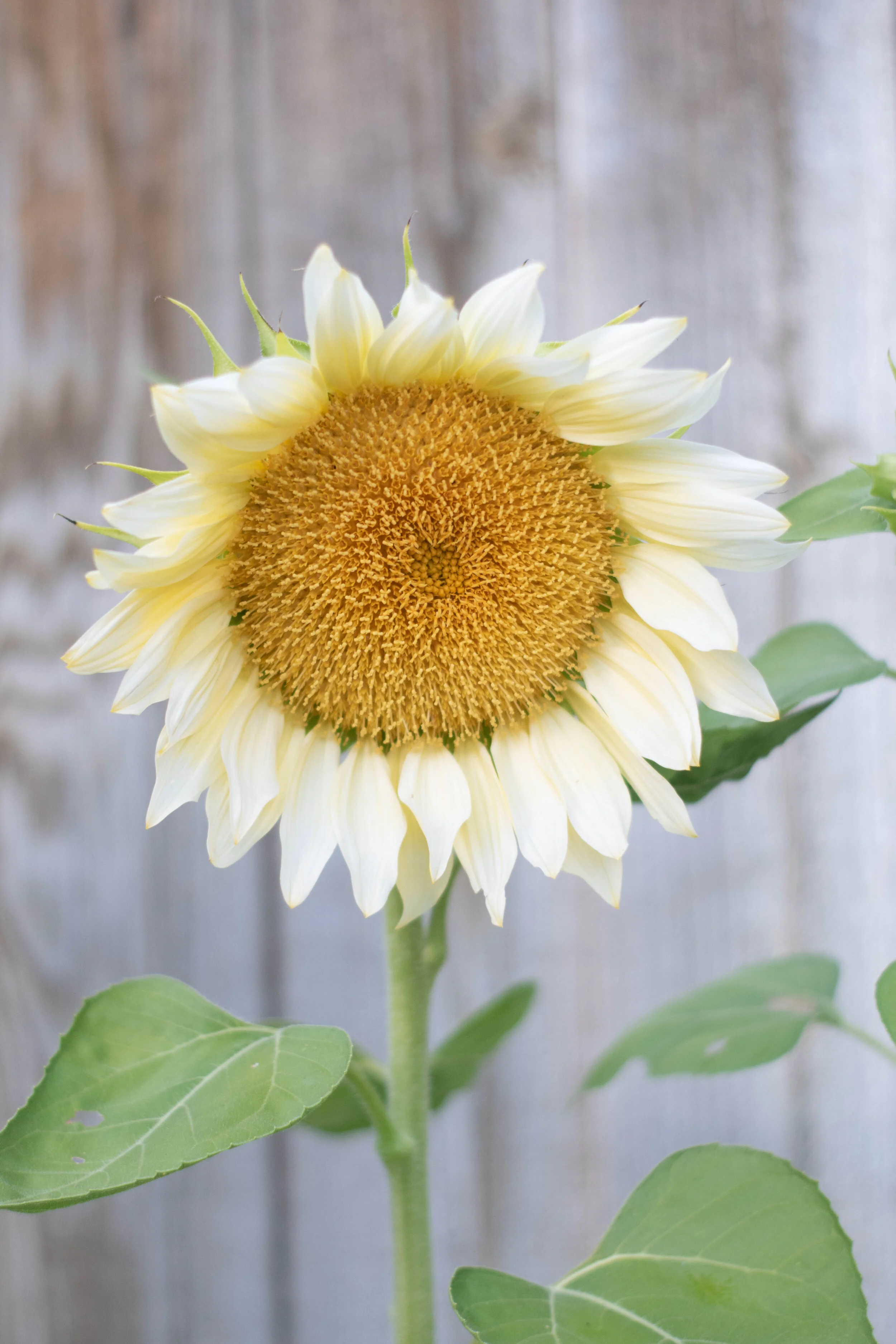
Helianthus annuus
Pale cream, nearly white petals catch the light and contrast against the deep yellow center. Sunflowers add late-summer through fall to your garden and floral arrangements. This drought tolerant crop attracts pollinators and birds throughout late-fall. Sunflowers can be harvested as a cut flower or left on the stock for seed production.
Seed Count: approximately 10 seeds
Plant Height: 5-6’
Light Requirements: full sun
Soil Preference: average fertility, well-draining soil, pH 6-7.5
USDA Zones: 2-10 (annual)
How to Grow
Germination: 7-21 days at 65-750F
Seeding Depth: 1/2” depth
Spacing: 4-6” (direct seed spacing), 12-18” (mature spacing)
Days to Maturity: 50-65 days
Early-Season Seeding: Direct seed outdoors after the last frost date has passed. Starting seed indoors is not recommended since plants dislike being transplanted but they can be started 2-3 weeks before your last frost date and planted out after frost has passed for early blooming.
Late-Season Seeding: Direct seed outdoors at least 12 weeks before the first fall frost.
Growing Tips: Sunflowers can shade other plants so put them at the northern end of your garden. They also require staking and protection from wind when they are young so planting near a fence or using a stake or trellis is best. Pinching is not recommended and will lower yields. Don’t grow near potatoes or beans since seeds emit a substance that can inhibit the growth of certain plants. Sunflowers produce abnormal flowers if given too much nitrogen fertilizer and overly saturated soils should be avoided to prevent disease.
Cut Flower: Harvest when flower buds are just showing color or when they are fully open. Strip a majority of the leaves off to increase the vase-life.
Photo by @melanies_garden

Helianthus annuus
Pale cream, nearly white petals are reminiscent of the moon against the dark center. These contrasting beauties add color late-summer through fall to your garden and floral arrangements. This drought tolerant crop attracts pollinators and birds throughout late-fall. Sunflowers can be harvested as a cut flower or left on the stock for seed production.
Seed Count: Approximately 10 seeds
Plant Height: 5-6’
Light Requirements: full sun
Soil Preference: average fertility, well-draining soil, pH 6-7.5
USDA Zones: 2-10 (annual)
How to Grow
Germination: 7-21 days at 65-750F
Seeding Depth: 1/2” depth
Spacing: 4-6” (direct seed spacing), 12-18” (mature spacing)
Days to Maturity: 50-65 days
Early-Season Seeding: Direct seed outdoors after the last frost date has passed. Starting seed indoors is not recommended since plants dislike being transplanted but they can be started 2-3 weeks before your last frost date and planted out after frost has passed for early blooming.
Late-Season Seeding: Direct seed outdoors at least 12 weeks before the first fall frost.
Growing Tips: Sunflowers can shade other plants so put them at the northern end of your garden. They also require staking and protection from wind when they are young so planting near a fence or using a stake or trellis is best. Pinching is not recommended and will lower yields. Don’t grow near potatoes or beans since seeds emit a substance that can inhibit the growth of certain plants. Sunflowers produce abnormal flowers if given too much nitrogen fertilizer and overly saturated soils should be avoided to prevent disease.
Cut Flower: Harvest when flower buds are just showing color or when they are fully open. Strip a majority of the leaves off to increase the vase-life.
Photo by @the_ct_colonial
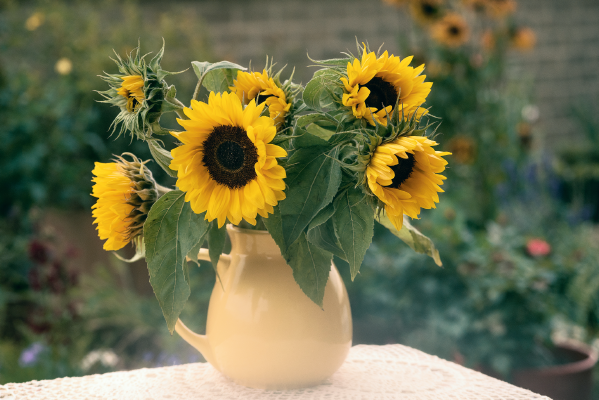
Helianthus annuus
Pollen free flowers that are perfect for those who struggle with allergies but still want a classic sunflower with golden-yellow petals and a dark center stand tall on their stems. Sunflowers add color late-summer through fall to your garden and floral arrangements. This drought tolerant crop attracts pollinators and birds throughout late-fall. Sunflowers can be harvested as a cut flower or left on the stock for seed production.
Plant Height: 3-5’
Light Requirements: full sun
Soil Preference: average fertility, well-draining soil, pH 6-7.5
USDA Zones: 2-10 (annual)
How to Grow
Germination: 7-21 days at 65-750F
Seeding Depth: 1/2” depth
Spacing: 4-6” (direct seed spacing), 12-18” (mature spacing)
Days to Maturity: 60-80 days
Early-Season Seeding: Direct seed outdoors after the last frost date has passed. Starting seed indoors is not recommended since plants dislike being transplanted but they can be started 2-3 weeks before your last frost date and planted out after frost has passed for early blooming.
Late-Season Seeding: Direct seed outdoors at least 11 weeks before the first fall frost.
Growing Tips: Sunflowers can shade other plants so put them at the northern end of your garden. They also require staking and protection from wind when they are young so planting near a fence or using a stake or trellis is best. Pinching is not recommended and will lower yields. Don’t grow near potatoes or beans since seeds emit a substance that can inhibit the growth of certain plants. Sunflowers produce abnormal flowers if given too much nitrogen fertilizer and overly saturated soils should be avoided to prevent disease.
Cut Flower: Harvest when flower buds are just showing color or when they are fully open. Strip a majority of the leaves off to increase the vase-life.

Helianthus annuus
This mix includes ‘all sorts’ of sunflowers and is perfect if you can’t choose just one, and ensures you will have staggered blooming times. Cultivars in this mix include, ‘Autumn Beauty’, ‘Grey Stripe’, ‘Lemon Queen’, ‘Sungold Tall’, ‘Teddy Bear’, ‘Sunspot Dwarf’ and ‘Velvet Queen’. They vary in height by 2-12’ and bloom size by 8-12”. Sunflowers add late-summer color to your garden and floral arrangements. This drought tolerant crop attracts pollinators and birds throughout late-fall. Sunflowers can be harvested as a cut flower or left on the stock for seed production.
Plant Height: 2-12’
Light Requirements: full sun
Soil Preference: average fertility, well-draining soil, pH 6-7.5
USDA Zones: 2-10 (annual)
How to Grow
Germination: 7-21 days at 65-750F, light required for germination
Seeding Depth: 1/2” depth, light required
Spacing: 4-6” (direct seed spacing), 8-12” (mature spacing)
Days to Maturity: 90-120 days
Early-Season Seeding: Direct seed outdoors after the last frost date has passed. Starting seed indoors is not recommended since plants dislike being transplanted but they can be started 2-3 weeks before your last frost date and planted out after frost has passed for early blooming.
Late-Season Seeding: Direct seed outdoors at least 16 weeks before the first fall frost date to ensure all cultivars in this mix will bloom.
Growing Tips: Sunflowers can shade other plants so put them at the northern end of your garden. They also require staking and protection from wind when they are young so planting near a fence or using a stake or trellis is best. Pinching is not recommended and will lower yields. Don’t grow near potatoes or beans since seeds emit a substance that can inhibit the growth of certain plants. Sunflowers produce abnormal flowers if given too much nitrogen fertilizer. Sunflowers are drought tolerant once established and overly saturated soils should be avoided to prevent disease.
Cut Flower: Harvest when flower buds are just showing color or when they are fully open. Strip a majority of the leaves off to increase the vase-life.
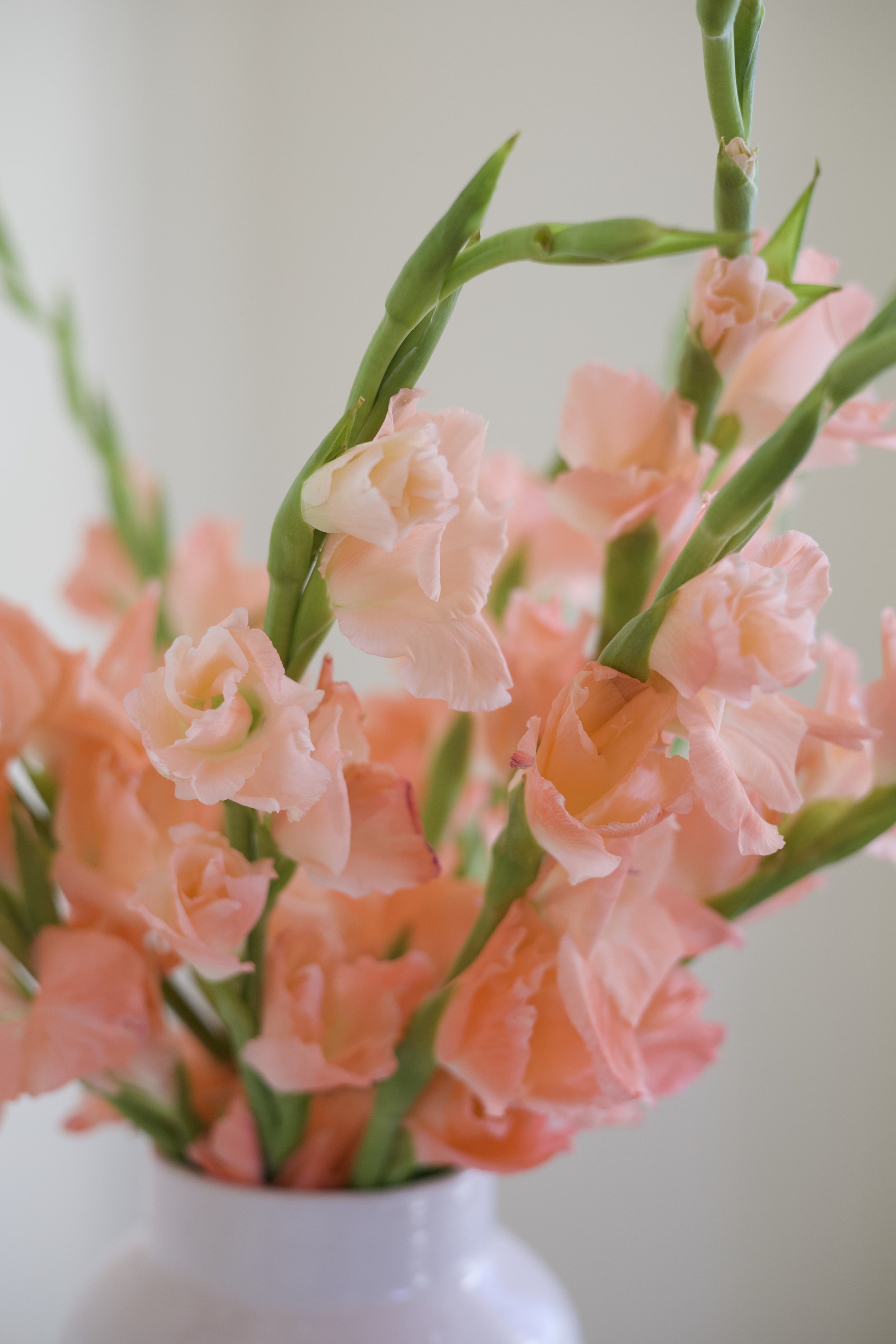
10 Bulbs per Order
Light Conditions: Sun
Days to Bloom: 75 - 80
Height: 50" – 60"
Hardiness Zone: 8 - 10

Unique double blooms cover tall stems of this snapdragon flower. This plant does well in cool temperatures of spring and fall but will bloom throughout the summer. Their tall stems add color to containers, gardens, and cut flower arrangements. Flowers attract a variety of pollinators and have a sweet scent.
Plant Height: 24-36”
Light Requirements: full sun
Soil Preference: average fertility and moist soil, pH 6-7
USDA Zones: 2-11 (annual)
How to Grow
Germination: 7-14 days at 70-75F, light required for germination
Seeding Depth: 1/8” depth
Plant Spacing: 6-9”
Days to Maturity: 100-120 days
Early-Season Seeding: Start seed indoors 6-8 weeks before the last frost date, transplant after the danger of frost has passed. Direct seeding is not recommended but can be done around the last frost date.
Late-Season Seeding: Start seed indoors at least 12 weeks before the first frost date.
Growing Tips: Pinching is not required for this crop and may delay blooming for a few weeks but will produce a bushier plant with more stems. Pinch the top growing point when the plant has at least 6 sets of leaves. Pinched plants require a spacing of at least 9”. Plants require horizontal trellising to support stems for cut flower production. Remove stems after they have bloomed and new stems will grow from the plant base.
Cut Flower: Harvest when the bottom 1/3 of the flowers are open for a vase-life of 7-10 days.

Seed Count: approximately 100 seeds
Types of Pollinators:
Bat, Beetle, Ant, Bee, Butterfly, Hummingbird, Moth, Wasp and Fly.

Zinnia elegans
Creamy white single flowers blooming summer through fall. This plant does well in warm temperatures and plants will branch out and become quite large if given enough water. Flowers attract a variety of pollinators. Their cheery flowers add color to containers, gardens, and cut flower arrangements.
Seed Count: approximately 50 seeds
Plant Height: 2-4’
Light Requirements: full sun
Soil Preference: average fertility and moist soil, pH 5.5-7.5
USDA Zones: 3-10 (annual)
How to Grow
Germination: 3-7 days at 70-85F, light required for germination
Seeding Depth: 1/4” depth
Plant Spacing: 9-12”
Days to Maturity: 60-80 days
Early-Season Seeding: Start seed indoors 4-6 weeks before the last frost date, transplant after the danger of frost has passed. Direct seeding is recommended after the last frost date.
Late-Season Seeding: Start seed indoors at least 12 weeks before the first frost date.
Growing Tips: Plants can be sown in successions every 2-3 weeks for continuous blooms. Pinching is not required for this crop but will encourage higher yields. Pinch plants when they are 8-12” by cutting out the top 2-4”. Plants require horizontal trellising to support stems for cut flower production. Avoid disturbing the roots when transplanting. Remove stems after they have bloomed to promote more flowering.
Cut Flower: Harvest when the stems are stiff and flowers are opened. Vase-life will last 7-10 days with preservative. Adding 1-2 drops of bleach to the water will keep it clean.
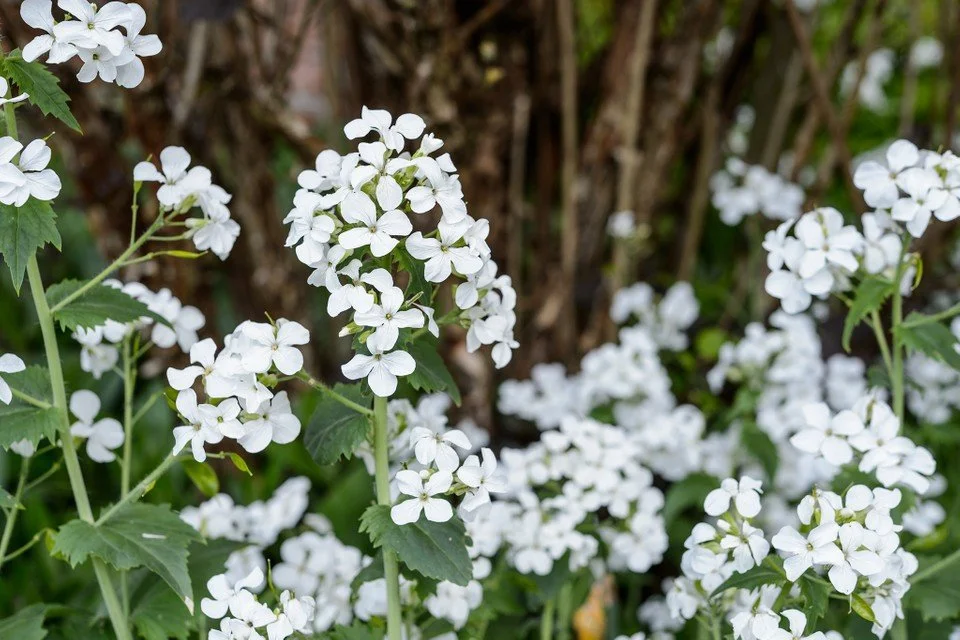
Plant Height: 4-6’
Light Requirements: full sun
Soil Preference: rich, well draining soil, pH 6.5-7.5
USDA Zones: 3-9 (perennial)
How to Grow
Germination: 14-28 days at 65-70F
Seeding Depth: 1/4”
Plant Spacing: 2-3’
Days to Maturity: Flowers in the second year
Early-Season Seeding: Start seed indoors 4-6 weeks before the last frost date, transplant after the danger of frost has passed. Direct seed outdoors after the last frost date or when soil temperature is above 60F.
Late-Season Seeding: Start seed indoors or direct seed outdoors at least 12 weeks before the first frost date.
Growing Tips: Delphinium requires support of the tall stems in windy locations to prevent them from breaking. Plants may need to be replanted every 3-5 as their vigor can decline with age. Cutting flowers back after they flower in summer may result in a second flush of blooms in the fall.
Cut Flower: Harvest when the bottom ⅓-½ of the blooms are open. Flower food will result in a vase-life of 7-10 days.
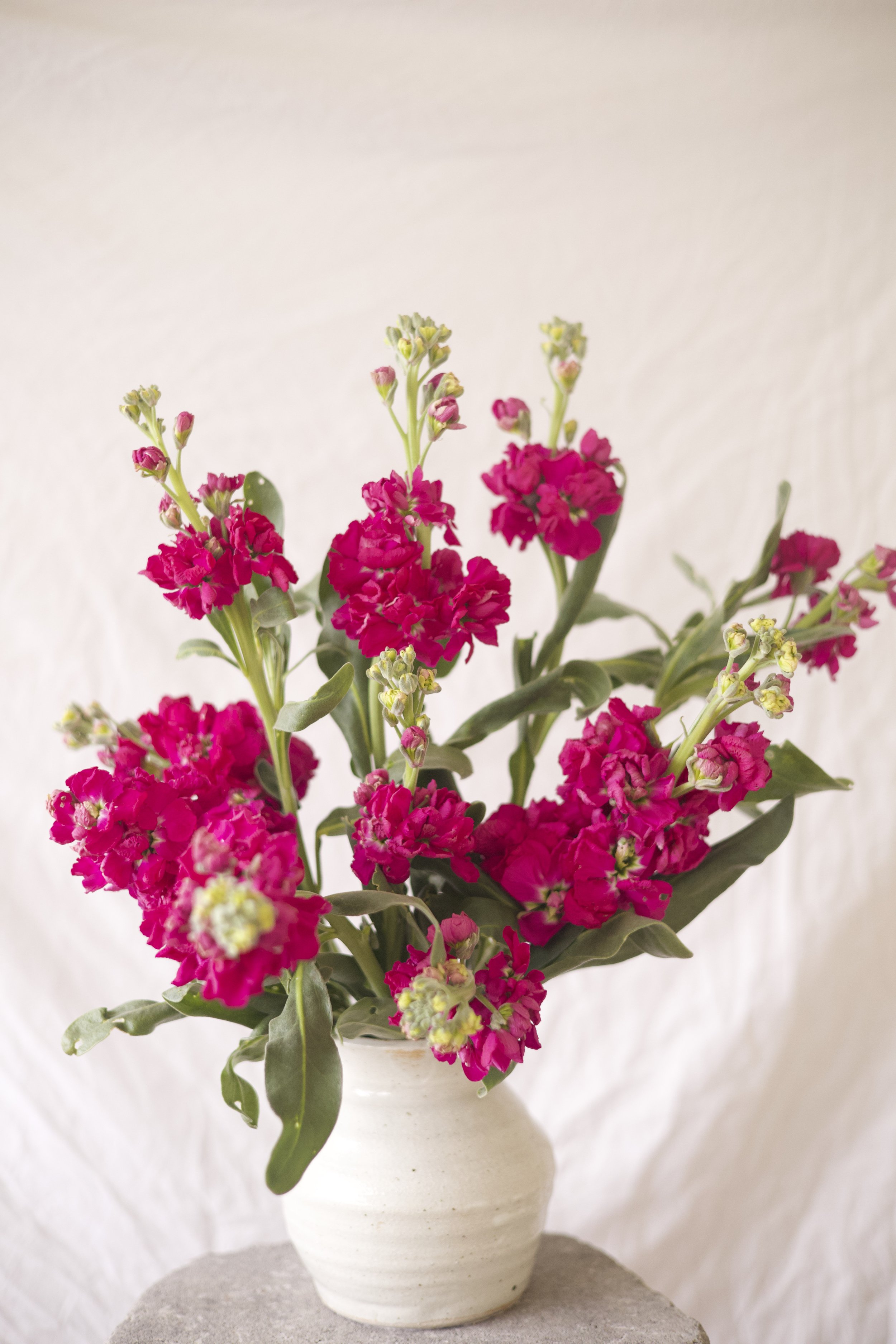
Matthiola incana
Stock Carmine is exceptional for early-spring and late-fall blooming. The tall stems add color to containers, gardens, and cut flower arrangements. Flowers attract a variety of pollinators and have a very sweet and spicy scent and are edible with a sweet clove flavor.
Seed Count: 75 Seeds
Plant Height: 24-32”
Light Requirements: full sun
Soil Preference: average fertility and moderate water conditions, pH 6-7
USDA Zones: 2-6 (annual), 7-10 (tender perennial)
How to Grow
Germination: 7-14 days at 60-75F, light required for germination
Seeding Depth: 1/4” depth
Plant Spacing: 6-9”
Days to Maturity: 90-100 days
Early-Season Seeding: Start seed indoors 5-6 weeks before the last frost date, transplant after the danger of frost has passed. Direct seed 3 weeks before the last frost date if moisture can be provided consistently.
Late-Season Seeding: Start seed indoors or direct seed outdoors at least 12 weeks before the first frost date.
Growing Tips: Succession planting is recommended to lengthen the harvest window. Plants will produce double or single flowers, if only double are desired then select plants when the first set of leaves have emerged. If the first two leaves are fused then plants produce single blooms. Unfused leaves typically produce double blooming flowers. It is recommended to harden off transplants before planting them outside. Pinching is not required for this crop and if the flower bud is pinched off they won’t flower.
Cut Flower: Harvest when 3-5 flower buds are open and remove a majority of the leaves for a vase-life of 8-10 days. Water and flower food will need to be replaced every few days for maximum vase-life.
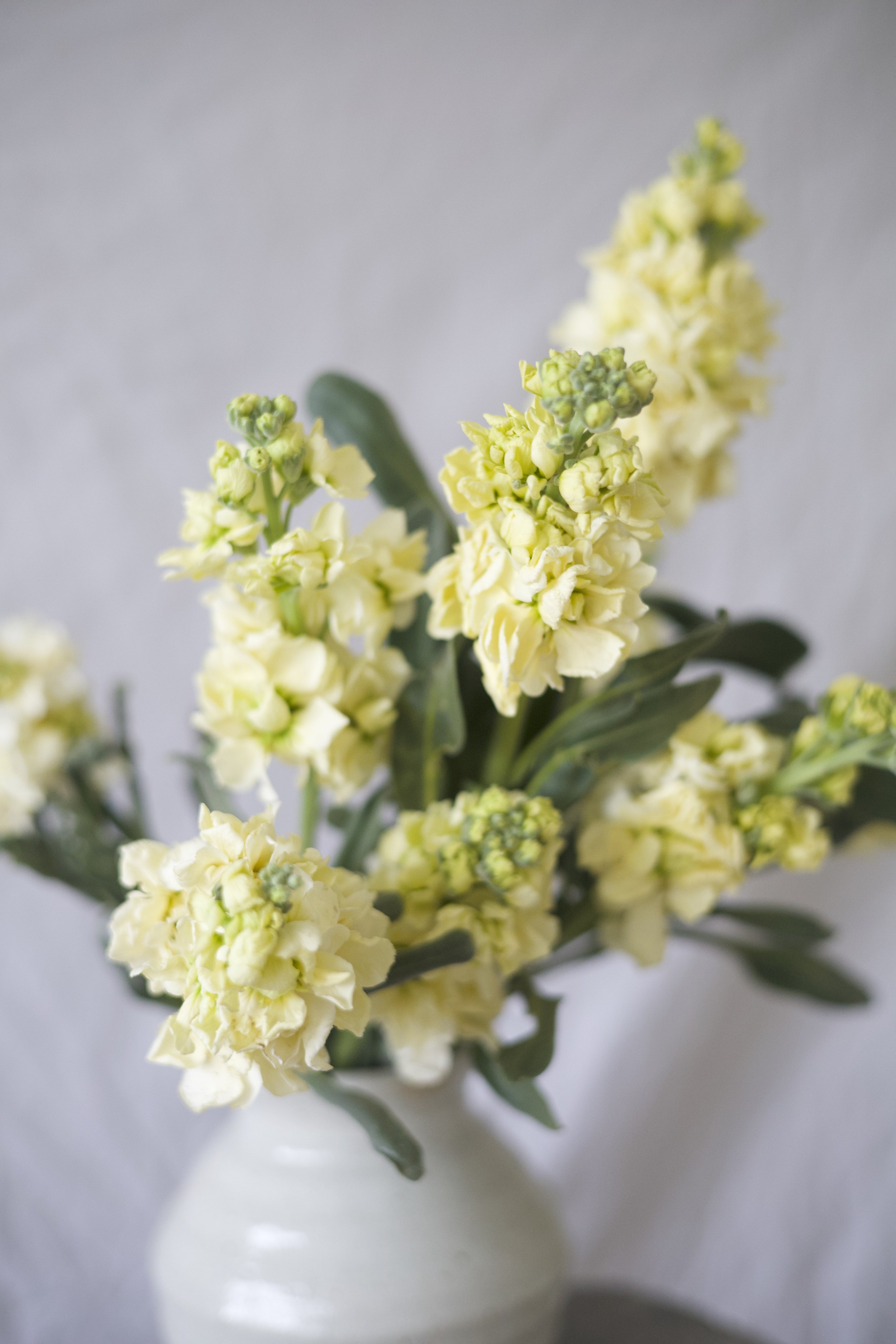
Matthiola incana
Lovely butter yellow double and single blooms, that are exceptional for early-spring and late-fall blooming. Their tall stems add color to containers, gardens, and cut flower arrangements. Flowers attract a variety of pollinators and have a very sweet and spicy scent and are edible with a sweet clove flavor.
Seed Count: approximately 75 seeds
Plant Height: 24-32”
Light Requirements: Full sun
Soil Preference: Average fertility and moderate water conditions, pH 6-7
USDA Zones: 2-6 (annual), 7-10 (tender perennial)
How to Grow
Germination: 7-14 days at 60-75F, light required for germination
Seeding Depth: 1/4” depth
Plant Spacing: 6-9”
Days to Maturity: 90-100 days
Early-Season Seeding: Start seed indoors 5-6 weeks before the last frost date, transplant after the danger of frost has passed. Direct seed 3 weeks before the last frost date if moisture can be provided consistently.
Late-Season Seeding: Start seed indoors or direct seed outdoors at least 12 weeks before the first frost date.
Growing Tips: Succession planting is recommended to lengthen the harvest window. Plants will produce double or single flowers, if only double are desired then select plants when the first set of leaves have emerged. If the first two leaves are fused then plants produce single blooms. Unfused leaves typically produce double blooming flowers. It is recommended to harden off transplants before planting them outside. Pinching is not required for this crop and if the flower bud is pinched off they won’t flower.
Cut Flower: Harvest when 3-5 flower buds are open and remove a majority of the leaves for a vase-life of 8-10 days. Water and flower food will need to be replaced every few days for maximum vase-life.
*Comes in a single packet or set.
Set of 6: Includes one of each color of stock including yellow

Matthiola incana
White double and single blooms, that are exceptional for early-spring and late-fall blooming. Their tall stems add color to containers, gardens, and cut flower arrangements. Flowers attract a variety of pollinators and have a very sweet and spicy scent and are edible with a sweet clove flavor.
Seed Count: 75 Seeds
Plant Height: 24-32”
Light Requirements: full sun
Soil Preference: average fertility and moderate water conditions, pH 6-7
USDA Zones: 2-6 (annual), 7-10 (tender perennial)
How to Grow
Germination: 7-14 days at 60-75F, light required for germination
Seeding Depth: 1/4” depth
Plant Spacing: 6-9”
Days to Maturity: 90-100 days
Early-Season Seeding: Start seed indoors 5-6 weeks before the last frost date, transplant after the danger of frost has passed. Direct seed 3 weeks before the last frost date if moisture can be provided consistently.
Late-Season Seeding: Start seed indoors or direct seed outdoors at least 12 weeks before the first frost date.
Growing Tips: Succession planting is recommended to lengthen the harvest window. Plants will produce double or single flowers, if only double are desired then select plants when the first set of leaves have emerged. If the first two leaves are fused then plants produce single blooms. Unfused leaves typically produce double blooming flowers. It is recommended to harden off transplants before planting them outside. Pinching is not required for this crop and if the flower bud is pinched off they won’t flower.
Cut Flower: Harvest when 3-5 flower buds are open and remove a majority of the leaves for a vase-life of 8-10 days. Water and flower food will need to be replaced every few days for maximum vase-life.
*Buy a Single Packet or a set:
Set of 3: Includes a packet each of White, pink, and apricot stock
Set of 6: Includes 6 colors of stock, including white
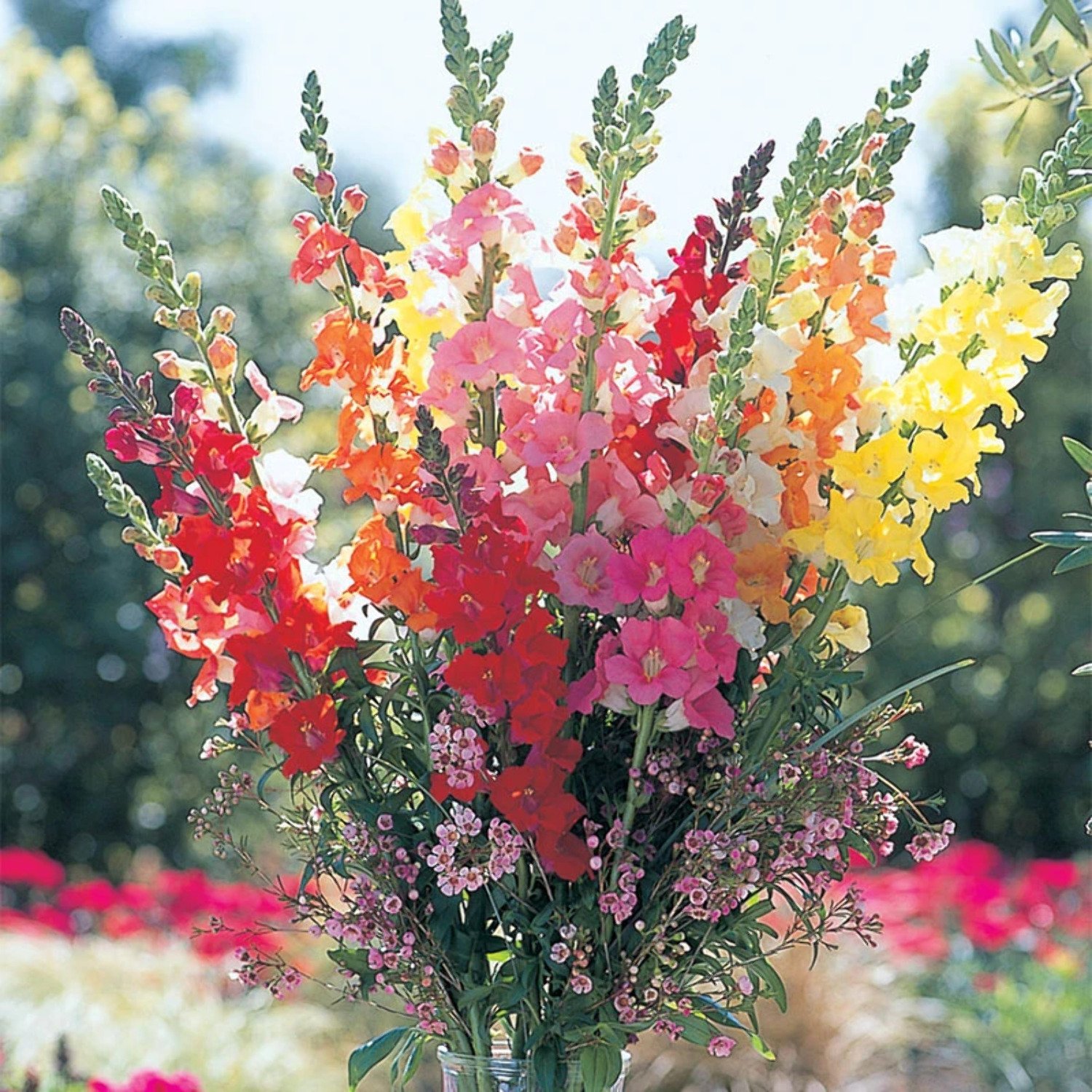
Plant Height: 8-10”
Light Requirements: Full sun
Soil Preference: Moist, well-draining soil
USDA Zones: 3-4 (annual), 5-9 (biennial)
How to Grow
Germination: 4-7 days at 60-70F
Seeding Depth: 1/8” depth, darkness is required for germination
Plant Spacing: 6”
Days to Maturity: 80-90 days
Early-Season Seeding: Start seeds indoors 8-12 weeks before the last spring frost date and transplant 2 weeks before the last spring frost. Direct seed after the danger of frost has passed.
Late-Season Seeding: Start seed indoors or direct seed outdoors at least 12 weeks before the first frost date. Direct seed outdoors in zones 5 and warmer in late-fall.
Growing Tips: Plants are cold tolerant and can be seeded or transplanted outdoors before the danger of spring frost has passed. Seeds are sown shallowly but require to be covered since darkness is needed for germination.
Cut Flower: Harvest when flowers are open and expect a vase-life of 5-7 days with flower food.
Delphinium cultorum
Delphinium are a striking addition to the garden and ‘Black Knight’ offers an exceptionally deep blue-violet hue with a dark black center. The tall stems add color and height to the back of gardens and can be used in floral arrangements. Plants attract a variety of pollinators and are deer resistant.
Plant Height: 4-6’
Light Requirements: full sun
Soil Preference: rich, well draining soil, pH 6.5-7.5
USDA Zones: 3-9 (perennial)
How to Grow
Germination: 14-28 days at 65-70F
Seeding Depth: 1/4”
Plant Spacing: 2-3’
Days to Maturity: Flowers in the second year
Early-Season Seeding: Start seed indoors 4-6 weeks before the last frost date, transplant after the danger of frost has passed. Direct seed outdoors after the last frost date or when soil temperature is above 60F.
Late-Season Seeding: Start seed indoors or direct seed outdoors at least 12 weeks before the first frost date.
Growing Tips: Delphinium requires support of the tall stems in windy locations to prevent them from breaking. Plants may need to be replanted every 3-5 as their vigor can decline with age. Cutting flowers back after they flower in summer may result in a second flush of blooms in the fall.
Cut Flower: Harvest when the bottom ⅓-½ of the blooms are open. Flower food will result in a vase-life of 7-10 days.
Photo by @northernlight_garden
Senecio cineraria
This mounded plant with velvety silver fern-like leaves is a beautiful addition to the garden or floral arrangements. It’s compact size is perfect for border and container plantings.
Plant Height: 8-12”
Light Requirements: full sun, partial shade
Soil Preference: average, well draining soil
USDA Zones: 3-7 (annual), 8-10 (tender perennial)
How to Grow
Germination: 7-14 days at 70-75F, light required for germination
Seeding Depth: 1/8” depth
Plant Spacing: 8-12”
Days to Maturity: 60-90 days
Early-Season Seeding: Starting seed indoors is recommended and should be done 10 weeks before the last frost and transplant after the danger of frost has passed. Direct seeding is not recommended but can be done outdoors after the danger of frost has passed.
Late-Season Seeding: Start seed indoors or direct seeding outdoors at least 10 weeks before the first frost date in fall.
Growing Tips: Watering from below will prevent seed disturbance. Remove flowers to encourage growth of foliage. Do not water plants from above since water can lead to disease. Mulching around plants will help them overwinter in warmer regions. Foliage can be harvested all year long and the more you harvest the leaves, the more they will grow.
Cut Flower: Harvest when plants are established, about 90 days after seeding. Harvest during the cooler part of the day in the morning or afternoon and place stems into water right away for 3 hours before arranging. Vase-life is 7-10 days.
Photo by @seths_succiejungle
Cynoglossum Amabile
These tiny flowers are not lost in your garden with their vivid blue coloring and heavy amount of blooms. This flower attracts a variety of pollinators while it blooms spring through summer and will freely self-sow in your garden. Delicate stems add a airy touch to cut flower arrangements.
Seed Count: approximately 100 seeds
Plant Height: 12-18”
Light Requirements: full sun, partial shade
Soil Preference: moderate fertility, well-draining soil, pH 6-7
USDA Zones: 3-10 (annual)
How to Grow
Germination: 14-21 days at 65-70F, requires darkness for germination
Seeding Depth: 1/4” depth
Plant Spacing: 9-12”
Days to Maturity: 80-120
Early-Season Seeding: Start seed indoors 6-8 weeks before the last frost date, transplant after the danger of frost has passed. Direct seeding outdoors is not recommended but can be attempted after the last frost date or when soil temperature is above 75F.
Late-Season Seeding: Start seed indoors or direct seeding outdoors at least 14 weeks before the first frost date in fall.
Growing Tips: All parts of this plant are poisonous to animals and humans. Bottom watering is helpful to prevent disturbing surface sown seeds or soil. Succession sowing twice, 3-4 weeks apart will lengthen the blooming time. Flowers will bloom for up to 6 weeks as long as you harvest them before they go to seed.
Cut Flower: Harvest when flowers are ¾ open for fresh use during the cooler parts of the day. Immediately after harvesting, place in water and allow it to rehydrate for a few hours before arranging. Forget me nots will last 5-7 days in a vase with flower food.
Cool Season
Godetia grandiflora
These unique blooms have a tissue paper appearance and come in salmon, coral color that is absolutely stunning. Tropical esque flowers bloom on a mounded plant that does well in garden beds, and container plantings. This particular Godetia has longer stems making it ideal for use in cut flower arrangements.
Plant Height: 18”
Light Requirements: full sun
Soil Preference: moist, well-draining soil, pH 6.6-7.3
USDA Zones: 3-7 (annual)
How to Grow
Germination: 21-28 days at 70F
Seeding Depth: 1/8” depth, light required for germination
Plant Spacing: 18-24”
Days to Maturity: 75-90 days
Early-Season Seeding: Starting seed indoors is not recommended but can be done 6-8 weeks before the last frost date, transplant after the danger of frost has passed. Direct seed outdoors after the last frost date or when soil temperature is above 70F.
Late-Season Seeding: Direct seed outdoors at least 10 weeks before the first frost in fall.
Growing Tips: Below tray watering is recommended for these shallow sown seeds to prevent disturbance. Seeds can be sown in 2-3 successions to lengthen the time they flower in the garden. Pinch plants when they are about 6” tall for a bushier plant and more flowers. Remove flowers before they set seed to lengthen the blooming time.
Cut Flower: Harvest when the first few flowers have opened on the stem. Expect a vase-life of 7 days with flowers opening up at different times along the stem.
Gomphrena globosa
These unique deep-magenta blooms have a pompom appearance similar to a clover flower. Gomphrena is heat tolerant, making it ideal for late-summer blooming and flowering in warmer climates. This bright annual flower will add color when planted in mass within your garden beds. They can also be planted in containers, attracting a variety of pollinators. Gomphrena makes an excellent flower for fresh or dried arrangements with a long vase-life and excellent color retention.
Seed Count: approximately 50 seeds
Plant Height: 18-30”
Light Requir-ements: full sun
Soil Preference: well-draining soil
USDA Zones: 3-11 (annual)
How to Grow
Germination: 5-14 days at 70-80F
Seeding Depth: 1/8” depth
Plant Spacing: 6-9”
Days to Maturity: 85-110 days
Early-Season Seeding: Start seed indoors 4-6 weeks before the last frost date, transplant after the danger of frost has passed. Direct seeding outdoors is not recommended but can be done after the last frost date or when soil temperature is above 70F.
Late-Season Seeding: Start indoors and transplant outdoors at least 16 weeks before the first frost in fall.
Growing Tips: Plants do not require pinching to be multi-branched. Remove spent flowers before they go to seed to encourage more flowering.
Cut Flower: Harvest when flowers begin to have color but are not fully open and expect a vase-life of 10-14 days with flower food. For drying, harvest when flowers are fully open and hang upside down for about 3 weeks in a cool, dry place.
Photo by @theperfectpick
Gomphrena globosa
These unique rosy-pink blooms have a pompom appearance similar to a clover flower. Gomphrena is heat tolerant, making it ideal for late-summer blooming and flowering in warmer climates. This bright annual flower will add color when planted in mass within your garden beds. They can also be planted in containers, attracting a variety of pollinators. Gomphrena makes an excellent flower for fresh or dried arrangements with a long vase-life and excellent color retention.
Seed Count: approximately 50 seeds
Plant Height: 18-30”
Light Requir-ements: full sun
Soil Preference: well-draining soil
USDA Zones: 3-11 (annual)
How to Grow
Germination: 5-14 days at 70-80F
Seeding Depth: 1/8” depth
Plant Spacing: 6-9”
Days to Maturity: 85-110 days
Early-Season Seeding: Start seed indoors 4-6 weeks before the last frost date, transplant after the danger of frost has passed. Direct seeding outdoors is not recommended but can be done after the last frost date or when soil temperature is above 70F.
Late-Season Seeding: Start indoors and transplant outdoors at least 16 weeks before the first frost in fall.
Growing Tips: Plants do not require pinching to be multi-branched. Remove spent flowers before they go to seed to encourage more flowering.
Cut Flower: Harvest when flowers begin to have color but are not fully open and expect a vase-life of 10-14 days with flower food. For drying, harvest when flowers are fully open and hang upside down for about 3 weeks in a cool, dry place.
Warm Season
Desmanthus Illinoensis
This unique plant has puffy white flowers which turn into woody seed heads that really stand out on the fine, feathery green foliage. Feathery leaves will fold when touched similar to a mimosa or sensitive plant. This plant is also a workhouse in the garden since it is considered a legume which fixates nitrogen in the soil making it available for other plants. This plant can reseed and will germinate
Plant Height: 2-4’
Light Requirements: full sun, partial shade
Soil Preference: sandy, well-draining soil, pH 6.5-7.5
USDA Zones: 3-9 (perennial)
How to Grow
Germination: 7-21 days at 65-70F
Seeding Depth: 1/4-1/2” depth
Plant Spacing: 1-2’
Days to Maturity: may bloom the first year but typically blooms the second year
Early-Season Seeding: Direct seed outdoors after the last frost date or when soil temperature is above 65F.
Late-Season Seeding: Direct seed outdoors in early-fall before frost.
Growing Tips: Bundle flowers are often grown as a range land crop so it may attract deer but can tolerate heavy feeding which will may it grow back. Seeds will fall and reseed on their own. Leaves will curl in when touched but avoid doing this too often as it can stress the plant and effect growth.

Lupinus polyphyllus
Heirloom lupine seeds come in a range of colors including cream, pink, purple, and blue. Masses of petals bloom on tall spikes begin to bloom in June and the blooms last for no more than 3 weeks. Stiff stems add height to gardens or floral arrangements. Flowers attract a variety of pollinators, and readily reseed.
Seed Count: approximately 25 seeds
Plant Height: 12-24”
Light Requirements: full sun, partial shade
Soil Preference: rich, moist, well-draining soil
USDA Zones: 3-9 (perennial)
How to Grow
Germination: 14-21 days at 65-75F
Seeding Depth: 1/4” depth, darkness aids germination, scarify and soak seeds
Plant Spacing: 12-14”
Days to Maturity: 365 days
Early-Season Seeding: Starting seeds indoors 4-8 weeks before planting out. Plant outdoors after the danger of frost has passed. Direct seed in early-spring as soon as soil can be worked.
Late-Season Seeding: Direct seed in early fall.
Growing Tips: The seed must be scarified (scratched) and then soaked for 24 hours to enhance germination. Do not wait to transplant as roots do not tolerate being transplanted. Plants can develop powdery mildew in late summer after blooming and can be trimmed back. Remove flowers after blooming to prevent re-seeding.
Cut Flower: Harvest when 80% of the florets on a stem are open. Allowing flowers to be open for too long and pollinated by bees will cause a shorter vase-life.
Photo by @shroom_momma

Trapaeolum minus
Choose between Empress of India or Alaska Mix. ‘Alaska mix’ produces yellow, orange, salmon, and red flowers that stand out on the lily pad shaped leaves. The foliage is enough to make this plant stand out with a splotchy striped look of green shades. This partial climbing plant can be guided up a trellis or left to mound in the garden. It works well with container plantings, attracting pollinators and repelling deer. This plant is not only beautiful in flower arrangements but is also edible. Peppery tasting leaves and mildly sweet flowers add zip and color to your salads.
Seed Count: approximately 15 seeds
Plant Height: 1-5’
Light Requirements: full sun, part shade
Soil Preference: rich, moist, well-draining soil, pH 6-8
USDA Zones: 2-8 (annual), 9-11 (perennial)
How to Grow
Germination: 7-14 days at 60-65F, gently rub seed with nail file to soften seed coat
Seeding Depth: 1/2-1” depth, require darkness for germination
Plant Spacing: 6-12”
Days to Maturity: 60-70
Early-Season Seeding: Start seed indoors 3-4 weeks before the last frost date, transplant after the danger of frost has passed. Direct seeding is recommended. Sow around the last frost date.
Late-Season Seeding: Start seeds indoors or direct seed outdoors at least 10 weeks before your first fall frost date.
Growing Tips: Planting in partial shade or adding high nitrogen levels will limit flower production. Plants don’t transplant well so if starting inside use containers that can degrade in the soil such as peat pots to prevent root disruption. Nasturtium are susceptible to aphids and can be used as a ‘trap plant’ in your vegetable garden.
Cut Flower: Nasturtiums are used for both their leaves and flowers in arrangements. Flowers will last the longest if you harvest them right when they begin to open. The foliage is ready to be harvested when leaves become firm to touch. The vase life is typically 7-10 days, but flower food can often extend that life.
Edible: Leaves can be harvested anytime but flowers should be harvested after they have fully opened.
Photo by @buttenshawbackyardfarm

Seed Count: Approximately 15 seeds
Days to Maturity: 60
Plant Height: 12
Plant Spacing: 6-8
Plant Depth: 1/2
Germination Time: 10-14 Days
Light: Sun
How to Grow:
A month before the last frost, start seeds indoors in pots. Transplant out when frost danger has passed. Make sure the weather is warm before you take them outside; these flowers are very sensitive to the cold. Provide opportunity for the vines to climb.
Harvesting/Vase Life:
Flowers will last the longest if you harvest them right when they begin to open. The foliage is ready to be harvested when leaves become firm to touch. The vase life is typically 7-10 days, but flower food can often extend that life.
Photo by @chelly__bee
Celosia spicata
Beautiful rosy-pink florets that fade to silver-pink after setting seed. Bright green stems and floral spike adds a unique texture to your garden or floral arrangements. Celosia thrives in warm temperatures to provide color summer through early-fall attracting a variety of pollinators.
Seed Count: approximately 100 seeds
Plant Height: 30-40”
Light Requirements: full sun
Soil Preference: well draining soil, keep soil evenly moist, pH 6.5-7.5
USDA Zones: 3-9 (annual), 10-11 (perennial)
How to Grow
Germination: 7-10 days at 68-80F
Seeding Depth: 1/8” depth, lightly cover seed with soil, light required for germination
Plant Spacing: 12-18”
Days to Maturity: 80-120 days
Early-Season Seeding: Start seed indoors 4-6 weeks before the last frost date, transplant after the danger of frost has passed. Direct seed outdoors 2 weeks after the last frost date or when soil temperature is above 65F.
Late-Season Seeding: Start seed indoors or direct seed outdoors at least 16 weeks before the last frost date.
Growing Tips: Pinching out the growing point when the plant is 6-10” tall will promote branching but is not necessary for this variety. Trellis may be required for support. Provide consistent watering to avoid premature flowering. Remove stems that have gone to seed to promote more blooms.
Cut Flower: Pinching plants will result in thinner stems which are more optimal for floral arranging. Harvest before the flower starts setting seed. Vase life up to 14 days with flower food. Can be dried after harvest by removing all of the foliage and hanging upside down in a dark, dry place for up to 3 weeks.
Warm Season