
DAHLIAS
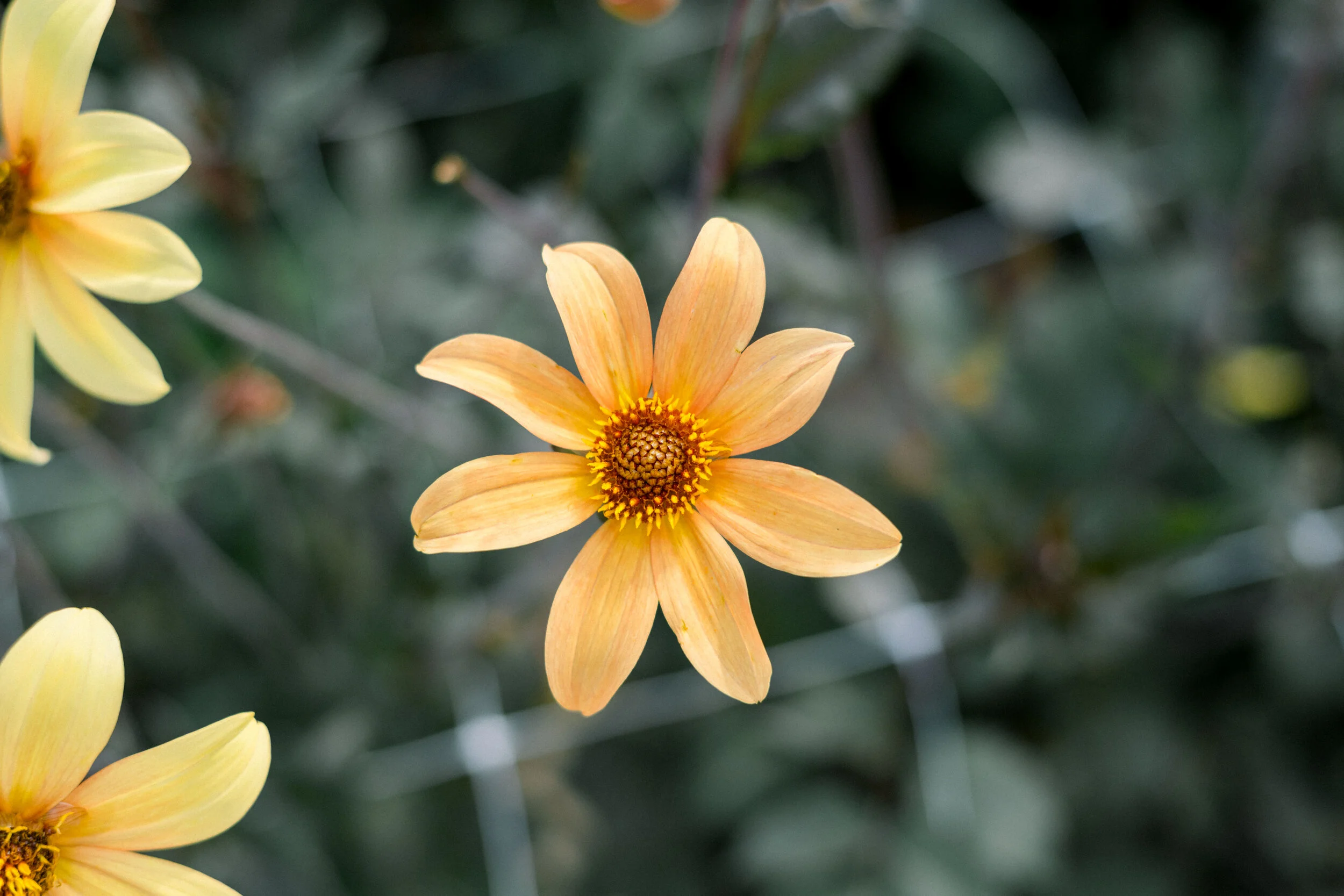
These bright dahlias have a single row of yellow-orange petals that contrast against the burgundy and deep-green leaves and stems. Flowers attract a variety of pollinators when in full bloom. Plants are compact for dahlias so they are ideal in border garden plantings, but are also an excellent addition to your cutting garden.
Flower Type: Peony
Plant Height: 2-3’
Flower Diameter: 2-6”
Light Requirements: full sun, part sun
Soil Preference: well-draining soil
USDA Zones: 2-7 (annual), 8-11 (perennial)
Days to Maturity: 80-100 days
How to Grow
Planting Depth: 1-2” (sprouting inside), 4-6” depth (outside)
Plant Spacing: 12-18”
When to plant: Sprout tuber indoors 4-6 weeks before the last frost date, transplant after the danger of frost has passed. Plant tubers directly outdoors after the danger of frost has passed.
Growing Tips: Tubers rot easily so avoid giving them too much water until the plant has begun to sprout (2-3 weeks after planting). Pinch top of stem when plants are 10-12” to promote branching. Add compost or fertilizer to soil before planting, or fertilize every 3-4 weeks with a well-balanced fertilizer after growth is visible. Trellis or staking is recommended to keep plants upright.
Cut Flower: Flowers can be harvested when petals are 3/4 open. Sear stems in 160-170F water or use a hydrating product to achieve 5-7 day vase-life.
Storing and Dividing Tubers: After frost has turned the top growth brown, cut the stem back a few inches above the soil. Then carefully dig carefully around the roots and rinse off excess dirt from and remove any tubers that may be rotting or damaged. Allow tubers to dry for several weeks allowing the roots to develop a slight wrinkled appearance before placing them in storage following the same storage procedures as above. Tubers can be divided in spring by cutting the tuber root segments apart with a sharp knife, making sure each has at least one visible eye (bud). Tubers can then be planted.
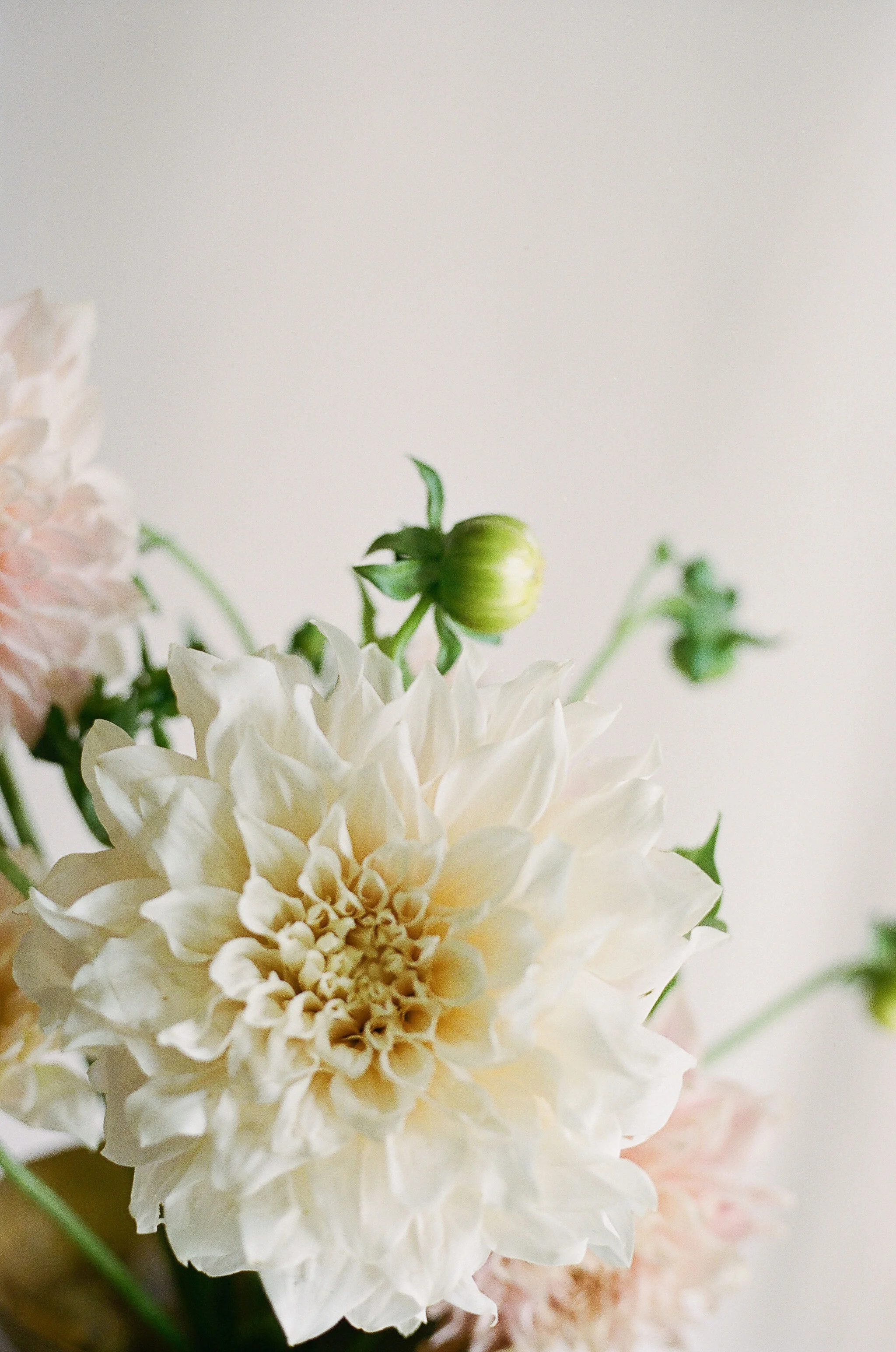
There’s a reason it’s the most sought after dahlia on the market. From creamy white to pale lavender and perky peach, if you’re planning a wedding arrangement, you’ll definitely want to take these blooms into consideration. They bloom in a wide array of pinks and add a gentle touch to any arrangement.
Flower Type: Dinner plate
Plant Height: 3-4’
Flower Diameter: 6-8”
Light Requirements: full sun, part sun
Soil Preference: well-draining soil
USDA Zones: 2-7 (annual), 8-11 (perennial)
Days to Maturity: 80-100 days
How to Grow
Planting Depth: 1-2” (sprouting inside), 4-6” depth (outside)
Plant Spacing: 12-18”
When to plant: Sprout tuber indoors 4-6 weeks before the last frost date, transplant after the danger of frost has passed. Plant tubers directly outdoors after the danger of frost has passed.
Growing Tips: Tubers rot easily so avoid giving them too much water until the plant has begun to sprout (2-3 weeks after planting). Pinch top of stem when plants are 10-12” to promote branching. Add compost or fertilizer to soil before planting, or fertilize every 3-4 weeks with a well-balanced fertilizer after growth is visible. Trellis or staking is recommended to keep plants upright.
Cut Flower: Flowers can be harvested when petals are 3/4 open. Sear stems in 160-170F water or use a hydrating product to achieve 5-7 day vase-life.
Storing and Dividing Tubers: After frost has turned the top growth brown, cut the stem back a few inches above the soil. Then carefully dig carefully around the roots and rinse off excess dirt from and remove any tubers that may be rotting or damaged. Allow tubers to dry for several weeks allowing the roots to develop a slight wrinkled appearance before placing them in storage following the same storage procedures as above. Tubers can be divided in spring by cutting the tuber root segments apart with a sharp knife, making sure each has at least one visible eye (bud). Tubers can then be planted.
photo by @urbanveggiepatch and @vikingflowerpatch and @wildryefarm and @hellobardeaux
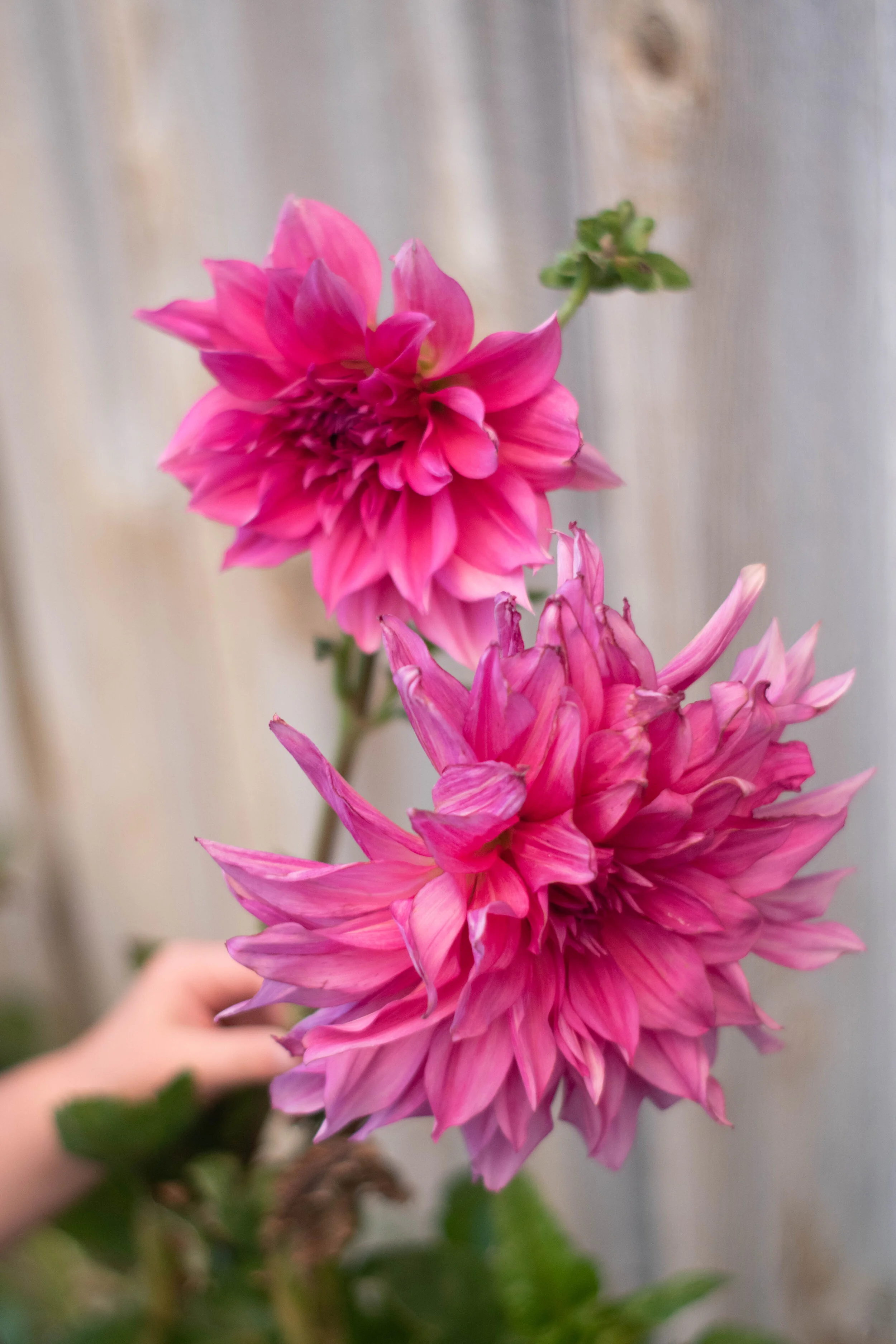
This rosey pink variation of the ever popular ‘Café au Lait’ is dark towards the center but fades to a pale-pink, nearly white color towards the tips of the blooms. The smaller dinnerplate dahlia size is ideal in floral arrangements but is still large enough to demand your attention in the garden.
Flower Type: Dinner plate
Plant Height: 3-4’
Flower Diameter: 6-8”
Light Requirements: full sun, part sun
Soil Preference: well-draining soil
USDA Zones: 2-7 (annual), 8-11 (perennial)
Days to Maturity: 80-100 days
How to Grow
Planting Depth: 1-2” (sprouting inside), 4-6” depth (outside)
Plant Spacing: 12-18”
When to plant: Sprout tuber indoors 4-6 weeks before the last frost date, transplant after the danger of frost has passed. Plant tubers directly outdoors after the danger of frost has passed.
Growing Tips: Tubers rot easily so avoid giving them too much water until the plant has begun to sprout (2-3 weeks after planting). Pinch top of stem when plants are 10-12” to promote branching. Add compost or fertilizer to soil before planting, or fertilize every 3-4 weeks with a well-balanced fertilizer after growth is visible. Trellis or staking is recommended to keep plants upright.
Cut Flower: Flowers can be harvested when petals are 3/4 open. Sear stems in 160-170F water or use a hydrating product to achieve 5-7 day vase-life.
Storing and Dividing Tubers: After frost has turned the top growth brown, cut the stem back a few inches above the soil. Then carefully dig carefully around the roots and rinse off excess dirt from and remove any tubers that may be rotting or damaged. Allow tubers to dry for several weeks allowing the roots to develop a slight wrinkled appearance before placing them in storage following the same storage procedures as above. Tubers can be divided in spring by cutting the tuber root segments apart with a sharp knife, making sure each has at least one visible eye (bud). Tubers can then be planted.'
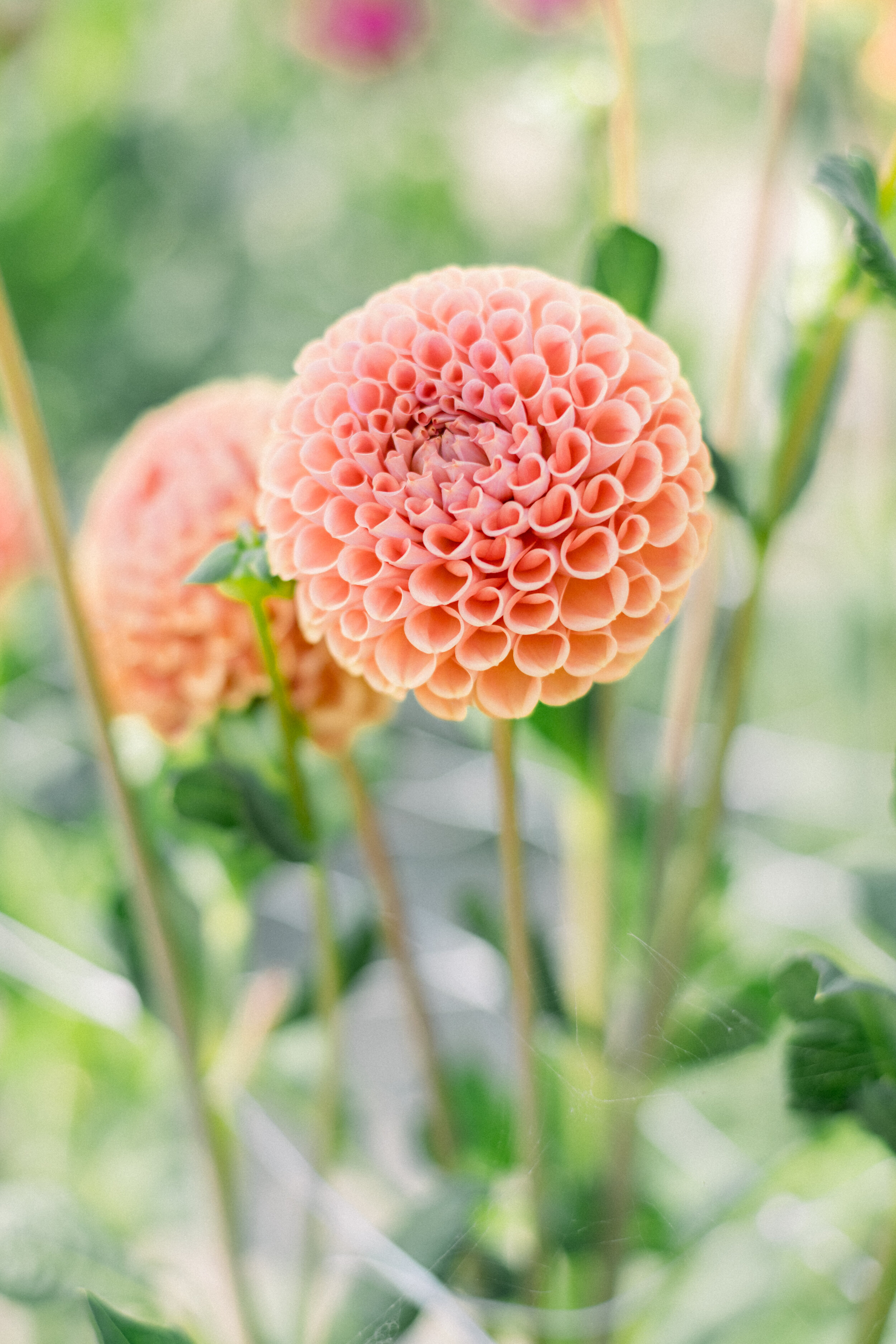
Bronze colored petals with touches of orange and pink are curved forming a perfect ball shape. The small size and long stems of these flowers make them suitable for garden plantings and in cut flower arrangements.
Flower Type: Ball
Plant Height: 3-4’
Flower Diameter: 4”
Light Requirements: full sun, part sun
Soil Preference: well-draining soil
USDA Zones: 2-7 (annual), 8-11 (perennial)
Days to Maturity: 80-100 days
How to Grow
Planting Depth: 1-2” (sprouting inside), 4-6” depth (outside)
Plant Spacing: 12-18”
When to plant: Sprout tuber indoors 4-6 weeks before the last frost date, transplant after the danger of frost has passed. Plant tubers directly outdoors after the danger of frost has passed.
Growing Tips: Tubers rot easily so avoid giving them too much water until the plant has begun to sprout (2-3 weeks after planting). Pinch top of stem when plants are 10-12” to promote branching. Add compost or fertilizer to soil before planting, or fertilize every 3-4 weeks with a well-balanced fertilizer after growth is visible. Trellis or staking is recommended to keep plants upright.
Cut Flower: Flowers can be harvested when petals are 3/4 open. Sear stems in 160-170F water or use a hydrating product to achieve 5-7 day vase-life.
Storing and Dividing Tubers: After frost has turned the top growth brown, cut the stem back a few inches above the soil. Then carefully dig carefully around the roots and rinse off excess dirt from and remove any tubers that may be rotting or damaged. Allow tubers to dry for several weeks allowing the roots to develop a slight wrinkled appearance before placing them in storage following the same storage procedures as above. Tubers can be divided in spring by cutting the tuber root segments apart with a sharp knife, making sure each has at least one visible eye (bud). Tubers can then be planted.
photo by @melindasgardenlove and @dahliasbyvanessa
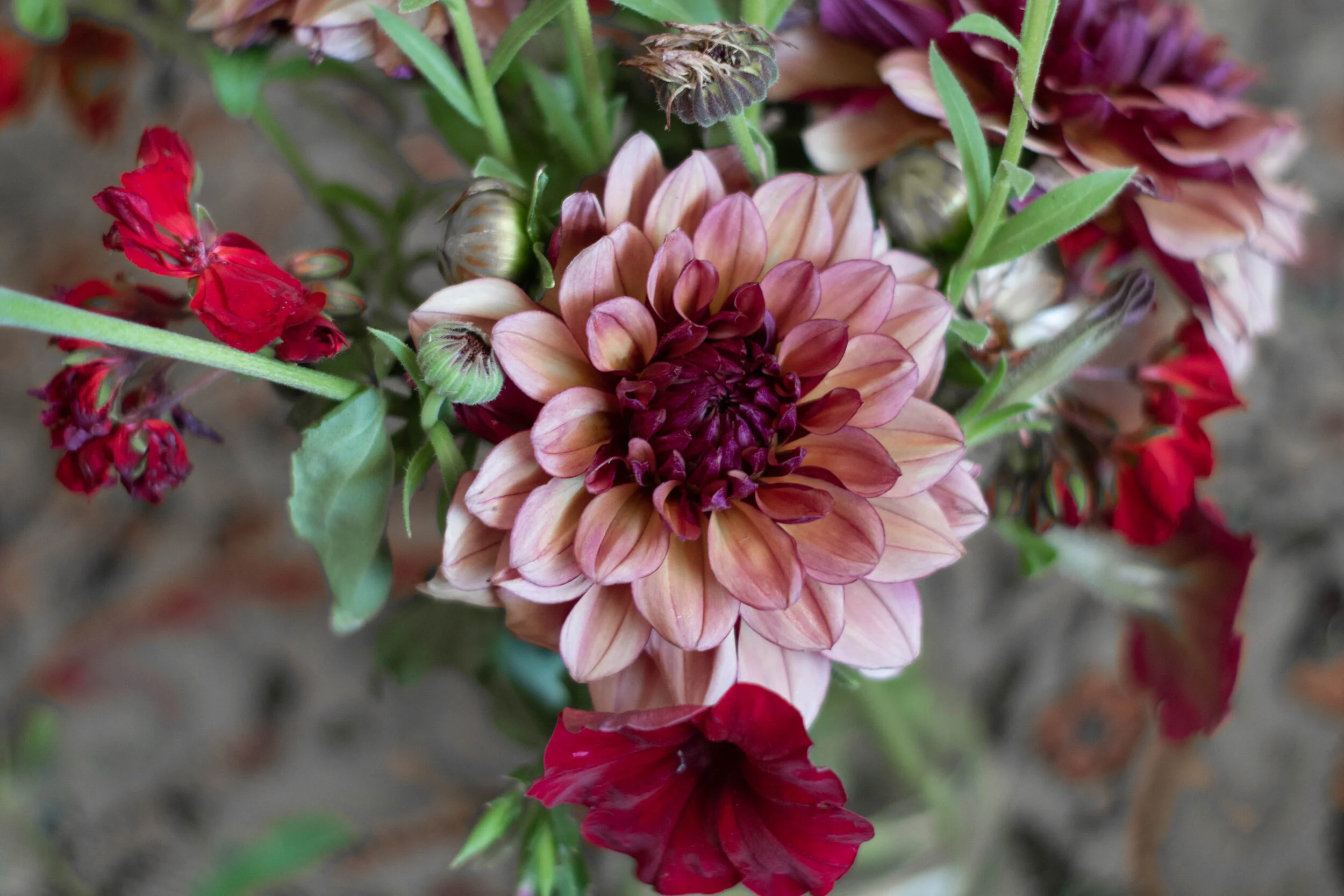
Petals are pale peach with raspberry tones on the underside. This bi-color on the petals is eye-catching and the flowers are small enough to blend into a landscape and can also be worked into floral arrangements.
Flower Type: Informal decorative
Plant Height: 3-4’
Flower Diameter: 4-6”
Light Requirements: full sun, part sun
Soil Preference: well-draining soil
USDA Zones: 2-7 (annual), 8-11 (perennial)
Days to Maturity: 80-100 days
How to Grow
Planting Depth: 1-2” (sprouting inside), 4-6” depth (outside)
Plant Spacing: 12-18”
When to plant: Sprout tuber indoors 4-6 weeks before the last frost date, transplant after the danger of frost has passed. Plant tubers directly outdoors after the danger of frost has passed.
Growing Tips: Tubers rot easily so avoid giving them too much water until the plant has begun to sprout (2-3 weeks after planting). Pinch top of stem when plants are 10-12” to promote branching. Add compost or fertilizer to soil before planting, or fertilize every 3-4 weeks with a well-balanced fertilizer after growth is visible. Trellis or staking is recommended to keep plants upright.
Cut Flower: Flowers can be harvested when petals are 3/4 open. Sear stems in 160-170F water or use a hydrating product to achieve 5-7 day vase-life.
Storing and Dividing Tubers: After frost has turned the top growth brown, cut the stem back a few inches above the soil. Then carefully dig carefully around the roots and rinse off excess dirt from and remove any tubers that may be rotting or damaged. Allow tubers to dry for several weeks allowing the roots to develop a slight wrinkled appearance before placing them in storage following the same storage procedures as above. Tubers can be divided in spring by cutting the tuber root segments apart with a sharp knife, making sure each has at least one visible eye (bud). Tubers can then be planted.
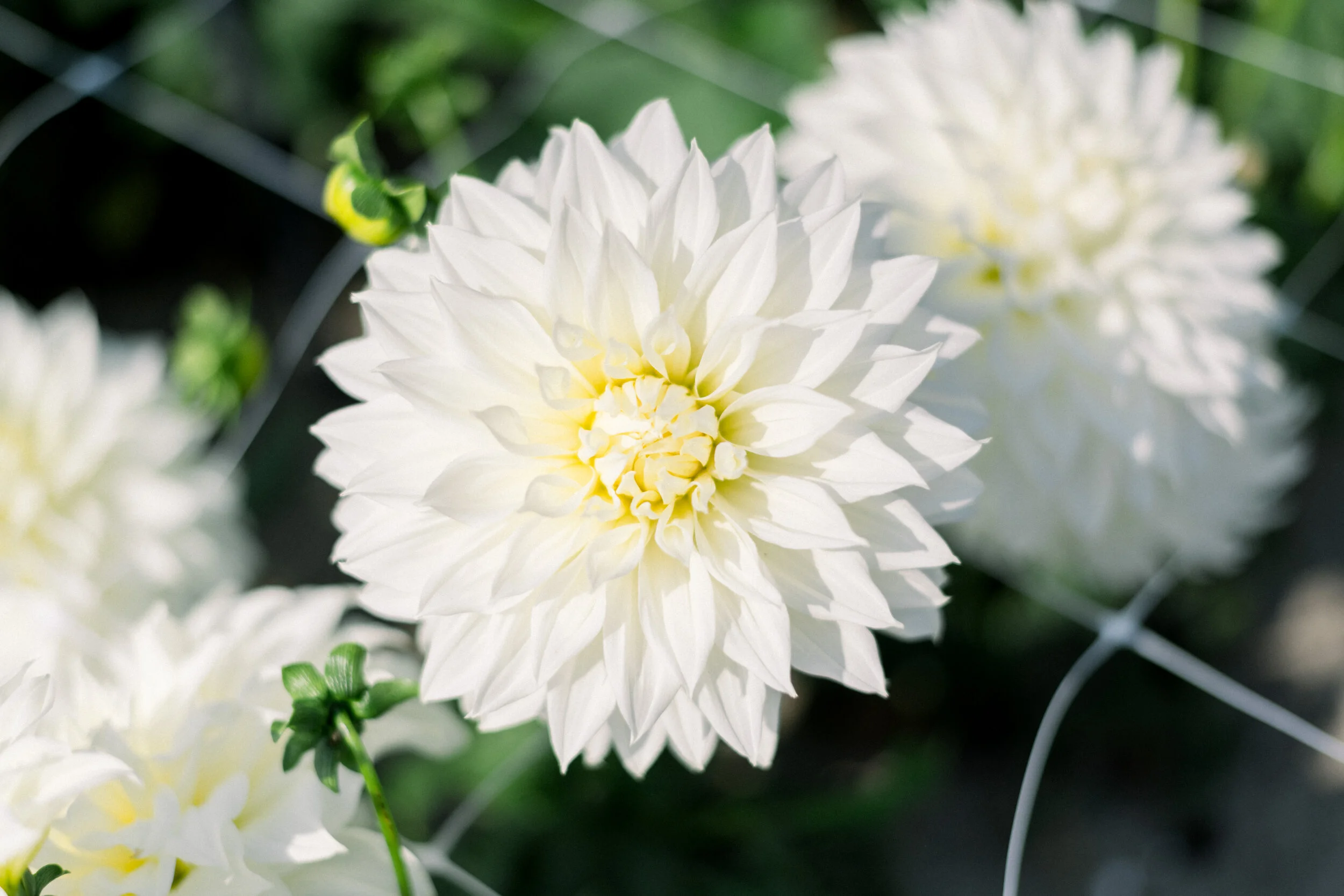
Crisp white blooms with sharp petals stand tall on thick stems in the garden and are focal flowers in arrangements. These flowers with their cream toned centers are the showcase of summer gardens and bouquets.
Flower Type: Informal decorative
Plant Height: 4-5’
Flower Diameter: 8-10”
Light Requirements: full sun, part sun
Soil Preference: well-draining soil
USDA Zones: 2-7 (annual), 8-11 (perennial)
Days to Maturity: 80-100 days
How to Grow
Planting Depth: 1-2” (sprouting inside), 4-6” depth (outside)
Plant Spacing: 12-18”
When to plant: Sprout tuber indoors 4-6 weeks before the last frost date, transplant after the danger of frost has passed. Plant tubers directly outdoors after the danger of frost has passed.
Growing Tips: Tubers rot easily so avoid giving them too much water until the plant has begun to sprout (2-3 weeks after planting). Pinch top of stem when plants are 10-12” to promote branching. Add compost or fertilizer to soil before planting, or fertilize every 3-4 weeks with a well-balanced fertilizer after growth is visible. Trellis or staking is recommended to keep plants upright.
Cut Flower: Flowers can be harvested when petals are 3/4 open. Sear stems in 160-170F water or use a hydrating product to achieve 5-7 day vase-life.
Storing and Dividing Tubers: After frost has turned the top growth brown, cut the stem back a few inches above the soil. Then carefully dig carefully around the roots and rinse off excess dirt from and remove any tubers that may be rotting or damaged. Allow tubers to dry for several weeks allowing the roots to develop a slight wrinkled appearance before placing them in storage following the same storage procedures as above. Tubers can be divided in spring by cutting the tuber root segments apart with a sharp knife, making sure each has at least one visible eye (bud). Tubers can then be planted.
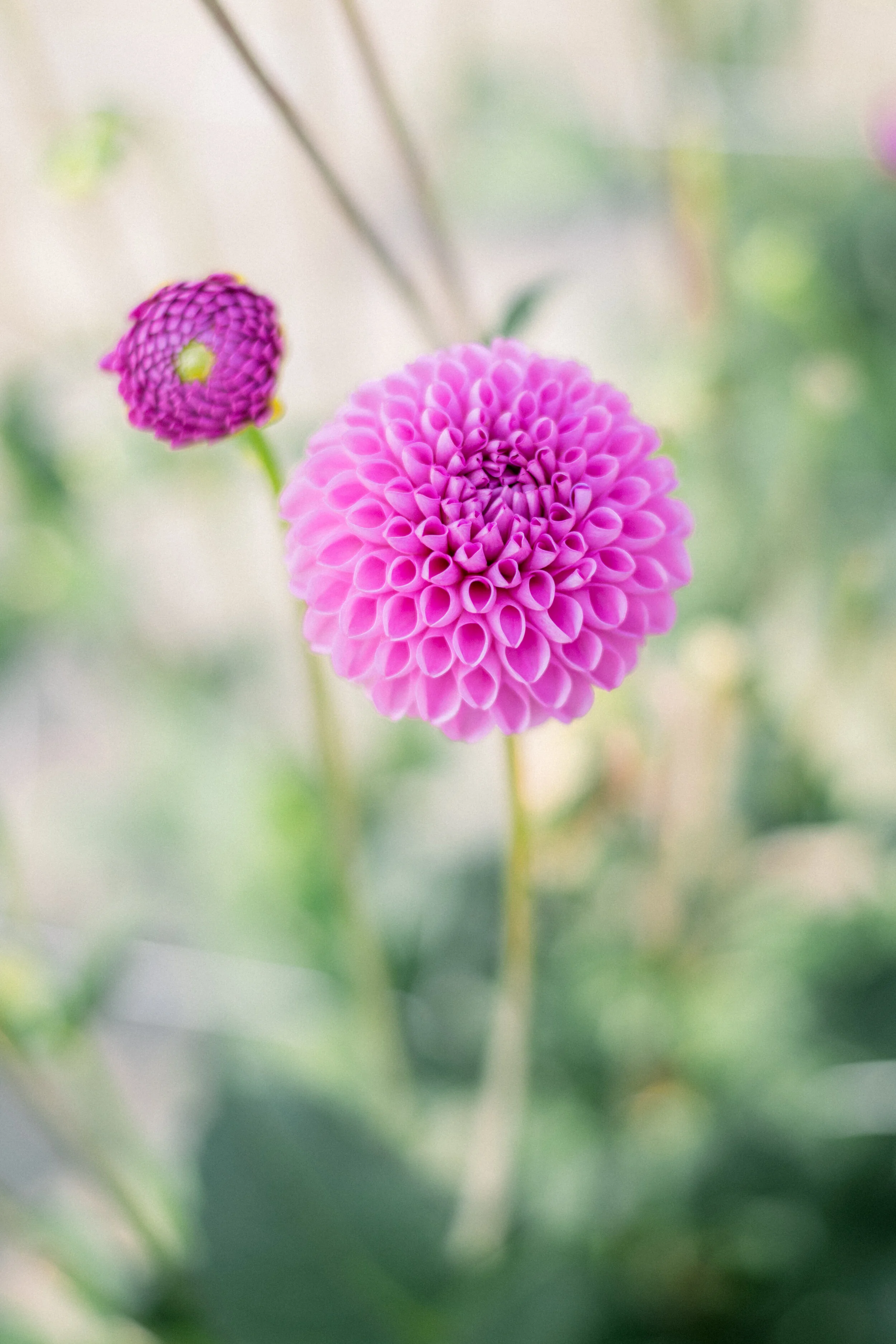
Dozens of magenta petals with a touch of blue align perfectly to create an adorable pompon appearance with a bright yellow center once they are fully open. Although these flowers are smaller they pack a mighty punch in color and shape to your garden beds and floral arrangements.
Flower Type: Pompon
Plant Height: 2-4’
Flower Diameter: 1-2”
Light Requirements: full sun, part sun
Soil Preference: well-draining soil
USDA Zones: 2-7 (annual), 8-11 (perennial)
Days to Maturity: 80-100 days
How to Grow
Planting Depth: 1-2” (sprouting inside), 4-6” depth (outside)
Plant Spacing: 12-18”
When to plant: Sprout tuber indoors 4-6 weeks before the last frost date, transplant after the danger of frost has passed. Plant tubers directly outdoors after the danger of frost has passed.
Growing Tips: Tubers rot easily so avoid giving them too much water until the plant has begun to sprout (2-3 weeks after planting). Pinch top of stem when plants are 10-12” to promote branching. Add compost or fertilizer to soil before planting, or fertilize every 3-4 weeks with a well-balanced fertilizer after growth is visible. Trellis or staking is recommended to keep plants upright.
Cut Flower: Flowers can be harvested when petals are 3/4 open. Sear stems in 160-170F water or use a hydrating product to achieve 5-7 day vase-life.
Storing and Dividing Tubers: After frost has turned the top growth brown, cut the stem back a few inches above the soil. Then carefully dig carefully around the roots and rinse off excess dirt from and remove any tubers that may be rotting or damaged. Allow tubers to dry for several weeks allowing the roots to develop a slight wrinkled appearance before placing them in storage following the same storage procedures as above. Tubers can be divided in spring by cutting the tuber root segments apart with a sharp knife, making sure each has at least one visible eye (bud). Tubers can then be planted.
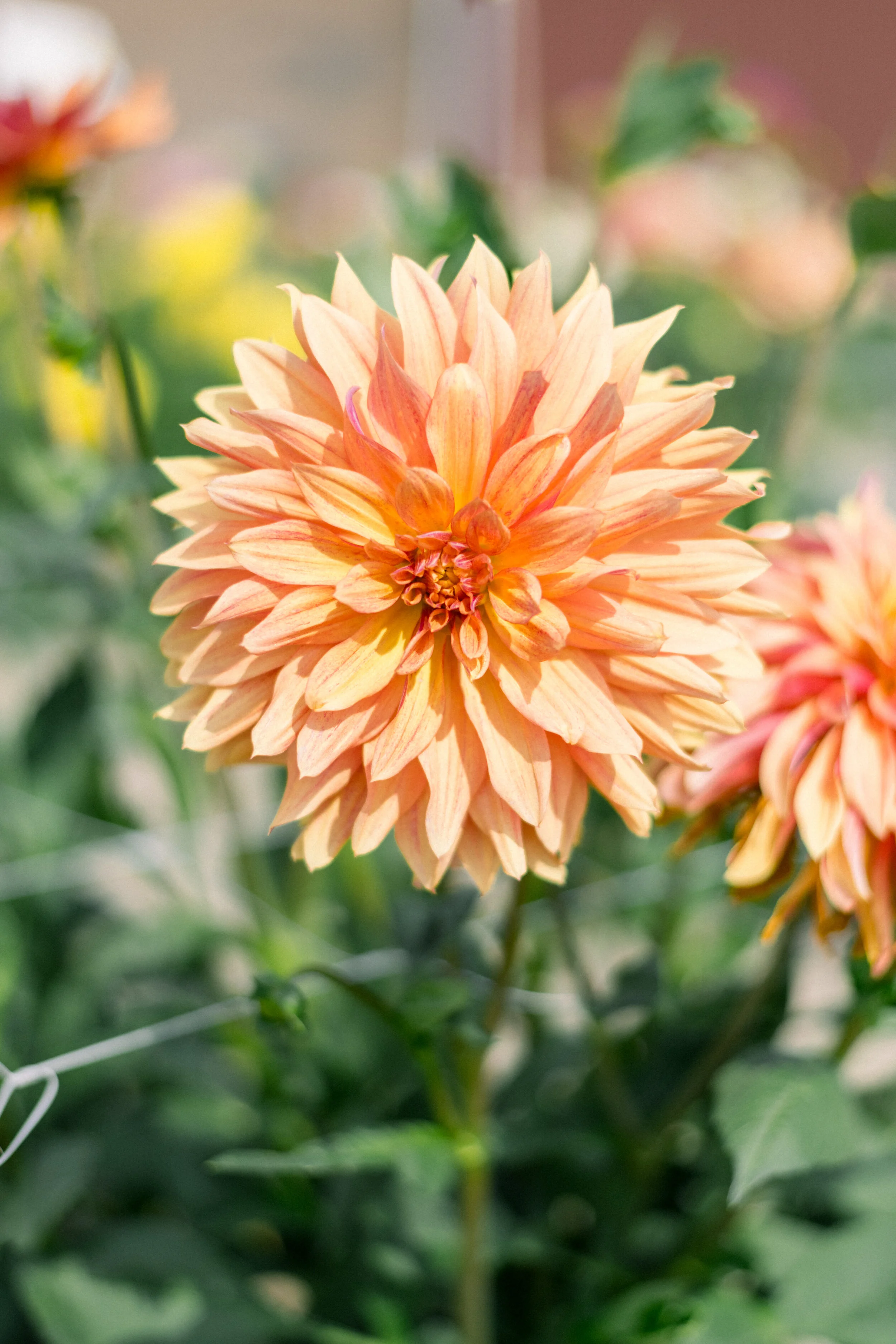
Tangerine petals with magenta undersides twist and twirl like dancers skirts adding delightful colors and textures to your garden. This dahlia makes a statement in floral arrangements and is sure to get some comments from neighbors and friends.
Flower Type: Decorative medium flowered
Plant Height: 3-4’
Flower Diameter: 4-6”
Light Requirements: full sun, part sun
Soil Preference: well-draining soil
USDA Zones: 2-7 (annual), 8-11 (perennial)
Days to Maturity: 80-100 days
How to Grow
Planting Depth: 1-2” (sprouting inside), 4-6” depth (outside)
Plant Spacing: 12-18”
When to plant: Sprout tuber indoors 4-6 weeks before the last frost date, transplant after the danger of frost has passed. Plant tubers directly outdoors after the danger of frost has passed.
Growing Tips: Tubers rot easily so avoid giving them too much water until the plant has begun to sprout (2-3 weeks after planting). Pinch top of stem when plants are 10-12” to promote branching. Add compost or fertilizer to soil before planting, or fertilize every 3-4 weeks with a well-balanced fertilizer after growth is visible. Trellis or staking is recommended to keep plants upright.
Cut Flower: Flowers can be harvested when petals are 3/4 open. Sear stems in 160-170F water or use a hydrating product to achieve 5-7 day vase-life.
Storing and Dividing Tubers: After frost has turned the top growth brown, cut the stem back a few inches above the soil. Then carefully dig carefully around the roots and rinse off excess dirt from and remove any tubers that may be rotting or damaged. Allow tubers to dry for several weeks allowing the roots to develop a slight wrinkled appearance before placing them in storage following the same storage procedures as above. Tubers can be divided in spring by cutting the tuber root segments apart with a sharp knife, making sure each has at least one visible eye (bud). Tubers can then be planted.
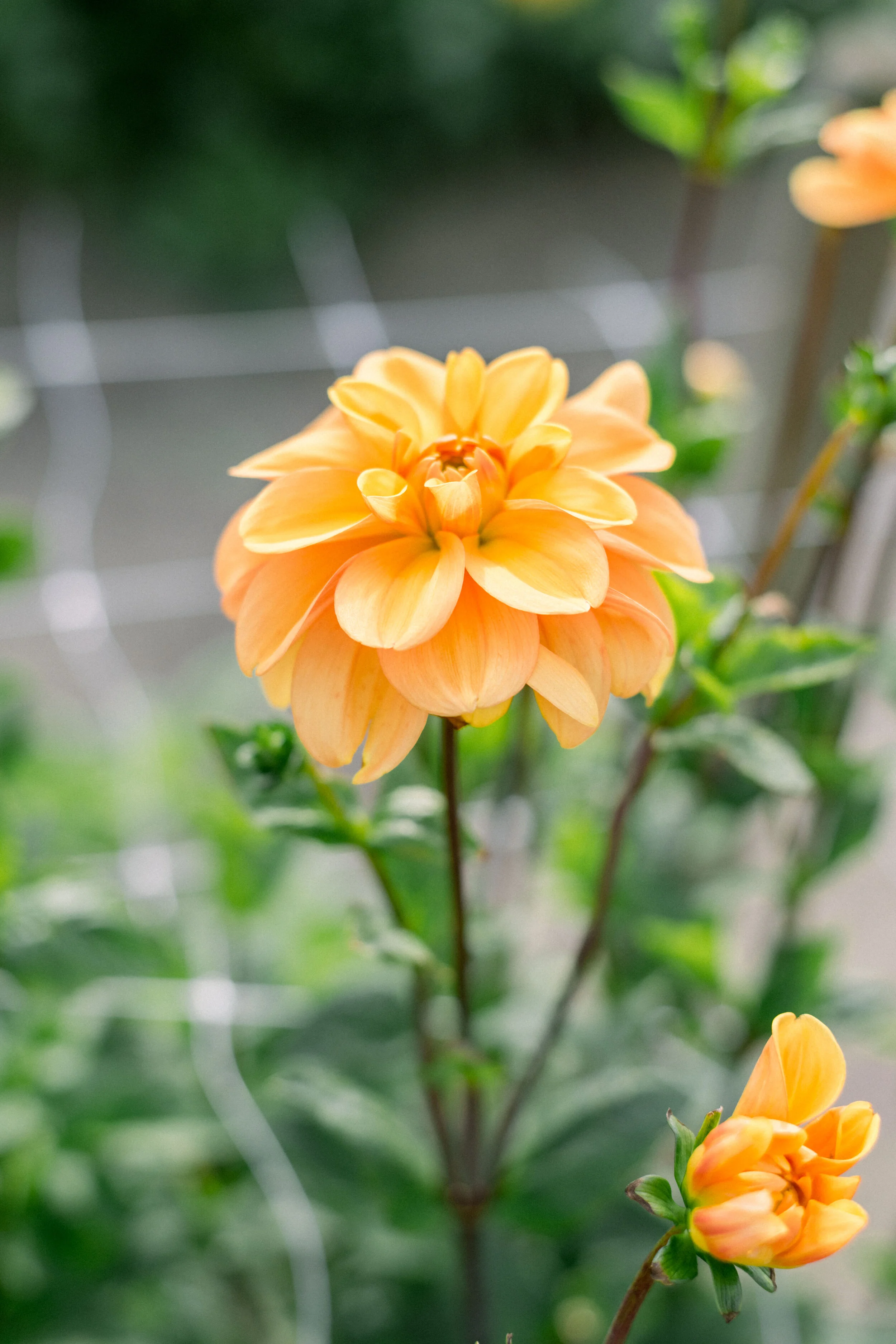
This flower comes in yellow-orange tones that are as snappy as ginger. The small flowers will add a bright addition to gardens and floral arrangements on tall strong stems.
Flower Type: Waterlily
Plant Height: 3-4’
Flower Diameter: 4-6”
Light Requirements: full sun, part sun
Soil Preference: well-draining soil
USDA Zones: 2-7 (annual), 8-11 (perennial)
Days to Maturity: 80-100 days
How to Grow
Planting Depth: 1-2” (sprouting inside), 4-6” depth (outside)
Plant Spacing: 12-18”
When to plant: Sprout tuber indoors 4-6 weeks before the last frost date, transplant after the danger of frost has passed. Plant tubers directly outdoors after the danger of frost has passed.
Growing Tips: Tubers rot easily so avoid giving them too much water until the plant has begun to sprout (2-3 weeks after planting). Pinch top of stem when plants are 10-12” to promote branching. Add compost or fertilizer to soil before planting, or fertilize every 3-4 weeks with a well-balanced fertilizer after growth is visible. Trellis or staking is recommended to keep plants upright.
Cut Flower: Flowers can be harvested when petals are 3/4 open. Sear stems in 160-170F water or use a hydrating product to achieve 5-7 day vase-life.
Storing and Dividing Tubers: After frost has turned the top growth brown, cut the stem back a few inches above the soil. Then carefully dig carefully around the roots and rinse off excess dirt from and remove any tubers that may be rotting or damaged. Allow tubers to dry for several weeks allowing the roots to develop a slight wrinkled appearance before placing them in storage following the same storage procedures as above. Tubers can be divided in spring by cutting the tuber root segments apart with a sharp knife, making sure each has at least one visible eye (bud). Tubers can then be planted.
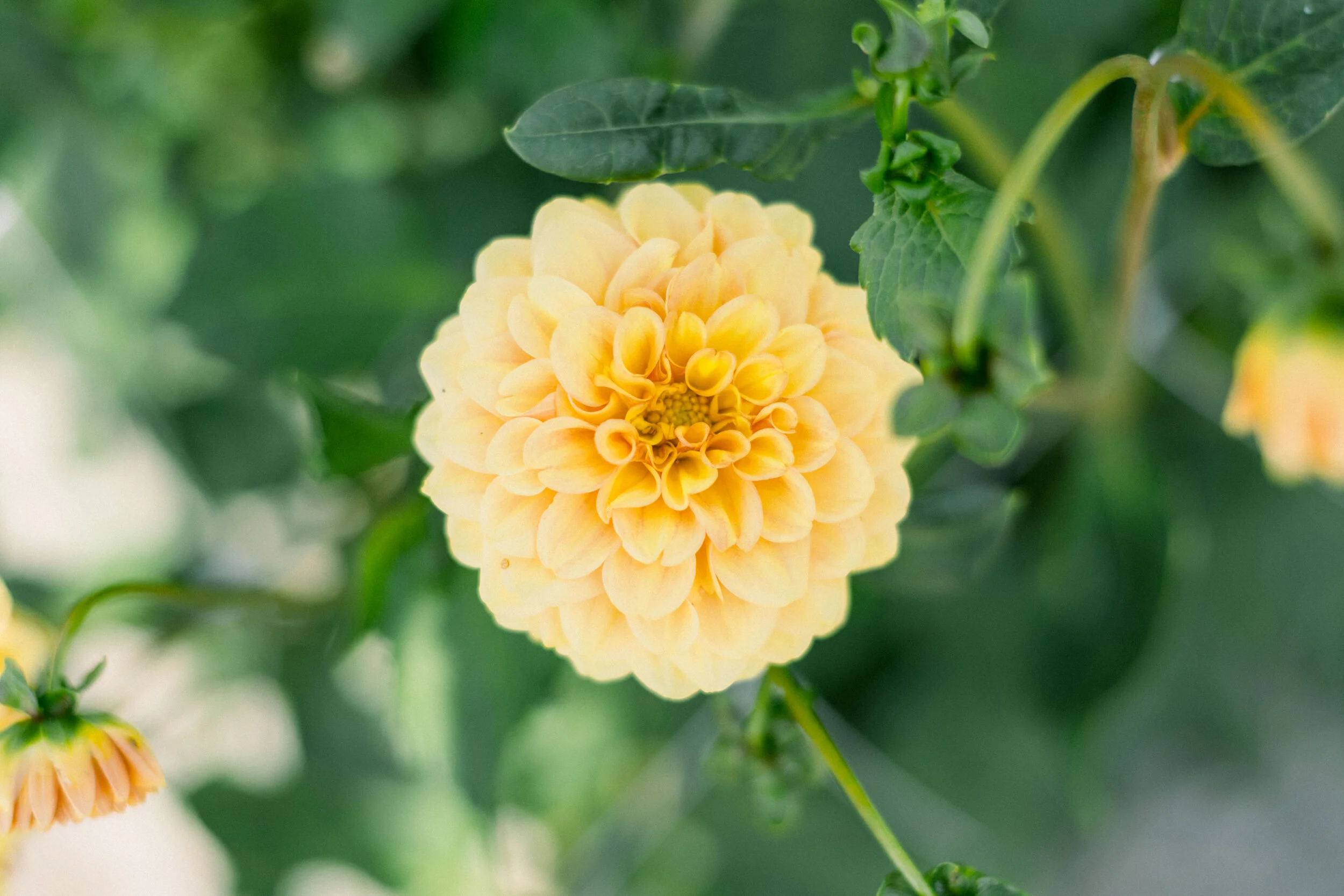
These dahlias are the perfect shade of golden-yellow with an orange center. Their bright hue is delightful in your summer and fall gardens and their tall stems are perfect for floral arrangements.
Flower Type: Ball
Plant Height: 4-5’
Flower Diameter: 3-4”
Light Requirements: full sun, part sun
Soil Preference: well-draining soil
USDA Zones: 2-7 (annual), 8-11 (perennial)
Days to Maturity: 80-100 days
How to Grow
Planting Depth: 1-2” (sprouting inside), 4-6” depth (outside)
Plant Spacing: 12-18”
When to plant: Sprout tuber indoors 4-6 weeks before the last frost date, transplant after the danger of frost has passed. Plant tubers directly outdoors after the danger of frost has passed.
Growing Tips: Tubers rot easily so avoid giving them too much water until the plant has begun to sprout (2-3 weeks after planting). Pinch top of stem when plants are 10-12” to promote branching. Add compost or fertilizer to soil before planting, or fertilize every 3-4 weeks with a well-balanced fertilizer after growth is visible. Trellis or staking is recommended to keep plants upright.
Cut Flower: Flowers can be harvested when petals are 3/4 open. Sear stems in 160-170F water or use a hydrating product to achieve 5-7 day vase-life.
Storing and Dividing Tubers: After frost has turned the top growth brown, cut the stem back a few inches above the soil. Then carefully dig carefully around the roots and rinse off excess dirt from and remove any tubers that may be rotting or damaged. Allow tubers to dry for several weeks allowing the roots to develop a slight wrinkled appearance before placing them in storage following the same storage procedures as above. Tubers can be divided in spring by cutting the tuber root segments apart with a sharp knife, making sure each has at least one visible eye (bud). Tubers can then be planted.
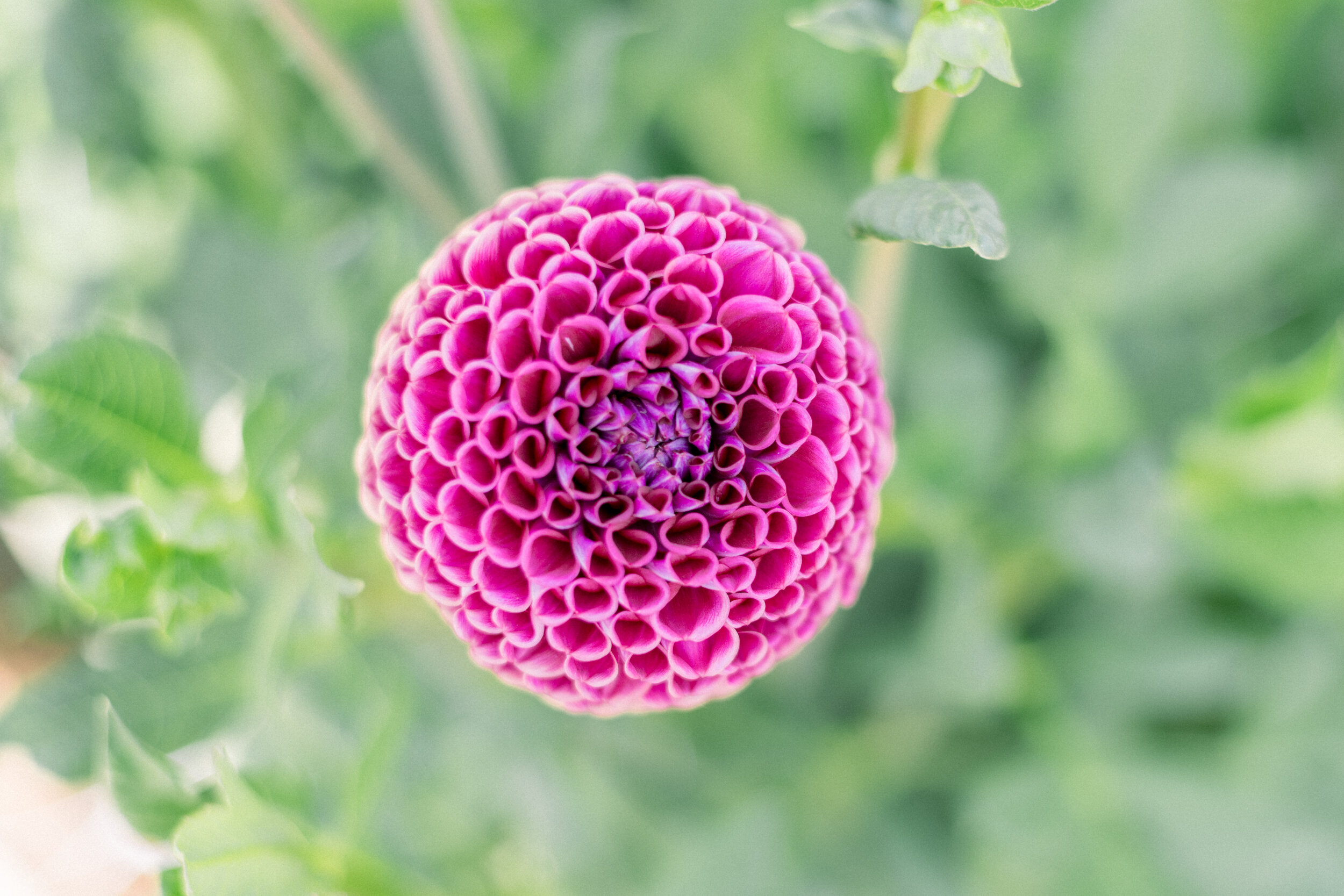
Petals curl and align perfectly to create a deep maroon flower pom. Deep colored petals contrast against the bright green leaves on tall stems adding height and color to your garden. Long stems are ideal in floral arrangements.
Flower Type: Ball
Plant Height: 3-4’
Flower Diameter: 4-6”
Light Requirements: full sun, part sun
Soil Preference: well-draining soil
USDA Zones: 2-7 (annual), 8-11 (perennial)
Days to Maturity: 80-100 days
How to Grow
Planting Depth: 1-2” (sprouting inside), 4-6” depth (outside)
Plant Spacing: 12-18”
When to plant: Sprout tuber indoors 4-6 weeks before the last frost date, transplant after the danger of frost has passed. Plant tubers directly outdoors after the danger of frost has passed.
Growing Tips: Tubers rot easily so avoid giving them too much water until the plant has begun to sprout (2-3 weeks after planting). Pinch top of stem when plants are 10-12” to promote branching. Add compost or fertilizer to soil before planting, or fertilize every 3-4 weeks with a well-balanced fertilizer after growth is visible. Trellis or staking is recommended to keep plants upright.
Cut Flower: Flowers can be harvested when petals are 3/4 open. Sear stems in 160-170F water or use a hydrating product to achieve 5-7 day vase-life.
Storing and Dividing Tubers: After frost has turned the top growth brown, cut the stem back a few inches above the soil. Then carefully dig carefully around the roots and rinse off excess dirt from and remove any tubers that may be rotting or damaged. Allow tubers to dry for several weeks allowing the roots to develop a slight wrinkled appearance before placing them in storage following the same storage procedures as above. Tubers can be divided in spring by cutting the tuber root segments apart with a sharp knife, making sure each has at least one visible eye (bud). Tubers can then be planted.
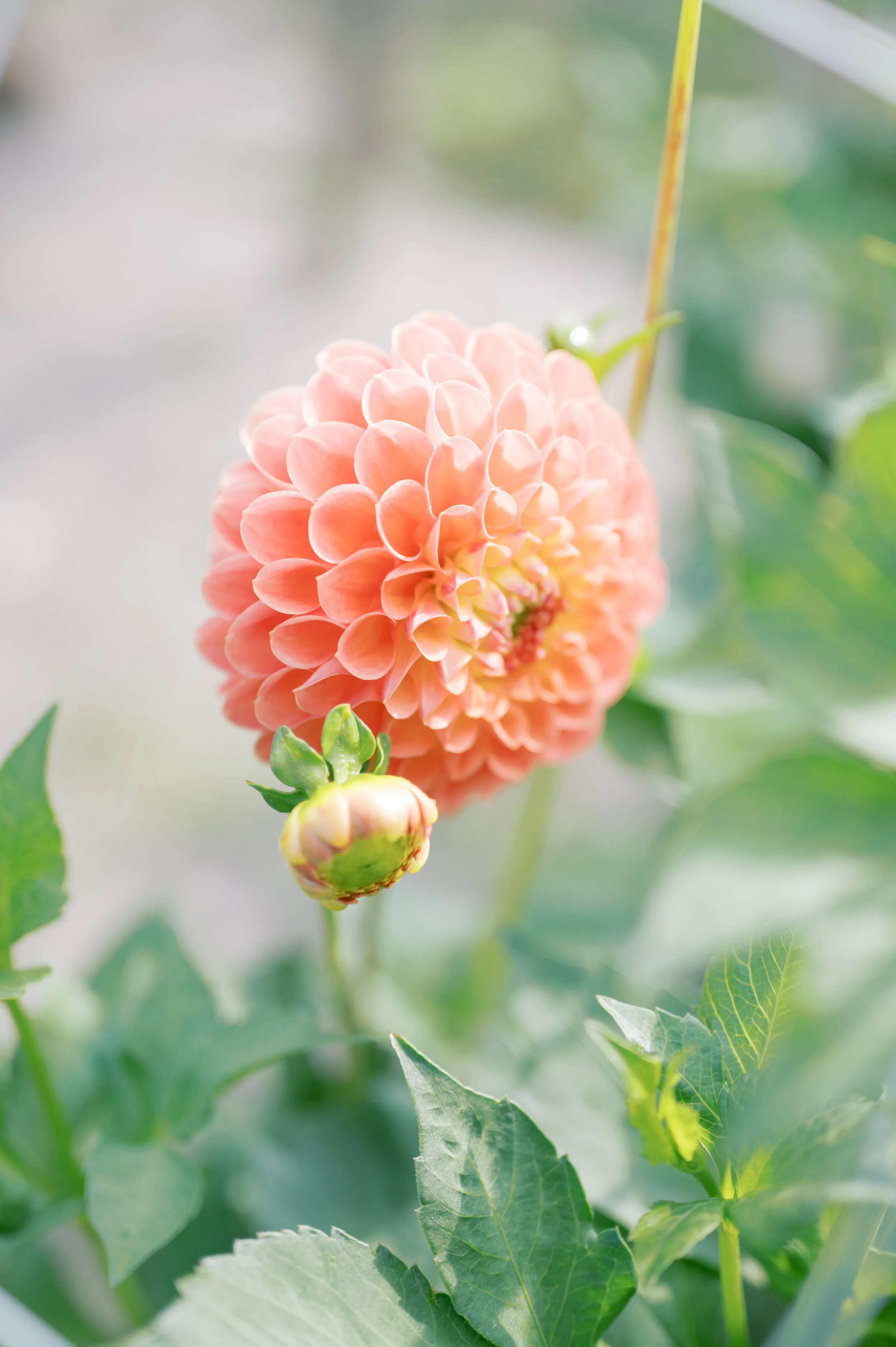
Coral, peach, and pink petals curl perfectly creating a beautiful ball shape. Petals begin deeply saturated in color but fade to lighter hues as they open. These bright flowers are a delight in summer gardens and bouquets.
Flower Type: Ball
Plant Height: 3-4’
Flower Diameter: 4-6”
Light Requirements: full sun, part sun
Soil Preference: well-draining soil
USDA Zones: 2-7 (annual), 8-11 (perennial)
Days to Maturity: 80-100 days
How to Grow
Planting Depth: 1-2” (sprouting inside), 4-6” depth (outside)
Plant Spacing: 12-18”
When to plant: Sprout tuber indoors 4-6 weeks before the last frost date, transplant after the danger of frost has passed. Plant tubers directly outdoors after the danger of frost has passed.
Growing Tips: Tubers rot easily so avoid giving them too much water until the plant has begun to sprout (2-3 weeks after planting). Pinch top of stem when plants are 10-12” to promote branching. Add compost or fertilizer to soil before planting, or fertilize every 3-4 weeks with a well-balanced fertilizer after growth is visible. Trellis or staking is recommended to keep plants upright.
Cut Flower: Flowers can be harvested when petals are 3/4 open. Sear stems in 160-170F water or use a hydrating product to achieve 5-7 day vase-life.
Storing and Dividing Tubers: After frost has turned the top growth brown, cut the stem back a few inches above the soil. Then carefully dig carefully around the roots and rinse off excess dirt from and remove any tubers that may be rotting or damaged. Allow tubers to dry for several weeks allowing the roots to develop a slight wrinkled appearance before placing them in storage following the same storage procedures as above. Tubers can be divided in spring by cutting the tuber root segments apart with a sharp knife, making sure each has at least one visible eye (bud). Tubers can then be planted.
Photo by @madelynsfloraldesignandfarm
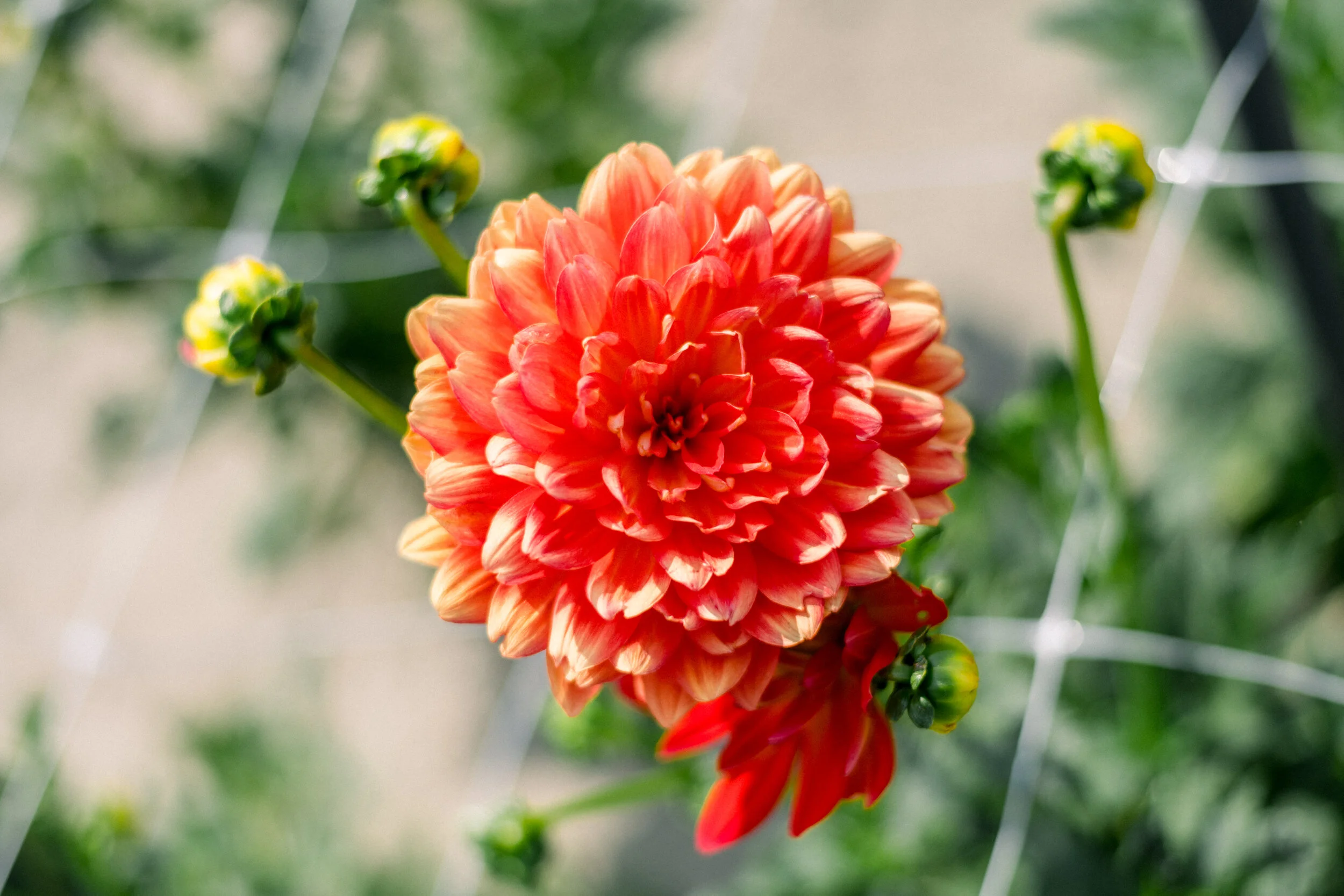
Golden hued dahlia petals accented with an orange center are held on dark red stems and bright green foliage making this dahlia the center of attention in your garden. It’s sunny glow will add cheer inside your house within floral arrangements.
Flower Type: Decorative small-flowered
Plant Height: 4-5’
Flower Diameter: 4-6”
Light Requirements: full sun, part sun
Soil Preference: well-draining soil
USDA Zones: 2-7 (annual), 8-11 (perennial)
Days to Maturity: 80-100 days
How to Grow
Planting Depth: 1-2” (sprouting inside), 4-6” depth (outside)
Plant Spacing: 12-18”
When to plant: Sprout tuber indoors 4-6 weeks before the last frost date, transplant after the danger of frost has passed. Plant tubers directly outdoors after the danger of frost has passed.
Growing Tips: Tubers rot easily so avoid giving them too much water until the plant has begun to sprout (2-3 weeks after planting). Pinch top of stem when plants are 10-12” to promote branching. Add compost or fertilizer to soil before planting, or fertilize every 3-4 weeks with a well-balanced fertilizer after growth is visible. Trellis or staking is recommended to keep plants upright.
Cut Flower: Flowers can be harvested when petals are 3/4 open. Sear stems in 160-170F water or use a hydrating product to achieve 5-7 day vase-life.
Storing and Dividing Tubers: After frost has turned the top growth brown, cut the stem back a few inches above the soil. Then carefully dig carefully around the roots and rinse off excess dirt from and remove any tubers that may be rotting or damaged. Allow tubers to dry for several weeks allowing the roots to develop a slight wrinkled appearance before placing them in storage following the same storage procedures as above. Tubers can be divided in spring by cutting the tuber root segments apart with a sharp knife, making sure each has at least one visible eye (bud). Tubers can then be planted.
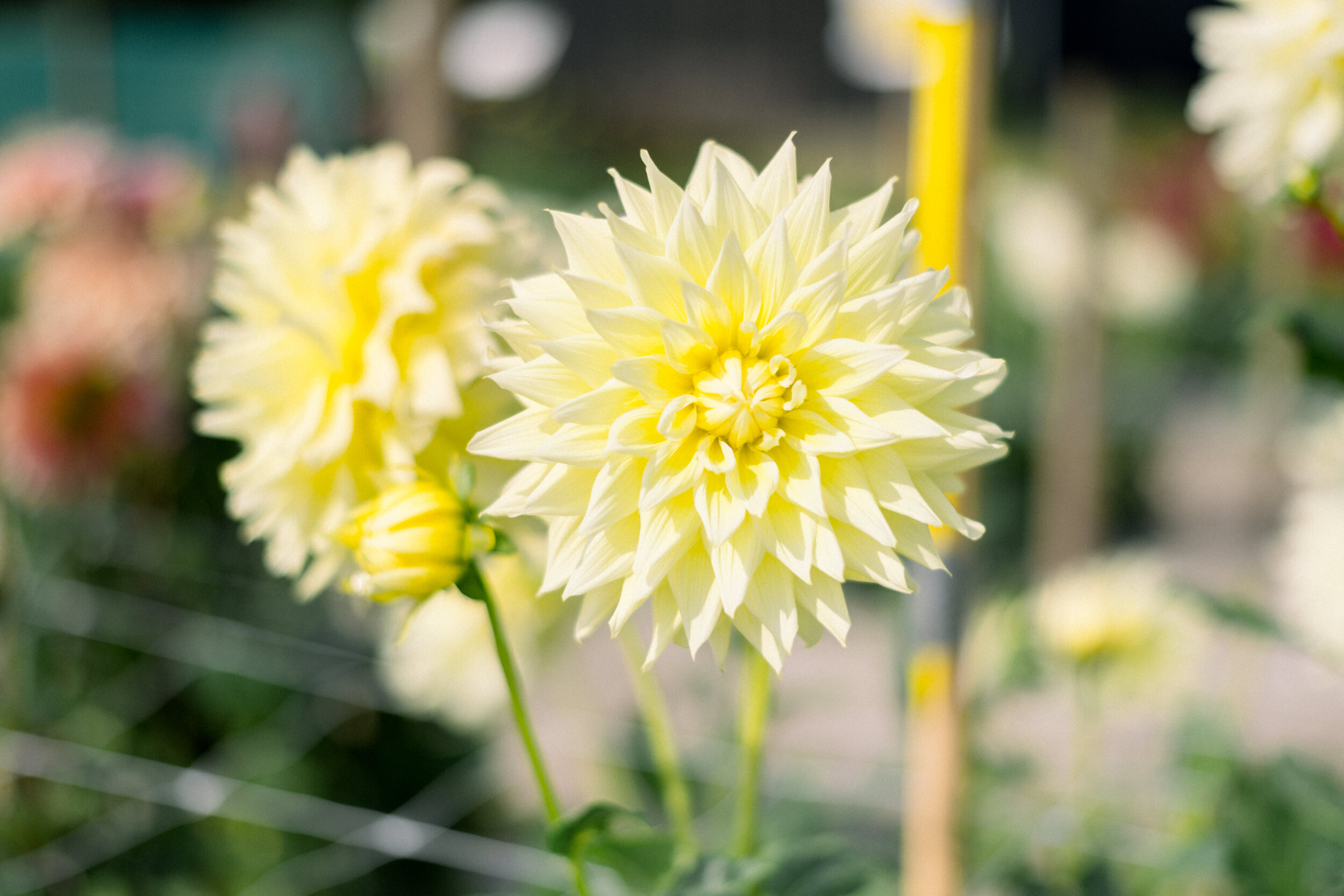
Just like the beauty of the full moon on a clear night, ‘La Luna’ dinner plate dahlias will capture your attention and leave you waxing and waning for more, with a pale yellow center bustling with smaller petals that give way to a larger cusp of white tipped petals that give this dahlia its classic starburst shape.
Flower Type: Dinner Plate
Plant Height: 4-5’
Flower Diameter: 6-8”
Light Requirements: full sun, part sun
Soil Preference: well-draining soil
USDA Zones: 2-7 (annual), 8-11 (perennial)
Days to Maturity: 80-100 days
How to Grow
Planting Depth: 1-2” (sprouting inside), 4-6” depth (outside)
Plant Spacing: 12-18”
When to plant: Sprout tuber indoors 4-6 weeks before the last frost date, transplant after the danger of frost has passed. Plant tubers directly outdoors after the danger of frost has passed.
Growing Tips: Tubers rot easily so avoid giving them too much water until the plant has begun to sprout (2-3 weeks after planting). Pinch top of stem when plants are 10-12” to promote branching. Add compost or fertilizer to soil before planting, or fertilize every 3-4 weeks with a well-balanced fertilizer after growth is visible. Trellis or staking is recommended to keep plants upright.
Cut Flower: Flowers can be harvested when petals are 3/4 open. Sear stems in 160-170F water or use a hydrating product to achieve 5-7 day vase-life.
Storing and Dividing Tubers: After frost has turned the top growth brown, cut the stem back a few inches above the soil. Then carefully dig carefully around the roots and rinse off excess dirt from and remove any tubers that may be rotting or damaged. Allow tubers to dry for several weeks allowing the roots to develop a slight wrinkled appearance before placing them in storage following the same storage procedures as above. Tubers can be divided in spring by cutting the tuber root segments apart with a sharp knife, making sure each has at least one visible eye (bud). Tubers can then be planted.
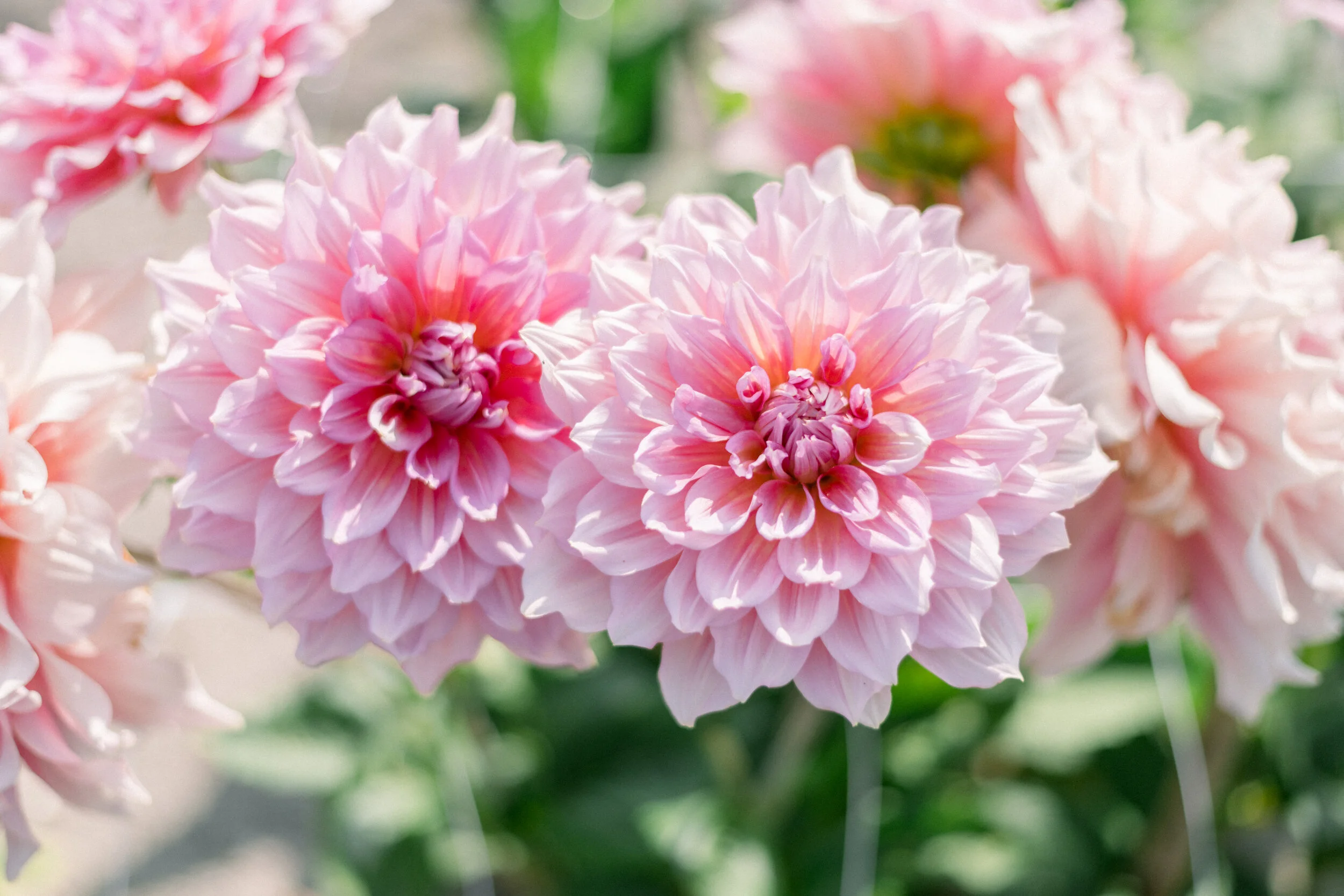
‘Otto’s Thrill’ is the perfect name for this absolutely thrilling dahlia which has a giant bloom even for a dinnerplate dahlia. Light pink petals meet in a dark pink center, making this dahlia the perfect bubblegum pink addition in your arrangement or bouquet.
Flower Type: Dinnerplate
Plant Height: 4-6’
Flower Diameter: 7-12”
Light Requirements: full sun, part sun
Soil Preference: well-draining soil
USDA Zones: 2-7 (annual), 8-11 (perennial)
Days to Maturity: 80-100 days
How to Grow
Planting Depth: 1-2” (sprouting inside), 4-6” depth (outside)
Plant Spacing: 12-18”
When to plant: Sprout tuber indoors 4-6 weeks before the last frost date, transplant after the danger of frost has passed. Plant tubers directly outdoors after the danger of frost has passed.
Growing Tips: Tubers rot easily so avoid giving them too much water until the plant has begun to sprout (2-3 weeks after planting). Pinch top of stem when plants are 10-12” to promote branching. Add compost or fertilizer to soil before planting, or fertilize every 3-4 weeks with a well-balanced fertilizer after growth is visible. Trellis or staking is recommended to keep plants upright.
Cut Flower: Flowers can be harvested when petals are 3/4 open. Sear stems in 160-170F water or use a hydrating product to achieve 5-7 day vase-life.
Storing and Dividing Tubers: After frost has turned the top growth brown, cut the stem back a few inches above the soil. Then carefully dig carefully around the roots and rinse off excess dirt from and remove any tubers that may be rotting or damaged. Allow tubers to dry for several weeks allowing the roots to develop a slight wrinkled appearance before placing them in storage following the same storage procedures as above. Tubers can be divided in spring by cutting the tuber root segments apart with a sharp knife, making sure each has at least one visible eye (bud). Tubers can then be planted.
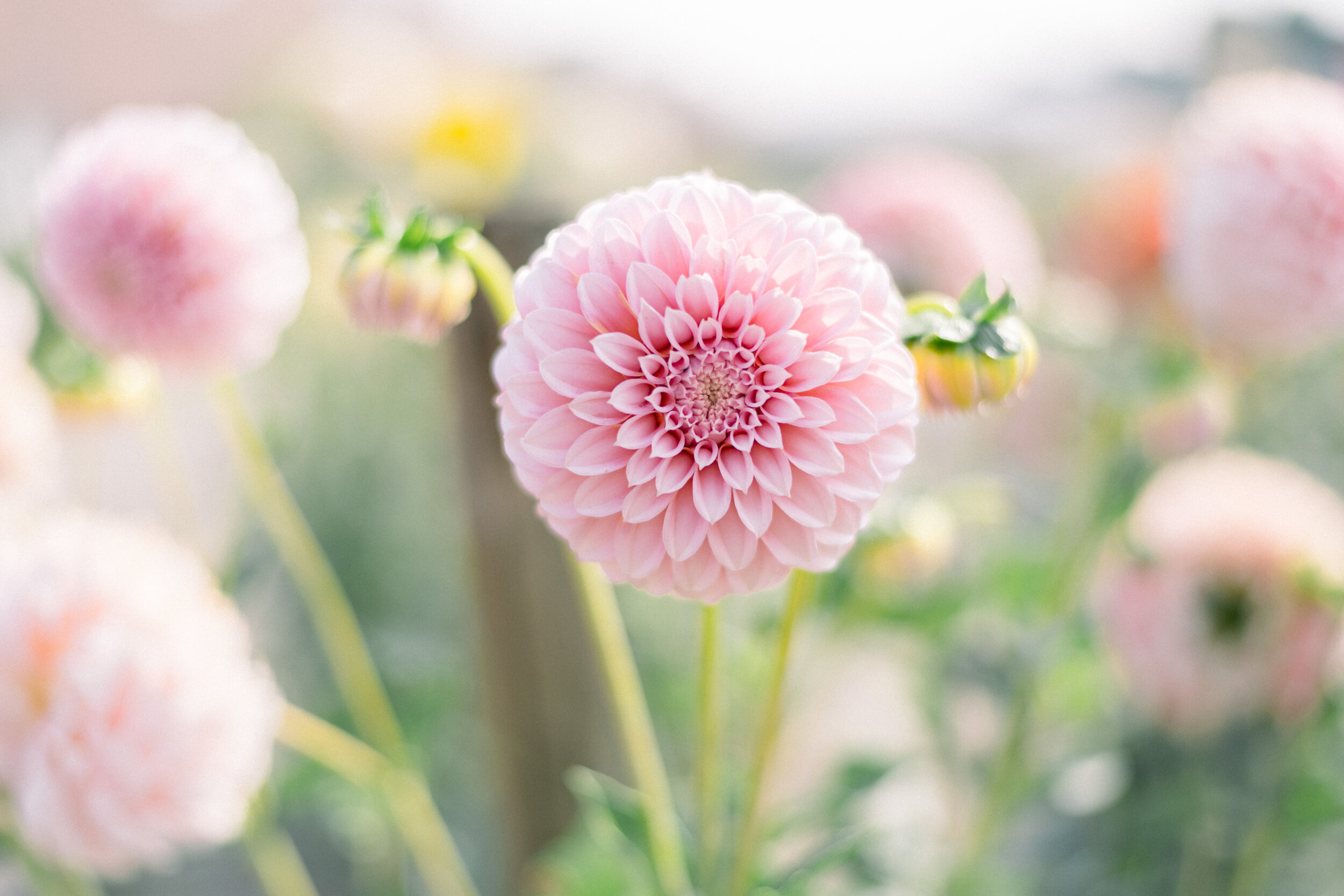
This flower has a peach hue towards the center of the petals that fades to cream towards the tips which will surely make you crave peaches and cream. The fading color and curled petals gives this flower so much depth and adds texture and interest to your gardens and floral arrangements.
Flower Type: Decorative medium-flowered
Plant Height: 4-5’
Flower Diameter: 4-5”
Light Requirements: full sun, part sun
Soil Preference: well-draining soil
USDA Zones: 2-7 (annual), 8-11 (perennial)
Days to Maturity: 80-100 days
How to Grow
Planting Depth: 1-2” (sprouting inside), 4-6” depth (outside)
Plant Spacing: 12-18”
When to plant: Sprout tuber indoors 4-6 weeks before the last frost date, transplant after the danger of frost has passed. Plant tubers directly outdoors after the danger of frost has passed.
Growing Tips: Tubers rot easily so avoid giving them too much water until the plant has begun to sprout (2-3 weeks after planting). Pinch top of stem when plants are 10-12” to promote branching. Add compost or fertilizer to soil before planting, or fertilize every 3-4 weeks with a well-balanced fertilizer after growth is visible. Trellis or staking is recommended to keep plants upright.
Cut Flower: Flowers can be harvested when petals are 3/4 open. Sear stems in 160-170F water or use a hydrating product to achieve 5-7 day vase-life.
Storing and Dividing Tubers: After frost has turned the top growth brown, cut the stem back a few inches above the soil. Then carefully dig carefully around the roots and rinse off excess dirt from and remove any tubers that may be rotting or damaged. Allow tubers to dry for several weeks allowing the roots to develop a slight wrinkled appearance before placing them in storage following the same storage procedures as above. Tubers can be divided in spring by cutting the tuber root segments apart with a sharp knife, making sure each has at least one visible eye (bud). Tubers can then be planted.
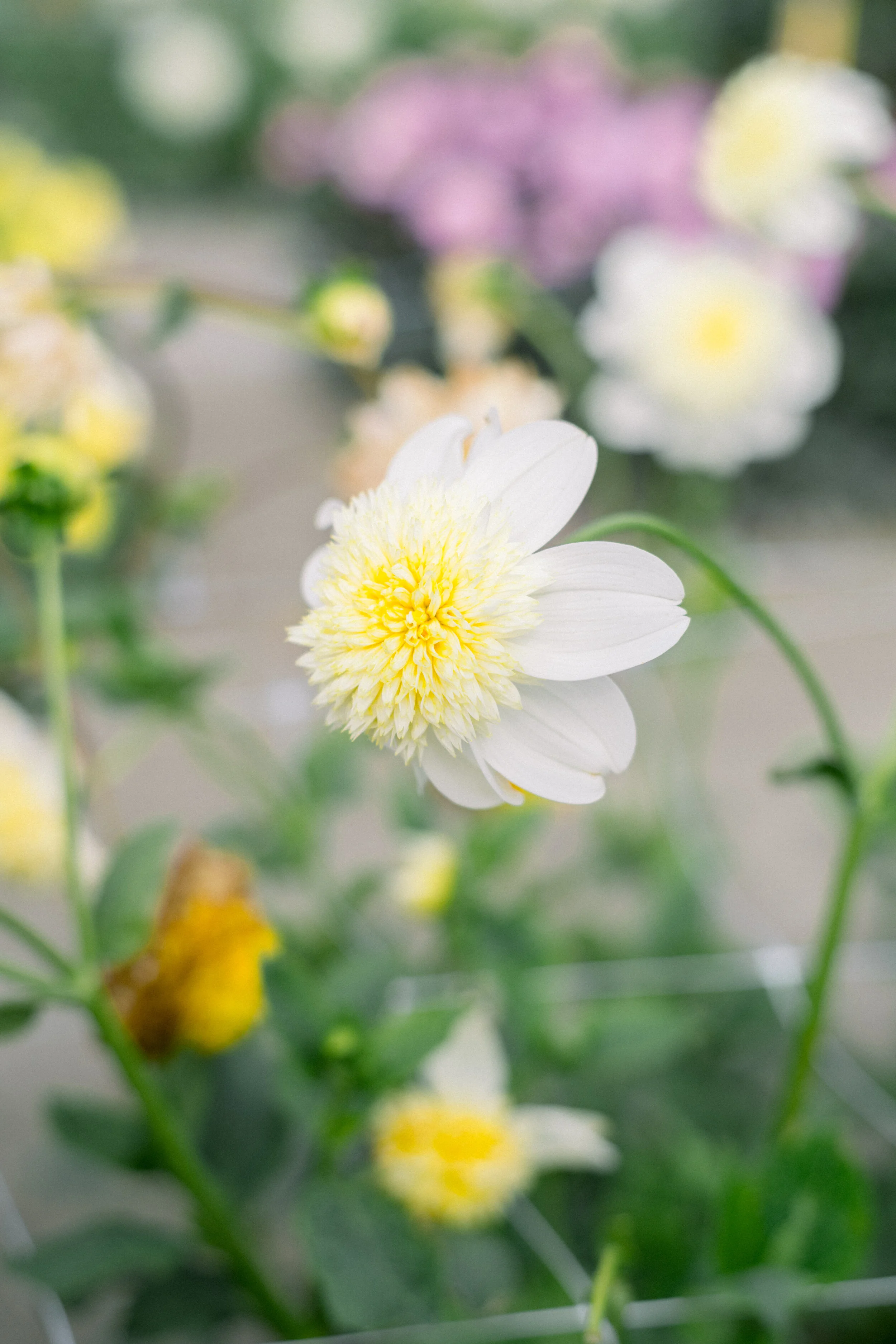
This flower has a peach hue towards the center of the petals that fades to cream towards the tips which will surely make you crave peaches and cream. The fading color and curled petals gives this flower so much depth and adds texture and interest to your gardens and floral arrangements.
Flower Type: Decorative medium-flowered
Plant Height: 4-5’
Flower Diameter: 4-5”
Light Requirements: full sun, part sun
Soil Preference: well-draining soil
USDA Zones: 2-7 (annual), 8-11 (perennial)
Days to Maturity: 80-100 days
How to Grow
Planting Depth: 1-2” (sprouting inside), 4-6” depth (outside)
Plant Spacing: 12-18”
When to plant: Sprout tuber indoors 4-6 weeks before the last frost date, transplant after the danger of frost has passed. Plant tubers directly outdoors after the danger of frost has passed.
Growing Tips: Tubers rot easily so avoid giving them too much water until the plant has begun to sprout (2-3 weeks after planting). Pinch top of stem when plants are 10-12” to promote branching. Add compost or fertilizer to soil before planting, or fertilize every 3-4 weeks with a well-balanced fertilizer after growth is visible. Trellis or staking is recommended to keep plants upright.
Cut Flower: Flowers can be harvested when petals are 3/4 open. Sear stems in 160-170F water or use a hydrating product to achieve 5-7 day vase-life.
Storing and Dividing Tubers: After frost has turned the top growth brown, cut the stem back a few inches above the soil. Then carefully dig carefully around the roots and rinse off excess dirt from and remove any tubers that may be rotting or damaged. Allow tubers to dry for several weeks allowing the roots to develop a slight wrinkled appearance before placing them in storage following the same storage procedures as above. Tubers can be divided in spring by cutting the tuber root segments apart with a sharp knife, making sure each has at least one visible eye (bud). Tubers can then be planted.
Photo by @theflowerfarm.co and @niky_pedley
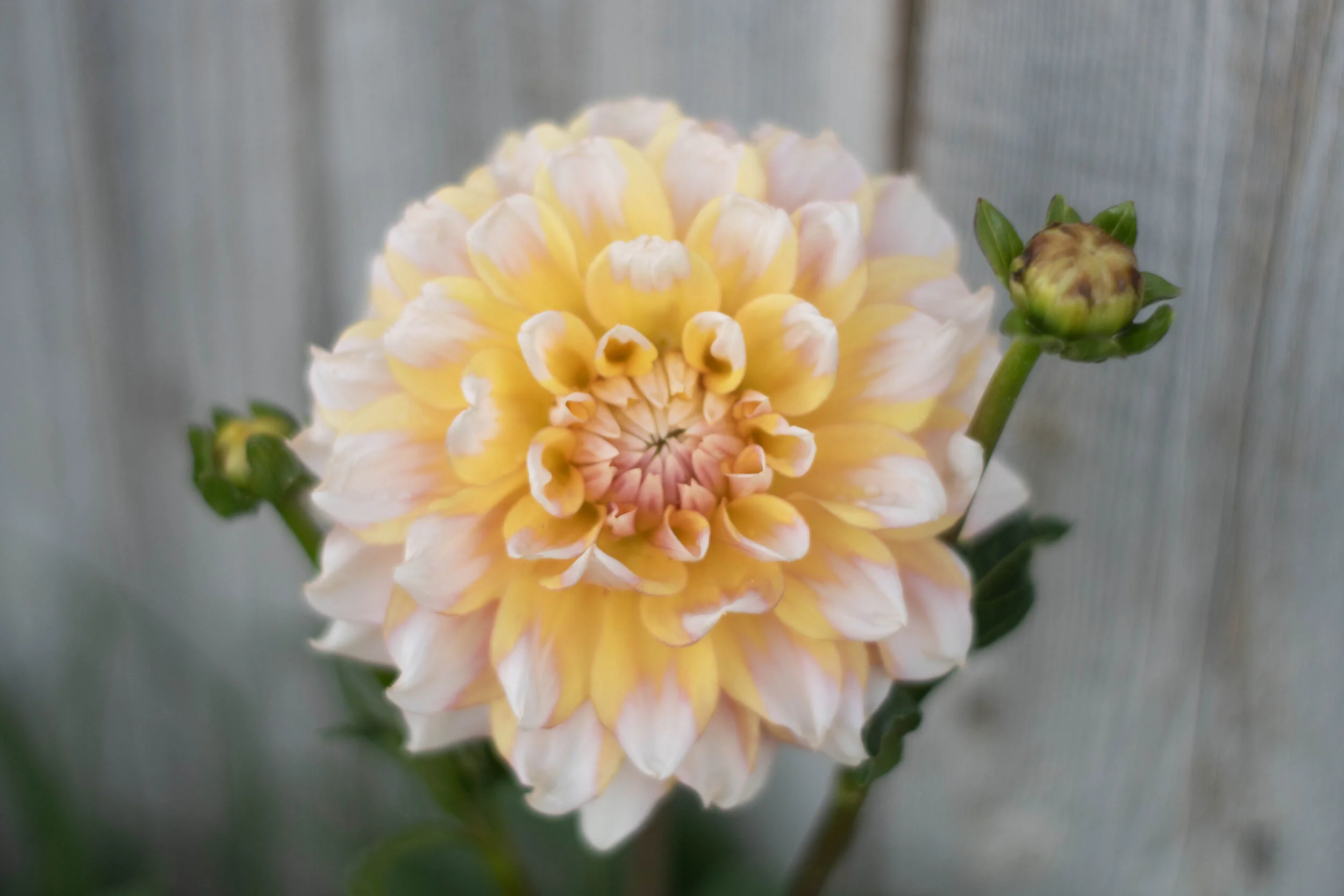
Golden-yellow flowers are tipped in white a touch of pink. Outward folding petals create a sharp texture and have dark burgundy stems with deep green foliage. These are one of the most uniquely colored dahlias and are a wonderful addition to your collection.
Flower Type: Dinnerplate
Plant Height: 3-4’
Flower Diameter: 6-10”
Light Requirements: full sun, part sun
Soil Preference: well-draining soil
USDA Zones: 2-7 (annual), 8-11 (perennial)
Days to Maturity: 80-100 days
How to Grow
Planting Depth: 1-2” (sprouting inside), 4-6” depth (outside)
Plant Spacing: 12-18”
When to plant: Sprout tuber indoors 4-6 weeks before the last frost date, transplant after the danger of frost has passed. Plant tubers directly outdoors after the danger of frost has passed.
Growing Tips: Tubers rot easily so avoid giving them too much water until the plant has begun to sprout (2-3 weeks after planting). Pinch top of stem when plants are 10-12” to promote branching. Add compost or fertilizer to soil before planting, or fertilize every 3-4 weeks with a well-balanced fertilizer after growth is visible. Trellis or staking is recommended to keep plants upright.
Cut Flower: Flowers can be harvested when petals are 3/4 open. Sear stems in 160-170F water or use a hydrating product to achieve 5-7 day vase-life.
Storing and Dividing Tubers: After frost has turned the top growth brown, cut the stem back a few inches above the soil. Then carefully dig carefully around the roots and rinse off excess dirt from and remove any tubers that may be rotting or damaged. Allow tubers to dry for several weeks allowing the roots to develop a slight wrinkled appearance before placing them in storage following the same storage procedures as above. Tubers can be divided in spring by cutting the tuber root segments apart with a sharp knife, making sure each has at least one visible eye (bud). Tubers can then be planted.
photo by @monhurrel and @itsjess_bless
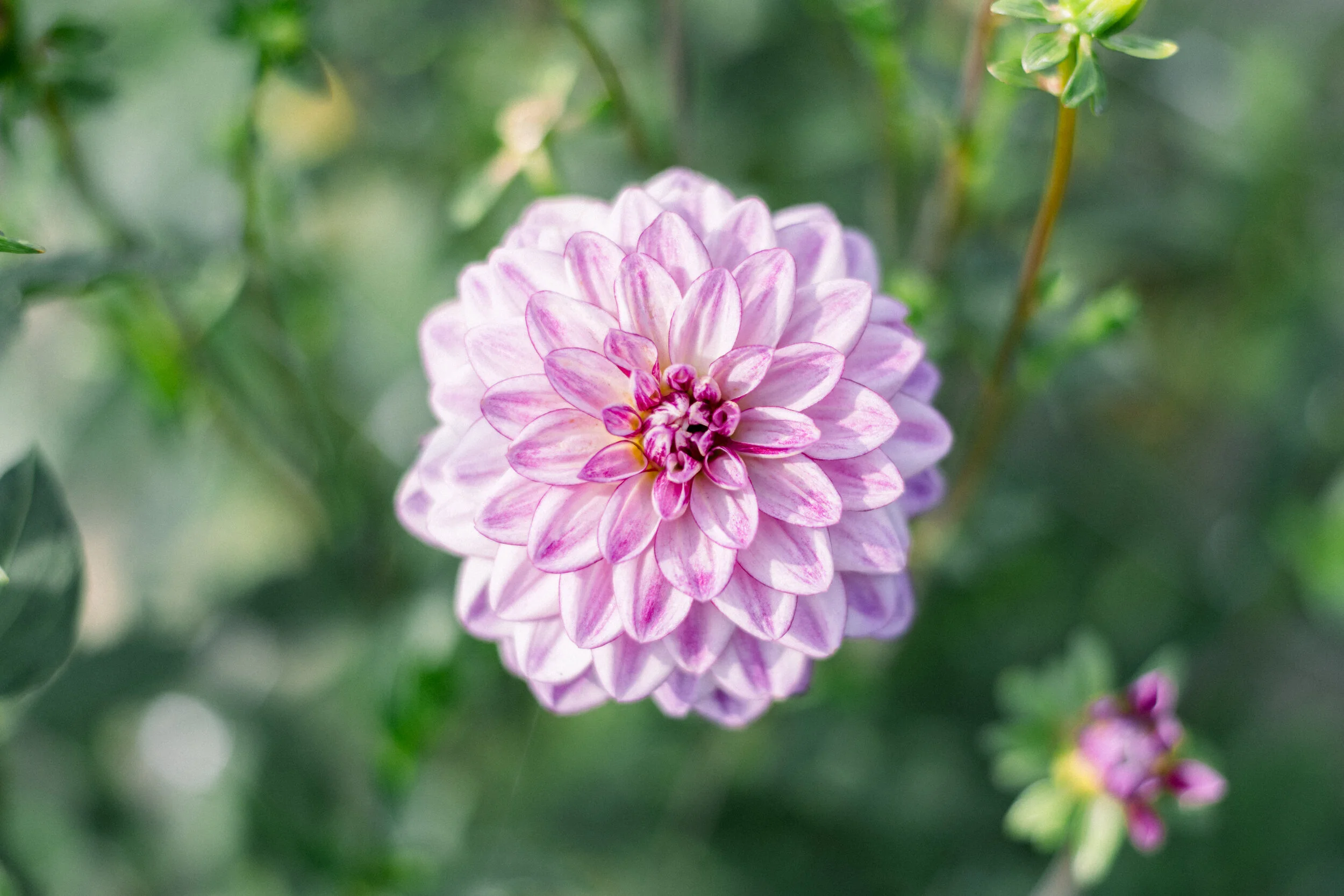
Nearly translucent white petals are edged and streaked with violet and magenta drawing everyone’s eye. The smaller size and exceptionally long stems make this flower ideal for use in floral arrangements. The plant's height is sure to add color to the back of your flower garden.
Flower Type: Decorative medium-flowered
Plant Height: 4-5’
Flower Diameter: 4-5”
Light Requirements: full sun, part sun
Soil Preference: well-draining soil
USDA Zones: 2-7 (annual), 8-11 (perennial)
Days to Maturity: 80-100 days
How to Grow
Planting Depth: 1-2” (sprouting inside), 4-6” depth (outside)
Plant Spacing: 12-18”
When to plant: Sprout tuber indoors 4-6 weeks before the last frost date, transplant after the danger of frost has passed. Plant tubers directly outdoors after the danger of frost has passed.
Growing Tips: Tubers rot easily so avoid giving them too much water until the plant has begun to sprout (2-3 weeks after planting). Pinch top of stem when plants are 10-12” to promote branching. Add compost or fertilizer to soil before planting, or fertilize every 3-4 weeks with a well-balanced fertilizer after growth is visible. Trellis or staking is recommended to keep plants upright.
Cut Flower: Flowers can be harvested when petals are 3/4 open. Sear stems in 160-170F water or use a hydrating product to achieve 5-7 day vase-life.
Storing and Dividing Tubers: After frost has turned the top growth brown, cut the stem back a few inches above the soil. Then carefully dig carefully around the roots and rinse off excess dirt from and remove any tubers that may be rotting or damaged. Allow tubers to dry for several weeks allowing the roots to develop a slight wrinkled appearance before placing them in storage following the same storage procedures as above. Tubers can be divided in spring by cutting the tuber root segments apart with a sharp knife, making sure each has at least one visible eye (bud). Tubers can then be planted.
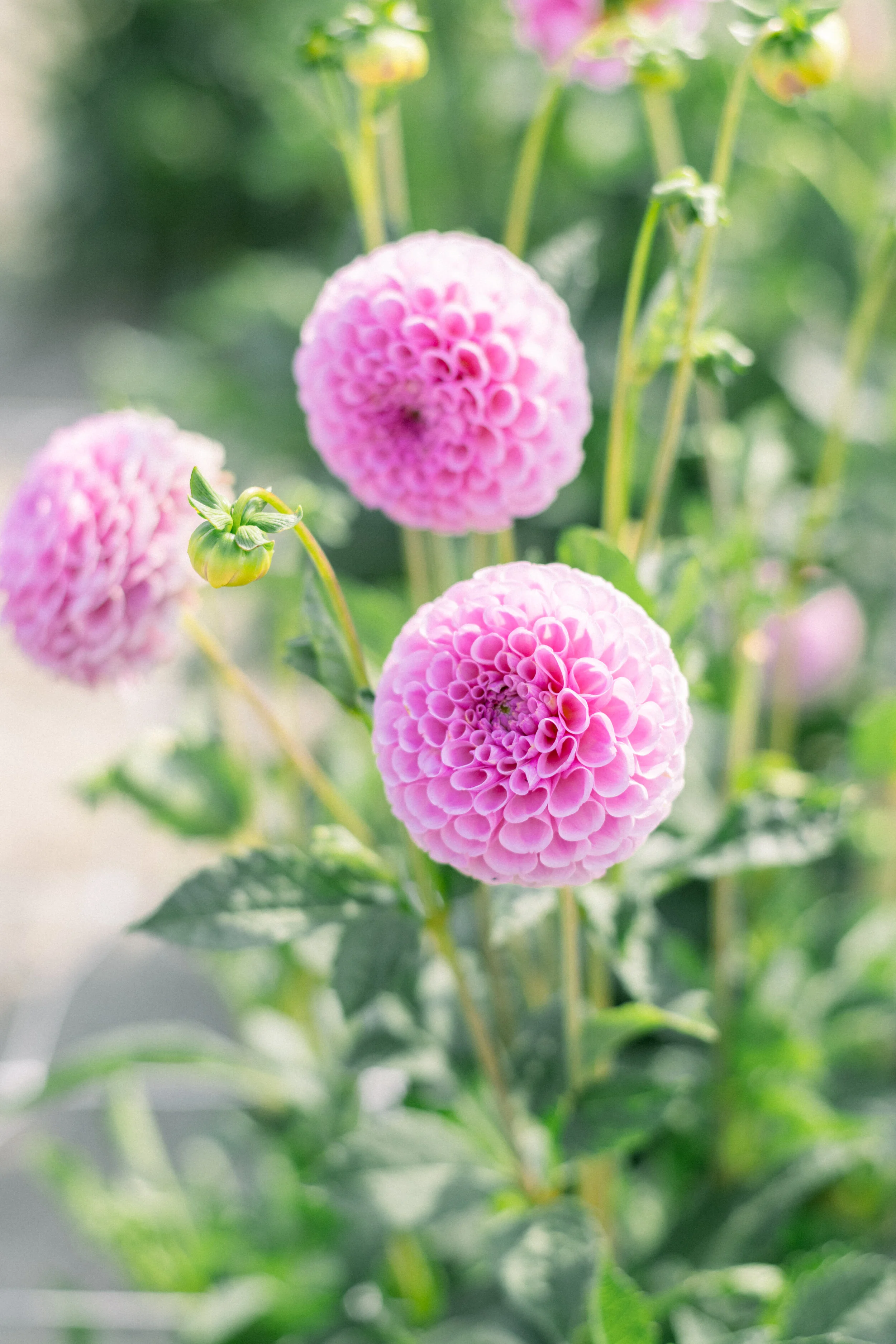
Small pom sized flowers are cotton candy pink with a touch of lilac hue to their darker centers. The pink blooms look like tufts of cotton candy floating in the garden.
Flower Type: Mini pom
Plant Height: 3-4’
Flower Diameter: 3-4”
Light Requirements: full sun, part sun
Soil Preference: well-draining soil
USDA Zones: 2-7 (annual), 8-11 (perennial)
Days to Maturity: 80-100 days
How to Grow
Planting Depth: 1-2” (sprouting inside), 4-6” depth (outside)
Plant Spacing: 12-18”
When to plant: Sprout tuber indoors 4-6 weeks before the last frost date, transplant after the danger of frost has passed. Plant tubers directly outdoors after the danger of frost has passed.
Growing Tips: Tubers rot easily so avoid giving them too much water until the plant has begun to sprout (2-3 weeks after planting). Pinch top of stem when plants are 10-12” to promote branching. Add compost or fertilizer to soil before planting, or fertilize every 3-4 weeks with a well-balanced fertilizer after growth is visible. Trellis or staking is recommended to keep plants upright.
Cut Flower: Flowers can be harvested when petals are 3/4 open. Sear stems in 160-170F water or use a hydrating product to achieve 5-7 day vase-life.
Storing and Dividing Tubers: After frost has turned the top growth brown, cut the stem back a few inches above the soil. Then carefully dig carefully around the roots and rinse off excess dirt from and remove any tubers that may be rotting or damaged. Allow tubers to dry for several weeks allowing the roots to develop a slight wrinkled appearance before placing them in storage following the same storage procedures as above. Tubers can be divided in spring by cutting the tuber root segments apart with a sharp knife, making sure each has at least one visible eye (bud). Tubers can then be planted.
photo by @rachel.a.landon
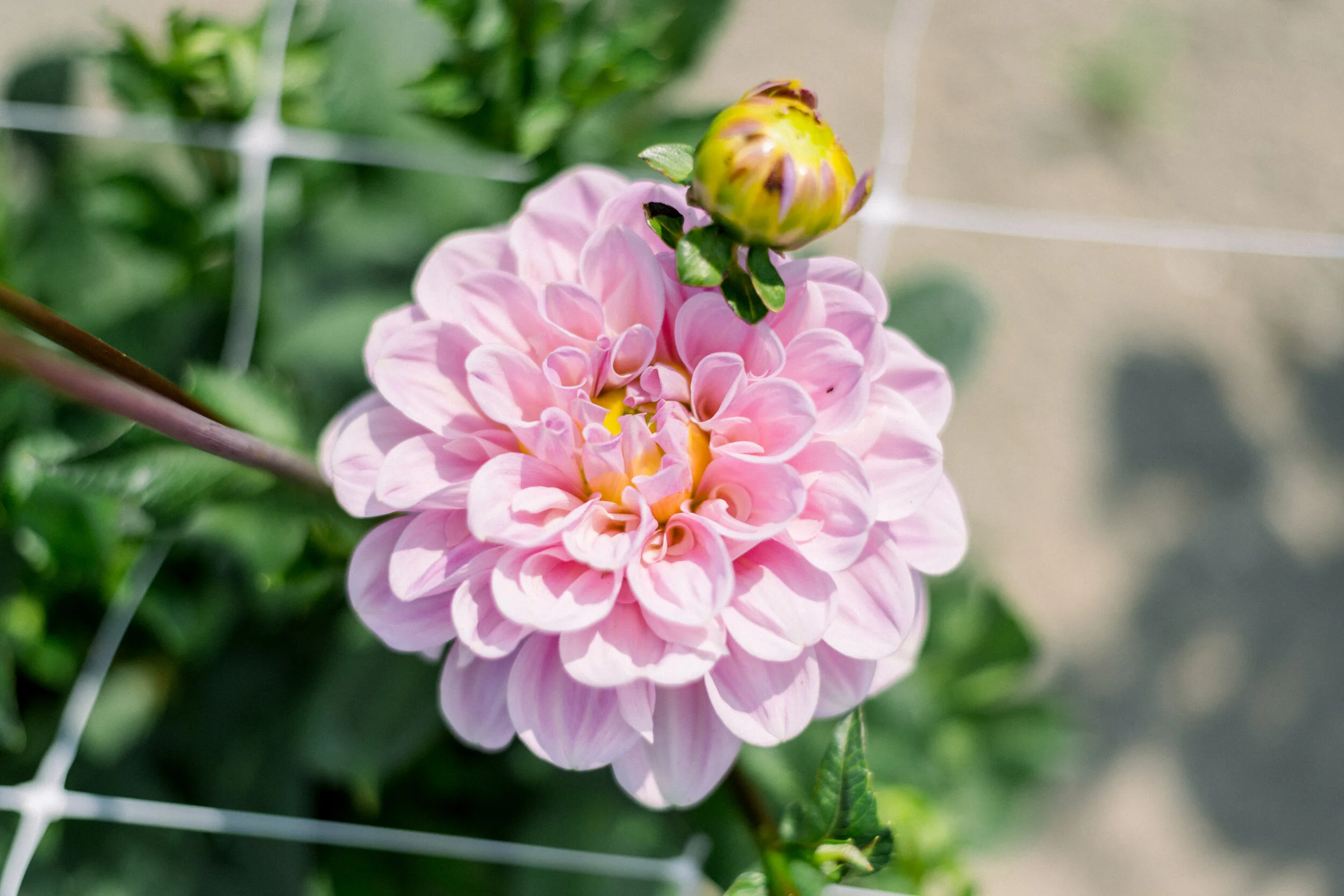
‘Sweet’ is the perfect name for this dahlia with delicately curled petals in pale peach and pink shades. The colors are similar to the ever popular ‘Cafe au Lait’ dahlia but in a smaller bloom size that is easier to work into floral arrangements.
Flower Type: Decorative small-flowered
Plant Height: 3-4’
Flower Diameter: 4-5”
Light Requirements: full sun, part sun
Soil Preference: well-draining soil
USDA Zones: 2-7 (annual), 8-11 (perennial)
Days to Maturity: 80-100 days
How to Grow
Planting Depth: 1-2” (sprouting inside), 4-6” depth (outside)
Plant Spacing: 12-18”
When to plant: Sprout tuber indoors 4-6 weeks before the last frost date, transplant after the danger of frost has passed. Plant tubers directly outdoors after the danger of frost has passed.
Growing Tips: Tubers rot easily so avoid giving them too much water until the plant has begun to sprout (2-3 weeks after planting). Pinch top of stem when plants are 10-12” to promote branching. Add compost or fertilizer to soil before planting, or fertilize every 3-4 weeks with a well-balanced fertilizer after growth is visible. Trellis or staking is recommended to keep plants upright.
Cut Flower: Flowers can be harvested when petals are 3/4 open. Sear stems in 160-170F water or use a hydrating product to achieve 5-7 day vase-life.
Storing and Dividing Tubers: After frost has turned the top growth brown, cut the stem back a few inches above the soil. Then carefully dig carefully around the roots and rinse off excess dirt from and remove any tubers that may be rotting or damaged. Allow tubers to dry for several weeks allowing the roots to develop a slight wrinkled appearance before placing them in storage following the same storage procedures as above. Tubers can be divided in spring by cutting the tuber root segments apart with a sharp knife, making sure each has at least one visible eye (bud). Tubers can then be planted.
Photo by @hellobardeaux
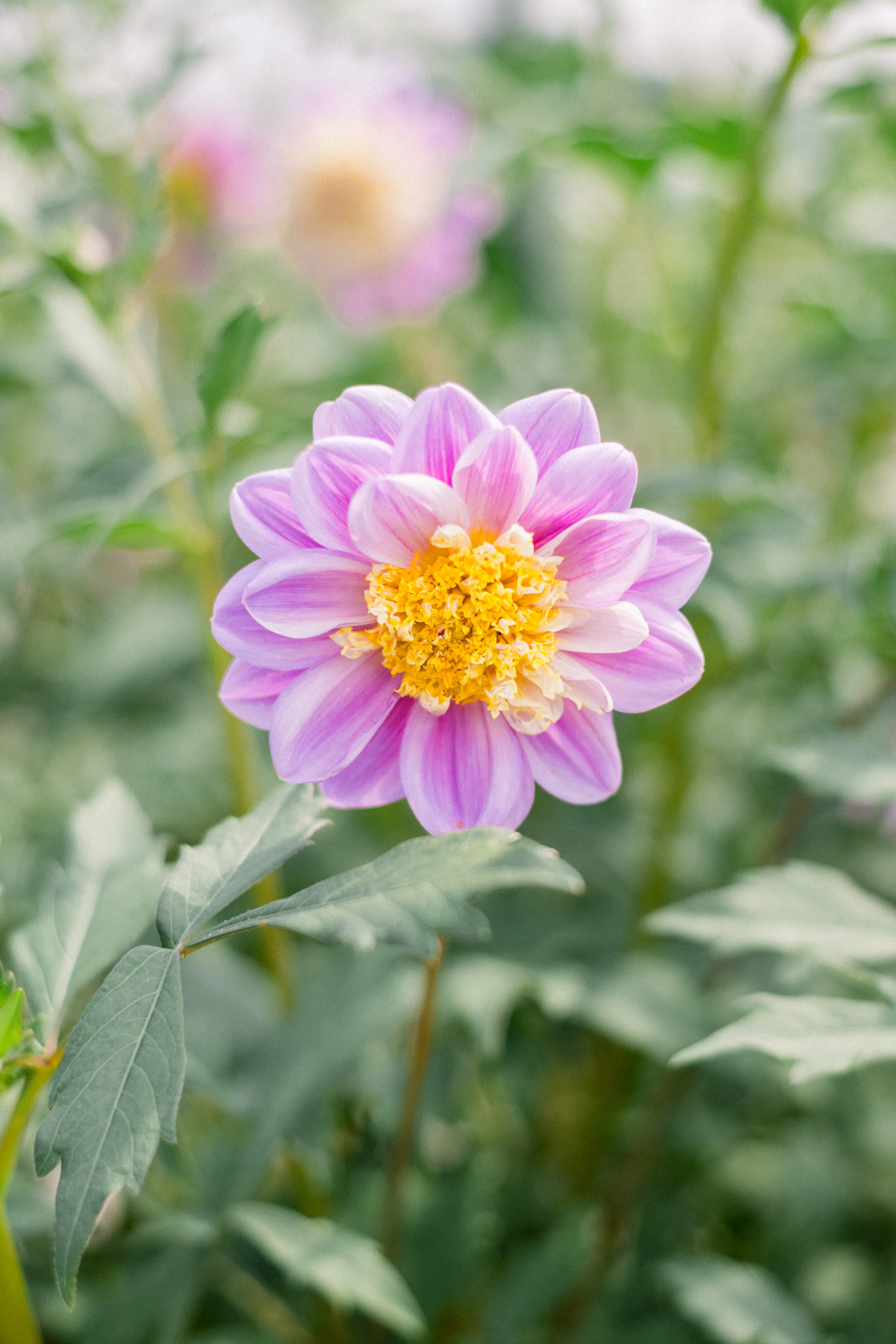
These stunning dahlias boast bright pink petals with a profusion of golden-yellow petals in the center. Flowers attract a variety of pollinators when in full bloom. Plants are compact for dahlias so they are ideal in border garden plantings, but are also an excellent addition to your cutting garden.
Flower Type: Anemone
Plant Height: 2-3’
Flower Diameter: 3-5”
Light Requirements: full sun, part sun
Soil Preference: well-draining soil
USDA Zones: 2-7 (annual), 8-11 (perennial)
Days to Maturity: 80-100 days
How to Grow
Planting Depth: 1-2” (sprouting inside), 4-6” depth (outside)
Plant Spacing: 12-18”
When to plant: Sprout tuber indoors 4-6 weeks before the last frost date, transplant after the danger of frost has passed. Plant tubers directly outdoors after the danger of frost has passed.
Growing Tips: Tubers rot easily so avoid giving them too much water until the plant has begun to sprout (2-3 weeks after planting). Pinch top of stem when plants are 10-12” to promote branching. Add compost or fertilizer to soil before planting, or fertilize every 3-4 weeks with a well-balanced fertilizer after growth is visible. Trellis or staking is recommended to keep plants upright.
Cut Flower: Flowers can be harvested when petals are 3/4 open. Sear stems in 160-170F water or use a hydrating product to achieve 5-7 day vase-life.
Storing and Dividing Tubers: After frost has turned the top growth brown, cut the stem back a few inches above the soil. Then carefully dig carefully around the roots and rinse off excess dirt from and remove any tubers that may be rotting or damaged. Allow tubers to dry for several weeks allowing the roots to develop a slight wrinkled appearance before placing them in storage following the same storage procedures as above. Tubers can be divided in spring by cutting the tuber root segments apart with a sharp knife, making sure each has at least one visible eye (bud). Tubers can then be planted.
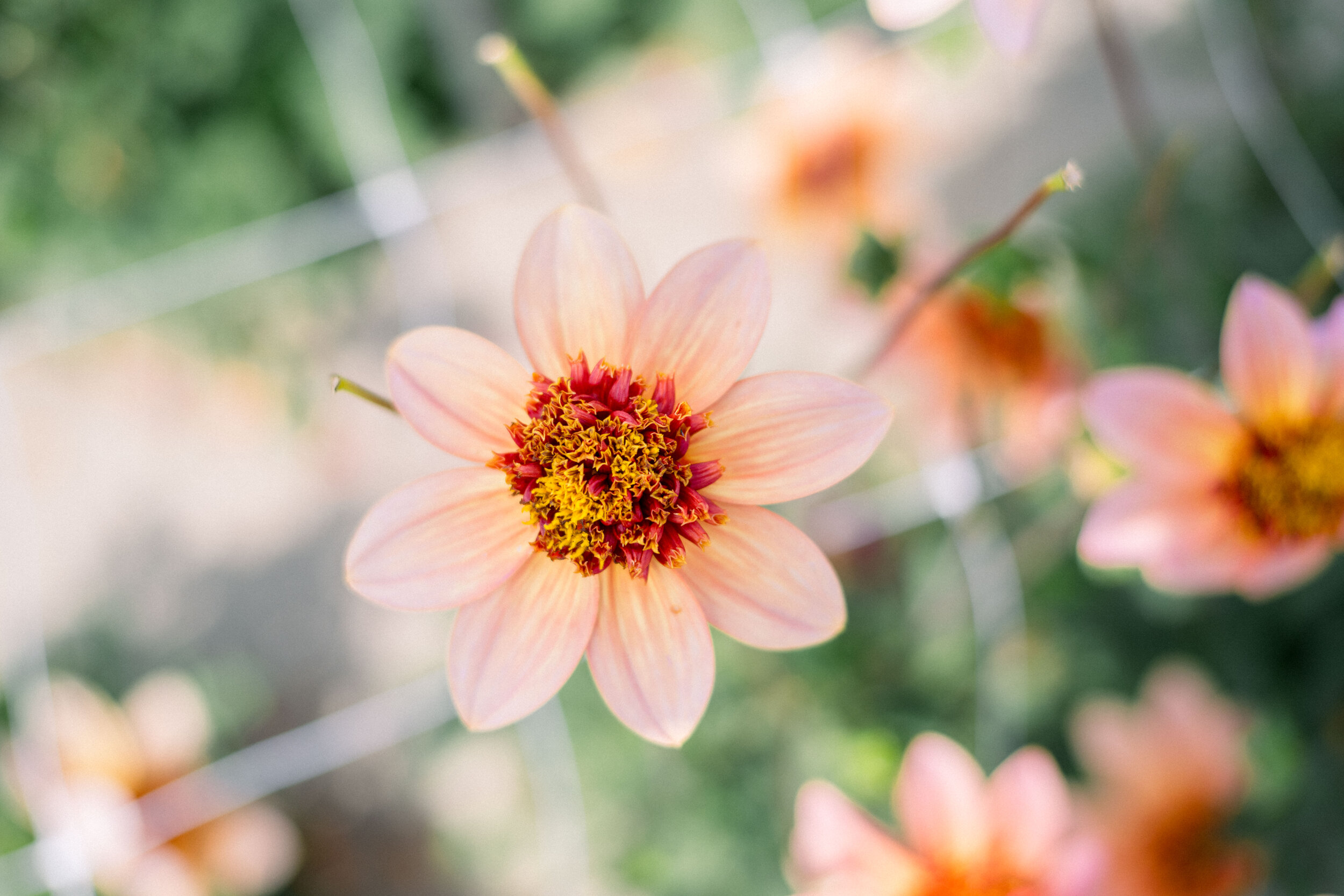
These dahlias will ‘totally’ catch your eye with the illusion of an almost fuzzy center with a cluster of red tipped in golden yellow surrounded by pink petals. Flowers attract a variety of pollinators when in full bloom. Plants are compact for dahlias so they are ideal in border garden plantings, but are also an excellent addition to your cutting garden.
Flower Type: Anemone
Plant Height: 2-3’
Flower Diameter: 2-6”
Light Requirements: full sun, part sun
Soil Preference: well-draining soil
USDA Zones: 2-7 (annual), 8-11 (perennial)
Days to Maturity: 80-100 days
How to Grow
Planting Depth: 1-2” (sprouting inside), 4-6” depth (outside)
Plant Spacing: 12-18”
When to plant: Sprout tuber indoors 4-6 weeks before the last frost date, transplant after the danger of frost has passed. Plant tubers directly outdoors after the danger of frost has passed.
Growing Tips: Tubers rot easily so avoid giving them too much water until the plant has begun to sprout (2-3 weeks after planting). Pinch top of stem when plants are 10-12” to promote branching. Add compost or fertilizer to soil before planting, or fertilize every 3-4 weeks with a well-balanced fertilizer after growth is visible. Trellis or staking is recommended to keep plants upright.
Cut Flower: Flowers can be harvested when petals are 3/4 open. Sear stems in 160-170F water or use a hydrating product to achieve 5-7 day vase-life.
Storing and Dividing Tubers: After frost has turned the top growth brown, cut the stem back a few inches above the soil. Then carefully dig carefully around the roots and rinse off excess dirt from and remove any tubers that may be rotting or damaged. Allow tubers to dry for several weeks allowing the roots to develop a slight wrinkled appearance before placing them in storage following the same storage procedures as above. Tubers can be divided in spring by cutting the tuber root segments apart with a sharp knife, making sure each has at least one visible eye (bud). Tubers can then be planted.
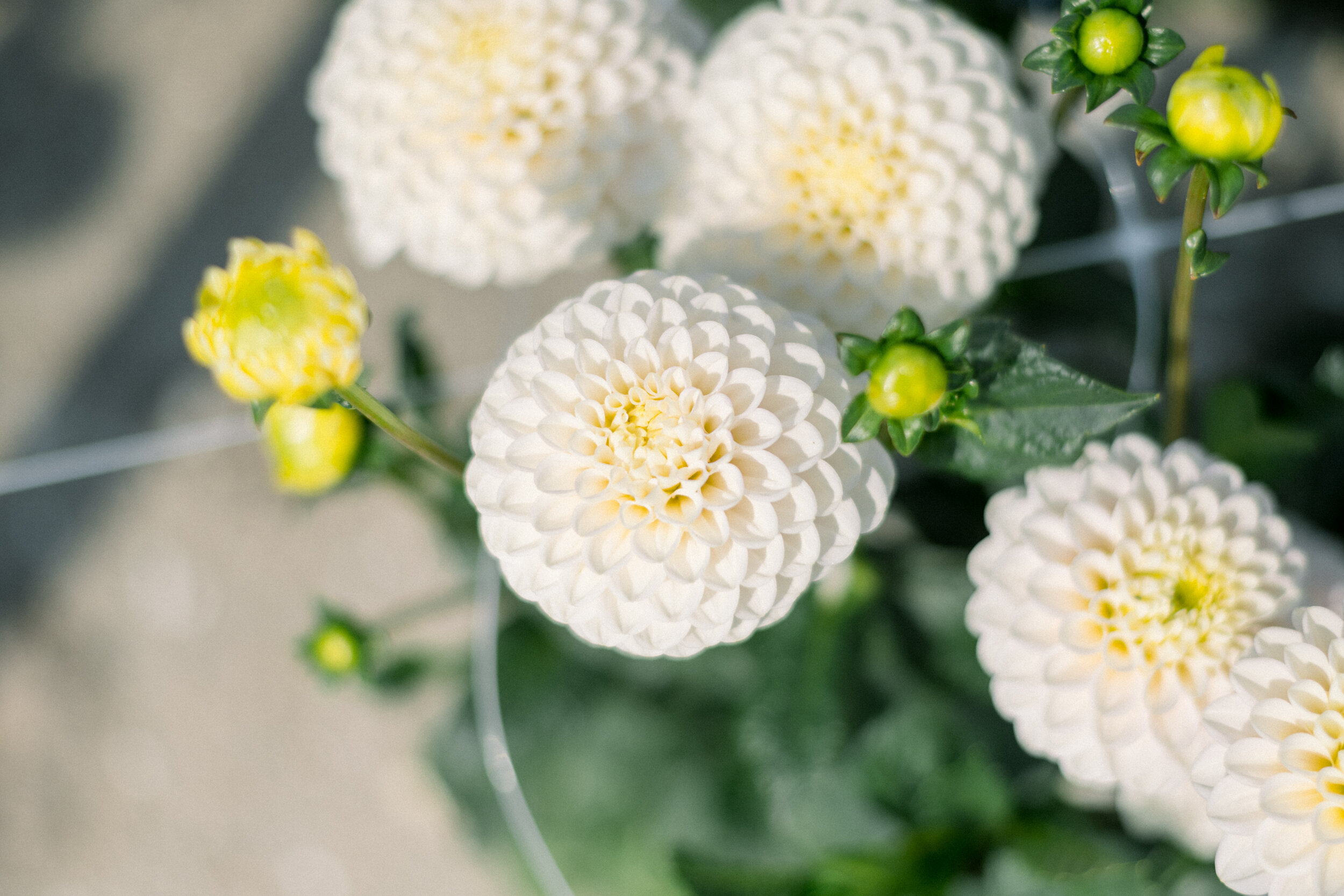
These intricate flowers will give the illusion of giant balls of cotton growing in your gardens. It’s height and bright white blooms are divine in the garden while it’s long stems are excellent for use as a cut flower.
Flower Type: Ball
Plant Height: 3-4’
Flower Diameter: 3-4”
Light Requirements: full sun, part sun
Soil Preference: well-draining soil
USDA Zones: 2-7 (annual), 8-11 (perennial)
Days to Maturity: 80-100 days
How to Grow
Planting Depth: 1-2” (sprouting inside), 4-6” depth (outside)
Plant Spacing: 12-18”
When to plant: Sprout tuber indoors 4-6 weeks before the last frost date, transplant after the danger of frost has passed. Plant tubers directly outdoors after the danger of frost has passed.
Growing Tips: Tubers rot easily so avoid giving them too much water until the plant has begun to sprout (2-3 weeks after planting). Pinch top of stem when plants are 10-12” to promote branching. Add compost or fertilizer to soil before planting, or fertilize every 3-4 weeks with a well-balanced fertilizer after growth is visible. Trellis or staking is recommended to keep plants upright.
Cut Flower: Flowers can be harvested when petals are 3/4 open. Sear stems in 160-170F water or use a hydrating product to achieve 5-7 day vase-life.
Storing and Dividing Tubers: After frost has turned the top growth brown, cut the stem back a few inches above the soil. Then carefully dig carefully around the roots and rinse off excess dirt from and remove any tubers that may be rotting or damaged. Allow tubers to dry for several weeks allowing the roots to develop a slight wrinkled appearance before placing them in storage following the same storage procedures as above. Tubers can be divided in spring by cutting the tuber root segments apart with a sharp knife, making sure each has at least one visible eye (bud). Tubers can then be planted.
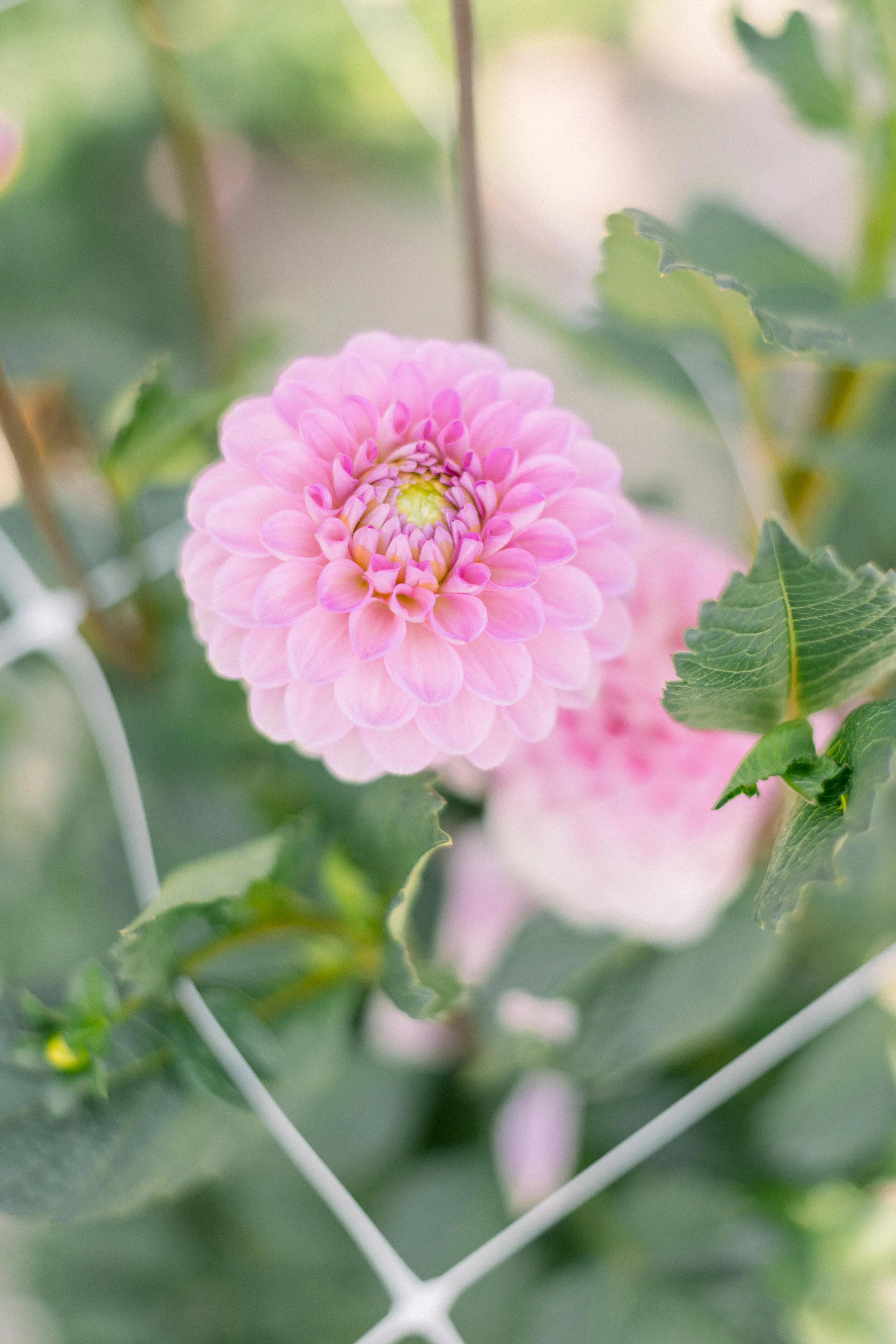
You will be ‘off to see the Wizard’ once you grow this delightful dahlia. It’s intricately shaped blooms have petals fading from pale-pink at the tips to deep-magenta towards the center. Bright blooms with their lush green foliage are an excellent addition to floral arrangements.
Flower Type: Ball
Plant Height: 3-4’
Flower Diameter: 3-4”
Light Requirements: full sun, part sun
Soil Preference: well-draining soil
USDA Zones: 2-7 (annual), 8-11 (perennial)
Days to Maturity: 80-100 days
How to Grow
Planting Depth: 1-2” (sprouting inside), 4-6” depth (outside)
Plant Spacing: 12-18”
When to plant: Sprout tuber indoors 4-6 weeks before the last frost date, transplant after the danger of frost has passed. Plant tubers directly outdoors after the danger of frost has passed.
Growing Tips: Tubers rot easily so avoid giving them too much water until the plant has begun to sprout (2-3 weeks after planting). Pinch top of stem when plants are 10-12” to promote branching. Add compost or fertilizer to soil before planting, or fertilize every 3-4 weeks with a well-balanced fertilizer after growth is visible. Trellis or staking is recommended to keep plants upright.
Cut Flower: Flowers can be harvested when petals are 3/4 open. Sear stems in 160-170F water or use a hydrating product to achieve 5-7 day vase-life.
Storing and Dividing Tubers: After frost has turned the top growth brown, cut the stem back a few inches above the soil. Then carefully dig carefully around the roots and rinse off excess dirt from and remove any tubers that may be rotting or damaged. Allow tubers to dry for several weeks allowing the roots to develop a slight wrinkled appearance before placing them in storage following the same storage procedures as above. Tubers can be divided in spring by cutting the tuber root segments apart with a sharp knife, making sure each has at least one visible eye (bud). Tubers can then be planted.
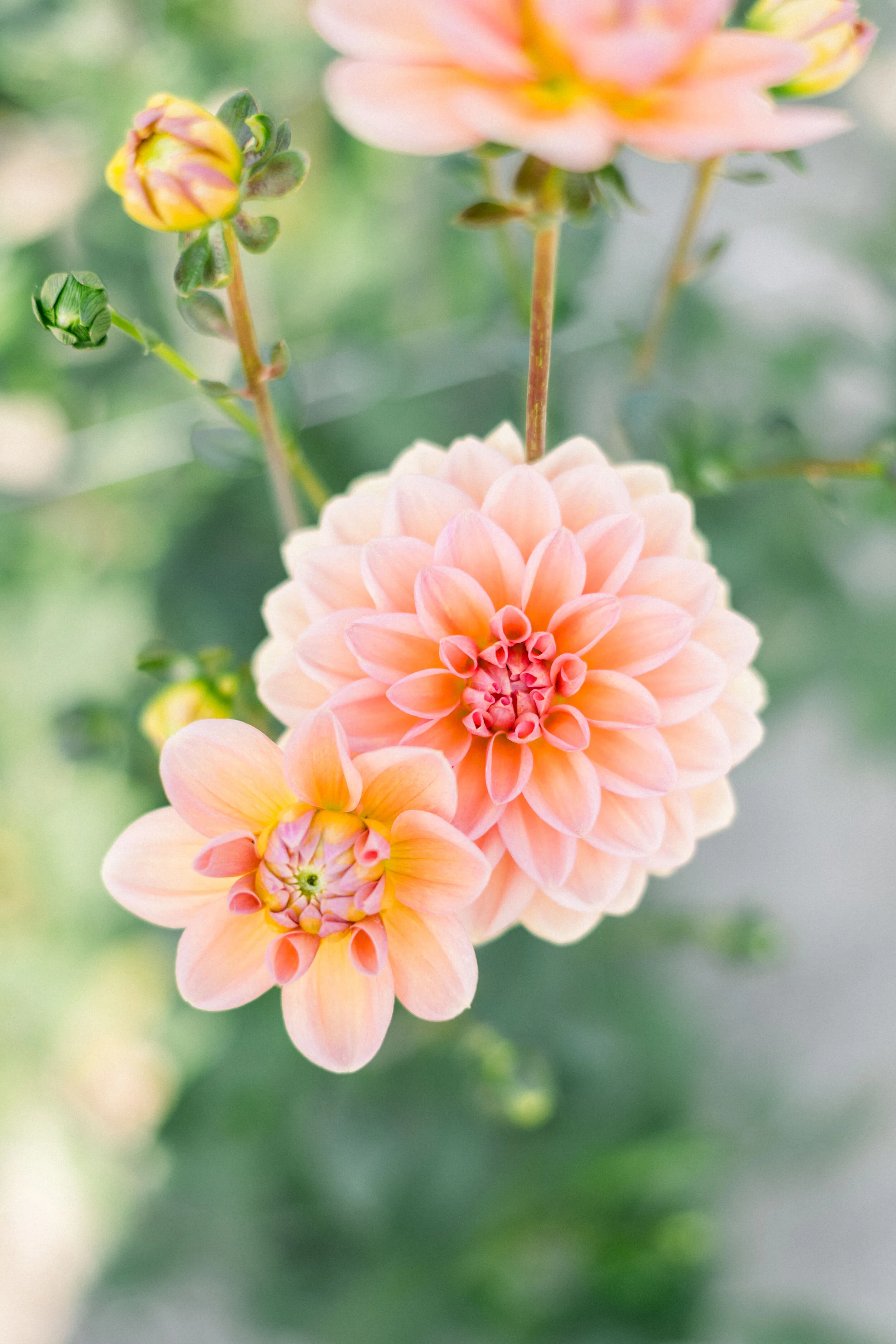
Petals open in layers like a water lily flower in harmonious shades of peach, pink, and yellow. Their color range compliments many other flower hues making them an ideal choice to grow in your garden beds and cutting garden.
Flower Type: Waterlily
Plant Height: 4-5’
Flower Diameter: 3-4”
Light Requirements: full sun, part sun
Soil Preference: well-draining soil
USDA Zones: 2-7 (annual), 8-11 (perennial)
Days to Maturity: 80-100 days
How to Grow
Planting Depth: 1-2” (sprouting inside), 4-6” depth (outside)
Plant Spacing: 12-18”
When to plant: Sprout tuber indoors 4-6 weeks before the last frost date, transplant after the danger of frost has passed. Plant tubers directly outdoors after the danger of frost has passed.
Growing Tips: Tubers rot easily so avoid giving them too much water until the plant has begun to sprout (2-3 weeks after planting). Pinch top of stem when plants are 10-12” to promote branching. Add compost or fertilizer to soil before planting, or fertilize every 3-4 weeks with a well-balanced fertilizer after growth is visible. Trellis or staking is recommended to keep plants upright.
Cut Flower: Flowers can be harvested when petals are 3/4 open. Sear stems in 160-170F water or use a hydrating product to achieve 5-7 day vase-life.
Storing and Dividing Tubers: After frost has turned the top growth brown, cut the stem back a few inches above the soil. Then carefully dig carefully around the roots and rinse off excess dirt from and remove any tubers that may be rotting or damaged. Allow tubers to dry for several weeks allowing the roots to develop a slight wrinkled appearance before placing them in storage following the same storage procedures as above. Tubers can be divided in spring by cutting the tuber root segments apart with a sharp knife, making sure each has at least one visible eye (bud). Tubers can then be planted.
This dahlia is as adorable as its name with rows of buttercup yellow petals aligning perfectly to create a pompon shape once they are fully open. This small but bright dahlia adds a sunshiny look to your garden beds and is an excellent secondary bloom in floral arrangements.
Flower Type: Pompon
Plant Height: 2-4’
Flower Diameter: 1-2”
Light Requirements: full sun, part sun
Soil Preference: well-draining soil
USDA Zones: 2-7 (annual), 8-11 (perennial)
Days to Maturity: 80-100 days
How to Grow
Planting Depth: 1-2” (sprouting inside), 4-6” depth (outside)
Plant Spacing: 12-18”
When to plant: Sprout tuber indoors 4-6 weeks before the last frost date, transplant after the danger of frost has passed. Plant tubers directly outdoors after the danger of frost has passed.
Growing Tips: Tubers rot easily so avoid giving them too much water until the plant has begun to sprout (2-3 weeks after planting). Pinch top of stem when plants are 10-12” to promote branching. Add compost or fertilizer to soil before planting, or fertilize every 3-4 weeks with a well-balanced fertilizer after growth is visible. Trellis or staking is recommended to keep plants upright.
Cut Flower: Flowers can be harvested when petals are 3/4 open. Sear stems in 160-170F water or use a hydrating product to achieve 5-7 day vase-life.
Storing and Dividing Tubers: After frost has turned the top growth brown, cut the stem back a few inches above the soil. Then carefully dig carefully around the roots and rinse off excess dirt from and remove any tubers that may be rotting or damaged. Allow tubers to dry for several weeks allowing the roots to develop a slight wrinkled appearance before placing them in storage following the same storage procedures as above. Tubers can be divided in spring by cutting the tuber root segments apart with a sharp knife, making sure each has at least one visible eye (bud). Tubers can then be planted.